Showing posts with label Japan. Show all posts
Showing posts with label Japan. Show all posts
Thursday, July 24, 2008


Wednesday, January 10, 2007
The Rising Sun Continues its Ascent
 There’s a host of news stories out of Japan that indicate the country is continuing normalization at a decent clip. As I’ve mentioned in many posts, I believe whether Japan becomes a normal country is the most important factor in determining how the first half of the 21st Century plays out. Due to their influence on India, they will also play a key role in encouraging that nation to join the US and Japan in keeping the second half of the 21st Century as peaceful and prosperous as possible.
The most important story is the upgrading of the Defense Agency to a full-fledged ministry. This editorial by the Japanese newspaper Yomiuri goes over the advantages this brings. The Defense Minister will now be able to directly call meetings and propose bills, instead of having to go through the Cabinet Office to do so. As the head of a ministry he will also have greater stature and be able to more effectively present the national security side of debates to the government. The upgrade will also see new sections added to the military such as a strategic planning section and a section to handle US-Japan military cooperation. This ends phase 1 of the necessary military expansion by Japan. Phase 2 and 3 will need to end the proscription of offensive military weapons and the 1% of GDP defense spending cap. Japan is simply too powerful of a country to not be helping us keep the secure global environment their economy heavily depends on secure.
The next important story is tied to the first. When the Japanese Diet past the bill to create the Defense Ministry, it also passed a bill that will have Japanese schools teach patriotism again. This will, over time, help to instill a level of confidence and willpower in the Japanese people that being an active global power requires. This is very important militarily as the amount of support from home has a major role in the effectiveness of the operation and diplomatically as an assertive willful nation needs to have a public that will stand by the government’s decisions. As more and more of our old allies, and perhaps even America herself, lose their national confidence and thereby their capability to do anything (only really Australia is left these days), this bill in Japan will become ever more important.
There are a group of stories that indicate Japan is becoming more active and assertive diplomatically and strategically. Since there are so many of them I’ll just list them in no particular order:
1) The ruling Liberal Democrat Party has made supporting visits to the Yasukuni Was Shrine part of its party platform. This is a signal to the East Asian countries, primarily China and South Korea, that Japan will not allow them to humiliate her over World War II and the Japanese Empire anymore. Japan will honor her war dead as she sees fit and if China or others have a problem with it then that’s their problem.
2) According to the China Daily (not sure how reputable they are) Japan will pass a law soon that opens an undersea gas field to Japanese development. The gas field is also claimed by China. Japan and China have been arguing over this gas field for some time. If the Japanese do pass the law and develop the gas field it would be another sign that Japan isn’t going to be pushed around anymore.
3) The government of Japan is doing more diplomatically than just reacting. Prime Minister Shinzo Abe is currently on a diplomatic tour of Europe. He is in Europe to expand Japanese ties with the EU and NATO. The overall importance of the EU as a positive factor may be nil but its negative impact can be large as was seen a few years back French President Chirac and German Chancellor Schroeder attempted to end the arms ban imposed on China after Tiananmen Square in 1989. This would have allowed China access to some of the latest military technology and would have been very problematic for Japan. It’s important for Japan to have a voice at the EU if only to persuade the EU not to do anything bad. Having contacts with NATO has more obvious positive results for Japan. Abe will be the first Japanese Prime Minister to address the North Atlantic Council.
4) Japan is no longer handing out foreign aid based primarily on World War II. It is being re-oriented to line up with strategic interests instead. Prior foreign aid was predominately given to countries like China, South Korea, the Philippines, etc. who were occupied by Japan at one time or another. Now it will be focused on shoring up the Middle East and competing with Chinese foreign aid.
5) According to news reports a few days ago, South Korean President Roh Moo-hyun proposed renaming the Sea of Japan to, ahem, “the Sea of Peace”. The Japanese government publicly rejected renaming the Sea of Japan. Later news stories have the South Korean President claiming to have informally offered several names like “Sea of Friendship” as a confidence building measure between Japan and South Korea. Either way, this is another sign that Japan will not be pushed around. I’d say China has two seas, Korea should ask to name one of those (yeah I know that won’t go anywhere).
6) Almost a month old, but Japan and India are developing a strategic partnership. The two countries have pledged to work together to maintain regional peace and security. This would include economic, military, and diplomatic cooperation. This is critical for us and the world since the ruling Congress Party in India was born and bred with anti-Americanism during the Cold War it makes it somewhat more difficult for us to make headway with India. When the Hindu nationalist BJP, which is much more pro-American, is in office we can work more closely with India. However, Japanese contact allows for continual alliance building with India even when the Congress Party is in power.
7) Japan continues to direct a large amount of her savings and investment to the US with the latest example being a plan to finance nuclear power plant construction in the US. Probably the most critical relationship in the global economy is between aging wealthy Japan and young growing America. As the only developed nation with a growing population and quickly growing economy, America needs large amounts of capital for investment. The Japanese need somewhere to put their massive pile of savings that will both earn a good return and be safe. This deal shows that this economic relationship will continue. We need large amounts of new power generation, Japan needs the profits they will generate, and we both need the close relationship it will develop.
A strong confident country with active diplomacy and a powerful military requires a strong economy to back it up (fukoku kyôhei for any Japanese readers out there). Japan has been a little weak in economic growth from 1990 to 2002 or so. The last few years have seen the Japanese economy grow around 2% a year. That sounds low but is pretty good for a country with a slowly shrinking workforce. The government expects the growth to continue into 2007. Renewed economic growth is important since it is the basis of all the things above. It helps the Japanese people feel proud and confident about their nation. It allows for active “Yen diplomacy” and makes access to the Japanese market more of an incentive. A powerful military needs a government with the tax revenue to properly fund it.
These news stories are mostly no more than 3 days old. Prime Minister Shinzo Abe has been setting a fairly hectic pace in his efforts to normalize Japan. So far he has been successful. He has some major challenges ahead such as adjusting the Japanese Constitution to reflect the reality of the world today. Hopefully for Japan, for the US, and for the world he will continue being as successful as he has.
Saturday, December 30, 2006
A Good Week that Ends a Bad Year
For the first time in what feels like ages there is finally some good news for the forces of good in the world. Yes, each of these four events requires follow up and will produce ample cause to worry in the future. Nevertheless, we’ve been moving backwards for so long (since April 2004 I’d say) that it feels like a major cause of celebration just to see us going in the right direction again, regardless of how limited that shift may in fact be. Sort of like the United States after Antietam and Guadalcanal, or the British after El Alamein and Mafeking (throw a rare one in for you). The four pieces of news are:
Saddam’s execution. This finally closes a dark chapter in Iraqi, Arab, and world history. No longer can the Sunnis hope and the Shiites/Kurds fear that the Democrats will reinstall Saddam "to make Iraq a better place to live". This has an unknown level of practicality since we have no idea if or how the Iraqi people will react to the releasing of Saddam's ever present grip on their lives. Nonetheless it is a moral victory that will at least remind the other brutal tyrants of the region that it can happen to them (even though we’ve given them every reason not to fear it).
Somalia. The Ethiopian military has thoroughly defeated the Islamic Courts Union in only a week’s time (I do declare they deserve a fourth cheer). Ethiopia has reminded us what a professional military can do to Islamist rabble militias when it is fully unleashed. Hopefully Washington and Jerusalem were watching and took notes. Whichever rotten government takes hold in Somalia next now knows not to work with the Islamists, unless they desire the same fate. Ethiopia has also placed itself in a postion to heavily influence the next government in the right direction since it owes its existence to Ethiopia. If Ethiopia takes advantage of this they can further teach the US and Israel the art of power politics we've forgotten.
Iran. According to The Wall Street Journal, Washington is beginning a campaign to push for tough non-UN economic sanctions on Iran. This follows the UN imposing a series of wrist slapping sanctions on Iran itself. I’m not sure why this new sanctions push would be any more successful than the last ones, but Washington is doing something for a change even if it is pathetically tiny. I shutter to think that I would consider this good news, but the Iran crises is being managed so badly by Washington that I’ll take what I can get these days.
Japan. This news story states that Japan recently researched the steps needed to develop nuclear weapons. If true this would mean Japan is finally throwing off the last vestiges of post-World War II de-normalization. A normal Japan is one of the most, if not the most, important requirements for a stable free world in the 21st Century (old post about it). The sooner they become “normal” the better, and from the looks of it we may not have long to wait. If confirmed and followed up on this would qualify as the best news of the year, but being unconfirmed it'll have to go at the bottom of the best news of the last week of 2006, one of its few good weeks.
Saddam’s execution. This finally closes a dark chapter in Iraqi, Arab, and world history. No longer can the Sunnis hope and the Shiites/Kurds fear that the Democrats will reinstall Saddam "to make Iraq a better place to live". This has an unknown level of practicality since we have no idea if or how the Iraqi people will react to the releasing of Saddam's ever present grip on their lives. Nonetheless it is a moral victory that will at least remind the other brutal tyrants of the region that it can happen to them (even though we’ve given them every reason not to fear it).
Somalia. The Ethiopian military has thoroughly defeated the Islamic Courts Union in only a week’s time (I do declare they deserve a fourth cheer). Ethiopia has reminded us what a professional military can do to Islamist rabble militias when it is fully unleashed. Hopefully Washington and Jerusalem were watching and took notes. Whichever rotten government takes hold in Somalia next now knows not to work with the Islamists, unless they desire the same fate. Ethiopia has also placed itself in a postion to heavily influence the next government in the right direction since it owes its existence to Ethiopia. If Ethiopia takes advantage of this they can further teach the US and Israel the art of power politics we've forgotten.
Iran. According to The Wall Street Journal, Washington is beginning a campaign to push for tough non-UN economic sanctions on Iran. This follows the UN imposing a series of wrist slapping sanctions on Iran itself. I’m not sure why this new sanctions push would be any more successful than the last ones, but Washington is doing something for a change even if it is pathetically tiny. I shutter to think that I would consider this good news, but the Iran crises is being managed so badly by Washington that I’ll take what I can get these days.
Japan. This news story states that Japan recently researched the steps needed to develop nuclear weapons. If true this would mean Japan is finally throwing off the last vestiges of post-World War II de-normalization. A normal Japan is one of the most, if not the most, important requirements for a stable free world in the 21st Century (old post about it). The sooner they become “normal” the better, and from the looks of it we may not have long to wait. If confirmed and followed up on this would qualify as the best news of the year, but being unconfirmed it'll have to go at the bottom of the best news of the last week of 2006, one of its few good weeks.
Monday, July 10, 2006
The Rising Sun rises again
One benefit of North Korea’s reckless behavior is that it's causing the Japanese to finally wake up to the real world. Their GDP, population, wealth, and potential defense spending make them, in my estimation, the second most powerful nation in the world. However, power and influence not used are power and influence that do not exist. Fully rousing the Japanese so they begin to exercise their power is one of the most critical things for ensuring the peace and stability of the future.
The Japanese were shocked when the North Koreans launched a missile over them in 1998. They were even more shocked to learn that they had no ability to defend against it. Since that time the Japanese have been a major partner in our National Missile Defense program. After President Bush came along in 2001, they accelerated their efforts to become a normal country. Most notably, they made their largest and furthest post-World War II deployment when they sent soldiers to Iraq. Whatever the public opinion polls said Japanese thought of that deployment, they re-elected Prime Minister Koizumi in an enormous landslide in September 2005.
Since Koizumi’s resounding re-election the Japanese have begun to throw off the last limitations of the post-World War II settlement. They re-organizing their defense forces and strengthening the relevant portions within their current budget limit. The ground self-defense force is being converted from a static Cold War defense force to a capable, smaller, deployable force for the 21st Century. The air self-defense force is continuing its purchases of F-15’s and the Japanese developed F-2’s (a sort of super F-16). The maritime self-defense force is expanding from 10 very modern destroyers/frigates every bit as excellent as America’s to 20. Despite concern throughout Asia, the Japanese are also planning to build 2 light carriers in the next few years (preliminary to full size carriers one hopes). To top it all off, they are seriously considering promoting their military to a full cabinet ministry and getting rid of the silly “defense force” names.
On the diplomatic front, the Japanese have been attempting to see a reformed U.N. where they would at least have a permanent non-veto seat on the Security Council. I consider one of the great problems of the U.N. that Japan, with the world’s second biggest economy, and India, with the second largest population, have to wait their turn for a Security Council seat like Belgium, Bhutan, and Burundi. Whatever the end result, the fact is that the Japanese are making the effort to do it. The Japanese have also been in the lead demanding strong U.N. action on North Korea. They have not stood down in the face of strong Chinese pressure over the Senkaku Islands and the East China Sea natural gas deposits, nor Korean pressure over Takeshima Island. They have further stood firm over demands for yet more apologies for World War II.
The latest example of the growing self-confidence in Japan is the statement that Japan is considering whether a pre-emptive strike against North Korea is allowed. Like America, the Japanese are realizing that sometimes the best defense is a good offense. However, as they consider whether they are legally allowed to attack North Korea they will soon learn that they do not have the means to attack North Korea even if they wanted to. This will be an interesting next step in Japan’s progression to normal country status; will they re-arm with offensive weapons? I hope they do and also hope they increase their military spending from under 1% of GDP (~$45 billion)to 2.5-3.5% ($125-175 billion). To do those things reliably they need to change Article 9 of their constitution which is just what they are doing. With Article 9 gone, the Japanese will be back on the international stage.
Far from turning away from such rhetoric and ideas, the Japanese people are warming to the main proponent of the new Japan, Shinzo Abe. (As a side note, Abe has been my favorite choice to succeed Koizumi since Koizumi announced he will step down, this only causes me to like him more.) I also noticed, while reading about the World War II super battleship IJN Yamato, that a movie about the exploits of the vessel was made in 2005 in Japan and that a museum about it opened the same year (from the pictures it looks relatively busy). As bad as the Japanese behaved in World War II, they can still take pride in their war-time achievements like the IJN Yamato. It’s interesting to see that, along with Yasukuni visits, the Japanese are at last getting over the war-guilt that has inhibited their nation since World War II. They also seem, unlike the Europeans, to understand that just because they behaved badly at times in the past doesn’t give anyone the right to push them around today. This is key because the exercise of power requires a firm moral and cultural basis. Again, no matter how much power you have, if you don't use it it's meaningless.
The Japanese appear to be culturally, diplomatically, and militarily preparing to re-enter the international geopolitical fray. As we lose our old allies in Europe because of the collapse of their morale and power, we could certainly use a reinvigorated Japan as our friend. I’ve already written about Japan’s value to us here. The North Koreans are simply silencing Japanese doubters of their country's new direction and causing them to redouble their efforts. The better Japan is able to help with real world problems, the better it is for both us and the world.
The Japanese were shocked when the North Koreans launched a missile over them in 1998. They were even more shocked to learn that they had no ability to defend against it. Since that time the Japanese have been a major partner in our National Missile Defense program. After President Bush came along in 2001, they accelerated their efforts to become a normal country. Most notably, they made their largest and furthest post-World War II deployment when they sent soldiers to Iraq. Whatever the public opinion polls said Japanese thought of that deployment, they re-elected Prime Minister Koizumi in an enormous landslide in September 2005.
Since Koizumi’s resounding re-election the Japanese have begun to throw off the last limitations of the post-World War II settlement. They re-organizing their defense forces and strengthening the relevant portions within their current budget limit. The ground self-defense force is being converted from a static Cold War defense force to a capable, smaller, deployable force for the 21st Century. The air self-defense force is continuing its purchases of F-15’s and the Japanese developed F-2’s (a sort of super F-16). The maritime self-defense force is expanding from 10 very modern destroyers/frigates every bit as excellent as America’s to 20. Despite concern throughout Asia, the Japanese are also planning to build 2 light carriers in the next few years (preliminary to full size carriers one hopes). To top it all off, they are seriously considering promoting their military to a full cabinet ministry and getting rid of the silly “defense force” names.
On the diplomatic front, the Japanese have been attempting to see a reformed U.N. where they would at least have a permanent non-veto seat on the Security Council. I consider one of the great problems of the U.N. that Japan, with the world’s second biggest economy, and India, with the second largest population, have to wait their turn for a Security Council seat like Belgium, Bhutan, and Burundi. Whatever the end result, the fact is that the Japanese are making the effort to do it. The Japanese have also been in the lead demanding strong U.N. action on North Korea. They have not stood down in the face of strong Chinese pressure over the Senkaku Islands and the East China Sea natural gas deposits, nor Korean pressure over Takeshima Island. They have further stood firm over demands for yet more apologies for World War II.
The latest example of the growing self-confidence in Japan is the statement that Japan is considering whether a pre-emptive strike against North Korea is allowed. Like America, the Japanese are realizing that sometimes the best defense is a good offense. However, as they consider whether they are legally allowed to attack North Korea they will soon learn that they do not have the means to attack North Korea even if they wanted to. This will be an interesting next step in Japan’s progression to normal country status; will they re-arm with offensive weapons? I hope they do and also hope they increase their military spending from under 1% of GDP (~$45 billion)to 2.5-3.5% ($125-175 billion). To do those things reliably they need to change Article 9 of their constitution which is just what they are doing. With Article 9 gone, the Japanese will be back on the international stage.
Far from turning away from such rhetoric and ideas, the Japanese people are warming to the main proponent of the new Japan, Shinzo Abe. (As a side note, Abe has been my favorite choice to succeed Koizumi since Koizumi announced he will step down, this only causes me to like him more.) I also noticed, while reading about the World War II super battleship IJN Yamato, that a movie about the exploits of the vessel was made in 2005 in Japan and that a museum about it opened the same year (from the pictures it looks relatively busy). As bad as the Japanese behaved in World War II, they can still take pride in their war-time achievements like the IJN Yamato. It’s interesting to see that, along with Yasukuni visits, the Japanese are at last getting over the war-guilt that has inhibited their nation since World War II. They also seem, unlike the Europeans, to understand that just because they behaved badly at times in the past doesn’t give anyone the right to push them around today. This is key because the exercise of power requires a firm moral and cultural basis. Again, no matter how much power you have, if you don't use it it's meaningless.
The Japanese appear to be culturally, diplomatically, and militarily preparing to re-enter the international geopolitical fray. As we lose our old allies in Europe because of the collapse of their morale and power, we could certainly use a reinvigorated Japan as our friend. I’ve already written about Japan’s value to us here. The North Koreans are simply silencing Japanese doubters of their country's new direction and causing them to redouble their efforts. The better Japan is able to help with real world problems, the better it is for both us and the world.
Saturday, June 10, 2006
Alliances for the new Century Part 2 – Japan
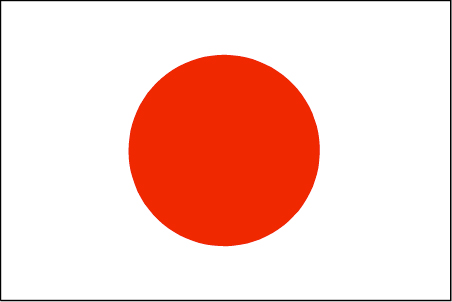 As the world changes around us, where are America’s future interests and potential allies? In a word, Asia. Therefore, first and foremost amongst our newly important allies is Japan. Though Japan is in a similar downward spiral as Europe, they exercise little of their power today, so if they use any in the future it will be more than they do today. By all measures Japan is very powerful country with an economy of $4.8 trillion, a population of 127 million, and a military budget of $45 billion. She is the second most powerful nation in the world, and will stay in the top 4 for the foreseeable future. Japan is absolutely critical to us for multiple geopolitical, economic, and military reasons.
Clearly a nation the size of Japan carries a lot of heft around the world and especially in East Asia. It is very useful to have a second voice at times, the more so the more powerful that voice is. Our main geopolitical challenge in East Asia is obviously China. Our general goal is to form an alliance of countries surrounding China so as to limit her ability for trouble making. The Japanese are the most important part of that ring. Not only because they are by far the most powerful member of that group, but also because they can reach out to the other members. For example, after we sign a trade or technology deal with India the Japanese can follow us and sign similar deals to further sweeten the pot. In many cases, due to Japan’s closer proximity, they can offer a better deal that we can. Japan can also work more closely with nations, such as Vietnam or Laos, which are difficult for us to deal with. All of this also applies outside of East Asia. Japan is rich and strong enough to have influence in Africa or Latin America in a way other countries like say South Korea or Taiwan cannot. This includes the U.N. where Japan is a useful member and second largest contributor. Combined with our contribution, we make a team that the U.N. cannot operate without. These are useful attributes especially combined with Japan's wealth.
That Japan is a very wealthy country is well known. At $36,700 they are the only large country with a per-capita income near our $41,600. Not only that, but Japan is a well known nation of savers. They will save over $1.3 trillion this year while investing just under $1.2 trillion inside Japan. As they age, they need a better yet safe place to invest their money than Japan since it is oversaturated with investment. We need a source of large amounts of capital to invest in our ever growing country and economy. We’ll only save about $2 trillion this year while needing around $2.6 trillion for investment. What better combination for the future than the biggest saving country and the biggest investment country? We are also major trading partners with over $210 billion in trade last year. To further encourage this trade there is even talk of a U.S.-Japan Free Trade Agreement, but it is admittedly a long way off. However, it would do much to advance our alliance. In addition to the hundred billion in excess savings available for overseas investment, Japan provides around $9 billion in foreign aid per year. The geopolitical aspect of this is obvious.
Along with the diplomatic and economic reasons, Japan is a valuable ally from the military standpoint as well. Japan’s military budget is one of the largest in the world and has much room to grow in the future. With a budget of $45 billion and 240,000 soldiers, the Japanese have a good spending per soldier ratio of $188,000. They have focused on funding a small force that is almost trained and equipped to our standards. This allows for easy co-operation. It also allows for future expansion. Japan needs protection in their unruly neighborhood and we need an access point to and support in the very same neighborhood. We have recently made many strides in regards to our military relationship. We have agreed to a new defense treaty that resolves the longstanding issue of the Marines on Okinawa and has Japan take a great role in East Asian operations. They are also the largest partner in our missile defense program. The Japanese have agreed that a Chinese invasion of Taiwan is matter of national security. Ultimately, as China becomes a bigger issue in East Asia, we need a powerful military in the region that other countries trust will always stand up for them. Sadly, we do not have the best reputation for standing by allies (which the media driven panic over Iraq is doing nothing to assuage) and many East Asian nations suspect that we will sell them out to China in the end. They would not worry about a powerful and confidant Japan selling them out since Japan has no where to go should they do that.
Given the changes in the global power structure, it is critical that the U.S. government recognize and act on them. One of the changes is that Japan is now the most critical future ally we have and any responsible administration would place her above all others. That is exactly what President Bush is doing. We have become closer to Japan than at any time in our history (Except maybe in the decade after World War 2). So long as we continue giving Japan the attention they deserve even though it may be at the expense of Europe, we can look forward to a long fruitful friendship.
Subscribe to:
Posts (Atom)