Note: War Plan Green was part of a series of color-coded war plans drawn up by the US military between the World Wars. Green dealt with intervention in Mexico.
Without much media attention, Mexico continues its slide into chaos. Every now and then there will be a story about it, such as yesterday in the Washington Post. It reports that the number of violent deaths in Mexico continues to rise. Although media coverage of this is new, as witnessed by the US travel advisory to Mexico, the violence and chaos are not. With journalists being killed, large cities increasingly ungovernable, gangland shootouts that include RPG’s and machine guns, public officials beheaded, a weak divided government trying to act humanely (this story covers a lot of it), you’d think this would be a story the media would love, but I guess not having the US military to blame is a deal breaker for the media.
At first glance this chaos seems odd. Mexico is a large resource rich nation, with a good level of population growth, Western cultural heritage, and direct access to 1/3 of the world’s economy. The problem is that Mexico has taken almost all of the worst aspects of Western culture, socialism, racism, and xenophobia. Socialism makes it difficult to create wealth and jobs in Mexico. There may be bountiful resources in Mexico but when the government alone owns them they are not efficiently exploited. The xenophobia in Mexico is primarily focused towards the North (though still expect to be greeted by machetes, clubs, and almost no legal rights if you’re from south of Mexico). The xenophobia primarily works with socialism to keep Mexico’s economy inefficient and undercapitalized by keeping out American investors. Better to leave the countries wealth to the whites of Mexico than have the gringos of El Norte “steal it” the people are told and believe. Thus, xenophobia also assists in maintaining Mexico’s terribly racist quasi-apartheid system. Most of the wealth and power in Mexico is concentrated in its white minority that consists of only about 10% of the population. The average income in Mexico is $6,500, for the top 10% it's $24,100, for the bottom 10% $1,040 (from the CIA World Factbook). Essentially 10% live like Western Europeans, 80% like Eastern Europeans, and 10% like Chinese. This places Mexico in the top 10% of most inequitably distributed income countries.
These are the seeds of the current growing chaos in Mexico. To be stable and flourish, Mexico needs to end all three practices, yet the three main parties are focused on only ending socialism (PAN), only ending racism (PRD), or actually reinforcing the old ways (PRI). A growing population can be a blessing if a country has a free market system that can absorb and utilize the extra workers. Since Mexico does not have this, the only safety valve has been to export around 400-500,000 people a year to the hated north. However, even our ability to absorb and utilize this horde is being stressed near, if not past, the breaking point. Add to the witches brew oil and drug cartels and Mexico’s problems only grow. With the oil, the Mexicans can copy the country destroying policies of Hugo Chavez, while the drugs open a route to a Columbia style drug war. In short, don’t expect the chaos to abate anytime in the near future.
This is where War Plan Green comes into play; the Pentagon needs to thoroughly update it. We must make sure we always have enough brigades, even if they are mostly National Guard, ready to move south if the violence becomes severe enough to spill over the border, create a humanitarian crises in northern Mexico, or threaten Mexico’s vital oil exports. We need to have a clear idea of how far we will go, such as only form a security zone in northern Mexico or go all the way to Mexico City, intervene in the chaos or let it rage south of our zone, get involved in the political situation or leave it for the Mexicans to sort out. We further need to plan nationally and encourage affected companies to have their own plans for the economic collapse that unbridled chaos will cause. One of the unfortunate side effects of free trade and globalization is that they have linked the health of our economy to weak unstable economies like Mexico’s (we definitely need more such plans but I doubt any serious ones exist). Venezuela, Bolivia, Columbia, and Argentina are societal meltdowns that we can largely watch from afar, not so with Mexico. Its size, proximity, and enormous émigré population in the US means the chaos there will inevitably spread here.
It would be nice if we could support them now more peacefully. However, since anti-Americanism was used to define Mexican identity long before even Canada existed, it is next to impossible for us to help in any overt and effective manner. We agreed to a free trade deal with Mexico, and we have taken their surplus population for 30 years running, we've provided an example, there’s not much more we can do to help. This could develop into a very serious problem right in our backyard in the near future so we should at least be prepared. I only hope the President hasn’t allowed his unabashed love of anything from south of the border to cloud his judgment on this issue.
Thursday, November 30, 2006


Monday, November 27, 2006
Injured Blogger Update
I apologize for being quiet longer than expected. My hand ended up being injured much worse than hoped (almost lost a finger), which means I’m not able to type well yet. As a side note, rehab, though necessary, sucks. So, you know, don’t go cutting tendons, nerves, and major blood vessels unless you have to. Also, preferably don't do it when so many interesting and bloggable things are happening (and wow did I support Rummy at the wrong time, oh well regardless of what Bush thinks I still like Rumsfeld and think he was a great Sec. of Defense).
Tuesday, November 07, 2006
Injured Blogger Notice
Since I badly cut my left hand (to the point of requiring surgery) I won’t be blogging much except occasional (very) short posts. I’ll be back blogging whenever the severed tendon heals enough (hopefully not more than 2 or 3 weeks). Thanks as always for the interest, take care.
Monday, November 06, 2006
Saddam & The Gallows, A Perfect Match
The upcoming executions of Saddam Hussein and his assorted henchmen are a truly historic moment. Provided they aren’t stopped by some freak judicial intervention, they will represent a rare moment in history in which a monster ruler has received justice in this life. All too often these human beasts get away with their crimes and depravity. Only a few have met their maker through worldly justice; for every Vlad the Impaler, Adolf Eichmann, or Benito Mussolini who do, there are countless men like Josef Stalin, Mao Tse-Tung, Ivan the Terrible, and Jimmy Carter (note: Simpsons humor) who do not.
Thanks to the skill, dedication, and hard work of the Coalition Forces and Iraqis who want a better future, Saddam will soon be listed with Vlad and not Ivan in the history books. This is not to argue that the price was worth it, or that we should have invaded, or anything like that. It is only to say that it is good to see justice being served to one of the worst dictators of a century that had all too many. Wherever one stands on the Iraq War, pro all the way, con all the way, for it before you were against it, this should be something that we can agree on. Once Saddam is in God’s court, we can get back to squabbling over Iraq.
Thanks to the skill, dedication, and hard work of the Coalition Forces and Iraqis who want a better future, Saddam will soon be listed with Vlad and not Ivan in the history books. This is not to argue that the price was worth it, or that we should have invaded, or anything like that. It is only to say that it is good to see justice being served to one of the worst dictators of a century that had all too many. Wherever one stands on the Iraq War, pro all the way, con all the way, for it before you were against it, this should be something that we can agree on. Once Saddam is in God’s court, we can get back to squabbling over Iraq.
Saturday, November 04, 2006
The Case for Rumsfeld
There is a debate (the favorable posts are too old and aren't online anymore, in short several contributors like Rumsfeld, con, con) at the National Review over the efficacy of Defense Secretary Donald Rumsfeld. I personally admire Rumsfeld very much as can be seen below. This post, Rumsfeld vs. the McClellan Democrats, from a month or so ago explains some of the reasons I like him. The following post is much older and explains why I think, contrary to some conservatives, that the current war makes transformation more imperative not less. Also, yes Rumsfeld wanted to eliminate two divisions prior to 9/11. Even under the first Bush budget, better though it was, the Army was simply not funded to a level required for 10 fully operational divisions. While the Defense Secretary must advocate for more, he also must plan based in reality (the Navy can have a plan for 33 carriers, it still isn't happening). Converting to an entirely light army would have been a mistake, and one I opposed at the time, but no one is perfect. Even so, it wouldn't have been too serious to this point, and it may have even been beneficial given the wars we fought. More light infantry would have been useful in Iraq in the first year and it was all we used in Afghanistan and elsewhere anyways. Nevertheless, it wasn't a good idea and Rumsfeld has dropped it. Anyways, on to the old post...
The 40,000 Soldier Question
Since 9/11 we have heard liberals frequently claim we need to add 40,000 more soldiers to the Army. It is treated by the left as a panacea for everything that ails the Army (whether true or not). Meanwhile, in the background Rumsfeld's transformation of the Army continues plodding along. Should we have added 40,000 soldiers? Or was allowing Rumsfeld's work to continue the better call? (It should be noted when discussing the reform of the Army that it is extremely difficult to find complete information on all aspects of it. I assume in cases where no information is available that it is staying similar to the current Army.)
First off, why reform at all? The reason is we still have a military which is essentially the little brother of the Cold War military. That military was designed to send dozens of divisions to fight the Soviet Union on the plains of Germany. Our current military is designed to send 3-6 divisions to fight regional wars against lesser states; Cold War planning in miniature. Further, the basic combat unit is still the division. This despite divisions almost never deploying for combat as they are organized in peacetime. The heavy battalions of the Army are still organized for the mass tank confrontation with the Soviet Union. Compared to the 18-24 armor battalions we had guarding the few dozen miles of the Fulda Gap in Germany during the Cold War we had 4 armor battalions sweeping the several hundred miles of desert in the invasion of Iraq. It no longer makes sense to have all tank battalions, as the ad hoc usage of mixed mechanized infantry (hereafter called mech) and armor task forces in Iraq shows. Lastly, the overall mix of troops we need has changed. In the past we needed lots of armor and artillery, now we need more infantry and military police.
Rumsfeld's reforms largely takes these issues that are being worked through on an ad hoc basis during combat operations and makes them permanent. On the issue of divisions, they are being made "modular". This means the brigades in the divisions can be easily switched around to suit the needs of the current mission. All of the support assets that used to be loaned from the division when it came time to deploy are now permanently part of the brigade. The heavy battalions are being changed from 3 mech or 3 armor companies to a mix of 2 mech and 2 armor companies. Many artillery and air defense battalions are being replaced with more useful military police and cavalry battalions. The net effect of these reforms is to increase the number of combat and close combat soldiers in the Army without increasing the overall number of soldiers. Basically, it is making the Army more efficient. The pre-Rumsfeld Army had approximately 59,000 combat and 61,000 near combat soldiers, or about 12.5% in each category. (note: my definition of combat soldiers is soldiers in infantry, armor, cavalry, and special forces units; close combat soldiers are those in artillery, air defense, engineer, and military police units. It does not conform to the Army's MOS classification system, nor do I include artillery as a combat unit.) Once Rumsfeld's transformation is completed with 48 new brigades, there will be 75,000 combat and 64,000 near combat soldiers. This would represent about 15.5% and 13.5% of the Army. While the overall number of combat soldiers per brigade would drop from 3,370 to 2,700, the total number of brigades that could be sustainably deployed would increase from 14 to 20. This means that the number of Army combat/near combat soldiers that could be deployed somewhere like Iraq would increase from 47,000 to 54,000 (the number of combat soldiers would see a much greater increase from 21,500 to 27,500).
The problem with only adding 40,000 soldiers is that it would just be adding more soldiers to the old Cold War Army. It would do nothing to solve various problems such as deployability, tactical rigidity, or exceptionally low share of combat soldiers of the old system. It is also more expensive than transformation while being less effective. Simply adding 40,000 soldiers to the Army would add 5,000 combat and 5,000 close combat soldiers. This compared to the net gains of 16,000 and 3,000 respectively with transformation. However, it would require an increase in the Army budget of nearly $6 billion a year plus many more billions upfront for the new equipment and buildings. Transformation costs a few hundred million for the more expensive training of the extra combat soldiers and such. While I support much more money for the Army, what matters is that Congress will not fund the extra $6 billion on a sustained basis. Congress has always cut funding quicker than troop levels.
The question would then arise, why not do both? Besides the fact that it is difficult enough just expanding the Army much less transforming it at the same time, the main reason is that the Pentagon as a whole does not want to reform to begin with. Armies have historically had major issues with reform and change. As great as our Army is, it is still an army. It has all the institutional problems that afflict all armies and nothing will ever change that. That said there are two things that spur change and reform in an army, defeat and fighting a war with limited means. To successfully change an army you must know how to operate within these constraints. Rumsfeld knows much better than most how to work within the Pentagon.
Examples of the first case include the German army after World War I and the French army after the Seven Years War. However, this situation will not force reform through today in the US Army so is not relevant. The second case can apply today and is what we are doing. When armies are provided with everything they ask for to fight a war, they will simply fight it the way they have always fought. The best (or worst if you like) example of this is World War I. Initially every army was given everything it could ask for, all the men, guns, and supplies they wanted. The result was the generals fought on like they always had. They did not attempt any reforms since they were constantly receiving new soldiers and supplies to try again. It was not until 1916 when her manpower reserves began to run low that Germany started to think about different, quicker ways to fight. England followed suit after Lloyd George refused to send more conscripts to France in the wake of the Paschendale Offensive. By early 1918 the Germans had developed the organization and tactics that allowed for infantry exploitations while the British had begun figuring out tank exploitations. It was the requirement to fight a war without all the resources they wanted that forced these armies to develop their new ideas. Sadly, that is how armies have always worked, and always will.
This is what we are doing today. The Army is having to figure out how to provide more combat troops to deal post-conflict occupations without simply recruiting extra soldiers. In the process it is possible to get through other reforms to deal with the outdated Cold War structure of our Army. The overall effect on Iraq is limited since as evidenced in my prior post I think we are at the point where adding more soldiers becomes counter-productive. However, it would be nice to either have more combat soldiers with the same number of soldiers overall, or the same number of combat soldiers with fewer soldiers overall. It is also good (though not necessary, we are at war) to lower the strain on the National Guard. Iraq is also a great opportunity for reform because while it is limiting opposition to transformation, we are not at major risk by reforming before adding more soldiers. By comparison, had the British military been slow to change in 1918, the decision to stop sending new soldiers could have easily cost them the war when the Germans unleashed their new tactics in March 1918.
Once transformation is complete we could add 40,000 soldiers and get even more combat soldiers. But until the Army reforms are completed, it is better to hold off lest it cause the generals to begin seriously opposing transformation because of their new found leverage. Since in addition to fixing many of the current structural problems in the Army, transformation will also provide more combat soldiers at much less cost it is the better bet anyways for alleviating any troop level or deployment related issues the Army has. Afterwards, if Congress would continue funding the new soldiers and not force the Army to reduce its important procurement and training budgets then it is a good idea to add more soldiers. I never have and never will oppose troop increases or increased funding for the Army in general, only when there is good reason to. The need to reform the Army is just such a reason.
US Army OrBat http://www.globalsecurity.org/military/agency/army/bua-list.htm
US Army Budget http://www.asafm.army.mil/budget/fybm/FY07/overview.pdf
Numbers of soldiers is arrived at by using the above OrBat with the TO&E in the latest version of the Steel Panthers computer game.
The 40,000 Soldier Question
Since 9/11 we have heard liberals frequently claim we need to add 40,000 more soldiers to the Army. It is treated by the left as a panacea for everything that ails the Army (whether true or not). Meanwhile, in the background Rumsfeld's transformation of the Army continues plodding along. Should we have added 40,000 soldiers? Or was allowing Rumsfeld's work to continue the better call? (It should be noted when discussing the reform of the Army that it is extremely difficult to find complete information on all aspects of it. I assume in cases where no information is available that it is staying similar to the current Army.)
First off, why reform at all? The reason is we still have a military which is essentially the little brother of the Cold War military. That military was designed to send dozens of divisions to fight the Soviet Union on the plains of Germany. Our current military is designed to send 3-6 divisions to fight regional wars against lesser states; Cold War planning in miniature. Further, the basic combat unit is still the division. This despite divisions almost never deploying for combat as they are organized in peacetime. The heavy battalions of the Army are still organized for the mass tank confrontation with the Soviet Union. Compared to the 18-24 armor battalions we had guarding the few dozen miles of the Fulda Gap in Germany during the Cold War we had 4 armor battalions sweeping the several hundred miles of desert in the invasion of Iraq. It no longer makes sense to have all tank battalions, as the ad hoc usage of mixed mechanized infantry (hereafter called mech) and armor task forces in Iraq shows. Lastly, the overall mix of troops we need has changed. In the past we needed lots of armor and artillery, now we need more infantry and military police.
Rumsfeld's reforms largely takes these issues that are being worked through on an ad hoc basis during combat operations and makes them permanent. On the issue of divisions, they are being made "modular". This means the brigades in the divisions can be easily switched around to suit the needs of the current mission. All of the support assets that used to be loaned from the division when it came time to deploy are now permanently part of the brigade. The heavy battalions are being changed from 3 mech or 3 armor companies to a mix of 2 mech and 2 armor companies. Many artillery and air defense battalions are being replaced with more useful military police and cavalry battalions. The net effect of these reforms is to increase the number of combat and close combat soldiers in the Army without increasing the overall number of soldiers. Basically, it is making the Army more efficient. The pre-Rumsfeld Army had approximately 59,000 combat and 61,000 near combat soldiers, or about 12.5% in each category. (note: my definition of combat soldiers is soldiers in infantry, armor, cavalry, and special forces units; close combat soldiers are those in artillery, air defense, engineer, and military police units. It does not conform to the Army's MOS classification system, nor do I include artillery as a combat unit.) Once Rumsfeld's transformation is completed with 48 new brigades, there will be 75,000 combat and 64,000 near combat soldiers. This would represent about 15.5% and 13.5% of the Army. While the overall number of combat soldiers per brigade would drop from 3,370 to 2,700, the total number of brigades that could be sustainably deployed would increase from 14 to 20. This means that the number of Army combat/near combat soldiers that could be deployed somewhere like Iraq would increase from 47,000 to 54,000 (the number of combat soldiers would see a much greater increase from 21,500 to 27,500).
The problem with only adding 40,000 soldiers is that it would just be adding more soldiers to the old Cold War Army. It would do nothing to solve various problems such as deployability, tactical rigidity, or exceptionally low share of combat soldiers of the old system. It is also more expensive than transformation while being less effective. Simply adding 40,000 soldiers to the Army would add 5,000 combat and 5,000 close combat soldiers. This compared to the net gains of 16,000 and 3,000 respectively with transformation. However, it would require an increase in the Army budget of nearly $6 billion a year plus many more billions upfront for the new equipment and buildings. Transformation costs a few hundred million for the more expensive training of the extra combat soldiers and such. While I support much more money for the Army, what matters is that Congress will not fund the extra $6 billion on a sustained basis. Congress has always cut funding quicker than troop levels.
The question would then arise, why not do both? Besides the fact that it is difficult enough just expanding the Army much less transforming it at the same time, the main reason is that the Pentagon as a whole does not want to reform to begin with. Armies have historically had major issues with reform and change. As great as our Army is, it is still an army. It has all the institutional problems that afflict all armies and nothing will ever change that. That said there are two things that spur change and reform in an army, defeat and fighting a war with limited means. To successfully change an army you must know how to operate within these constraints. Rumsfeld knows much better than most how to work within the Pentagon.
Examples of the first case include the German army after World War I and the French army after the Seven Years War. However, this situation will not force reform through today in the US Army so is not relevant. The second case can apply today and is what we are doing. When armies are provided with everything they ask for to fight a war, they will simply fight it the way they have always fought. The best (or worst if you like) example of this is World War I. Initially every army was given everything it could ask for, all the men, guns, and supplies they wanted. The result was the generals fought on like they always had. They did not attempt any reforms since they were constantly receiving new soldiers and supplies to try again. It was not until 1916 when her manpower reserves began to run low that Germany started to think about different, quicker ways to fight. England followed suit after Lloyd George refused to send more conscripts to France in the wake of the Paschendale Offensive. By early 1918 the Germans had developed the organization and tactics that allowed for infantry exploitations while the British had begun figuring out tank exploitations. It was the requirement to fight a war without all the resources they wanted that forced these armies to develop their new ideas. Sadly, that is how armies have always worked, and always will.
This is what we are doing today. The Army is having to figure out how to provide more combat troops to deal post-conflict occupations without simply recruiting extra soldiers. In the process it is possible to get through other reforms to deal with the outdated Cold War structure of our Army. The overall effect on Iraq is limited since as evidenced in my prior post I think we are at the point where adding more soldiers becomes counter-productive. However, it would be nice to either have more combat soldiers with the same number of soldiers overall, or the same number of combat soldiers with fewer soldiers overall. It is also good (though not necessary, we are at war) to lower the strain on the National Guard. Iraq is also a great opportunity for reform because while it is limiting opposition to transformation, we are not at major risk by reforming before adding more soldiers. By comparison, had the British military been slow to change in 1918, the decision to stop sending new soldiers could have easily cost them the war when the Germans unleashed their new tactics in March 1918.
Once transformation is complete we could add 40,000 soldiers and get even more combat soldiers. But until the Army reforms are completed, it is better to hold off lest it cause the generals to begin seriously opposing transformation because of their new found leverage. Since in addition to fixing many of the current structural problems in the Army, transformation will also provide more combat soldiers at much less cost it is the better bet anyways for alleviating any troop level or deployment related issues the Army has. Afterwards, if Congress would continue funding the new soldiers and not force the Army to reduce its important procurement and training budgets then it is a good idea to add more soldiers. I never have and never will oppose troop increases or increased funding for the Army in general, only when there is good reason to. The need to reform the Army is just such a reason.
US Army OrBat http://www.globalsecurity.org/military/agency/army/bua-list.htm
US Army Budget http://www.asafm.army.mil/budget/fybm/FY07/overview.pdf
Numbers of soldiers is arrived at by using the above OrBat with the TO&E in the latest version of the Steel Panthers computer game.
Monday, October 30, 2006
Et Tu, Britannia?
Ever since the end of the Cold War, it was obvious that due to the massive reductions in defense spending by NATO members few could operate along side us anymore. This progression can be seen in the three main conflicts since the end of the Cold War. In the Persian Gulf War of 1991, most of NATO was capable of at least sending a squadron of aircraft. By 1999’s Kosovo War most of NATO was no longer capable of operating with us but instead spent the war hanging back and stretching while we did the heavy lifting. In 2003, most of NATO’s militaries had become so out of shape that they were not even able to hang back and stretch while showing the flag.
The one exception to this decline was thought to be Great Britain. Even as old Europe fell by the wayside, we, including myself, thought at least our kinfolk in Britain could still work with us. The last two years in Iraq and Afghanistan has seriously called this assumption into question. This is in no part due to the bravery and professionalism of the British soldier, which is as high as it has always been. Unfortunately, the British government has not funded the British military as much as their soldiers’ dedication and skill merits. This is beginning to cause serious problems as the British military, like ours, needs to purchase the expensive equipment required for counter insurgency operations and to replace the aged Cold War stockpile that is being rapidly burned through in Iraq.
The British are in an especially bad situation regarding counter-insurgency equipment. 15 years of moderate under funding has left the British military a very capable conventional force (as witnessed in Kosovo and Iraq) but without enough modern COIN equipment for even a medium scale operation. We at least had the hundreds of helicopters, UAV’s, counter-battery radar, fast quiet armored vehicles (Strykers), precision weapons, etc. that are the stuff of counter-insurgency. We have had to buy far more than planned, but it wasn’t too expensive. The British would have to buy most of it new which simply hasn’t happened. Since the British government is evidently uninterested in providing more defense funding (billions for health care, not a penny for defense seems to be the reigning philosophy), they should have at least reworked their current questionable spending plans.
EU Referendum Blog has been following the failure of the British government to properly allocate defense monies for some time. Unlike us, Britain is no longer responsible for global security and can safely focus more on either conventional or COIN aspects of their military. I would argue that since the British will mostly be engaged in COIN that they should focus on that capability. However, London’s spending plans indicate an almost entire focus on conventional war even while their soldiers have been fighting insurgents in Iraq and Afghanistan for 4 years now. Even then, to save money, the conventional weapons Britain is buying would be of very limited use in an actual war. EU Referendum has an exchange with the Minister of State for Defense over this very issue. For example, the British government is overpaying roughly $4 billion (compared to the excellent and combat proven US Aegis Destroyer) for Type 45 destroyers that have most of their functionality removed. That’s not to say anything about the army’s $20+ billion FRES armored vehicle program that won’t be useful for either conventional or COIN operations, or the Eurofighter, or countless other smaller pointless and/or overpriced programs.
While what little money the British military has is blown on largely useless programs whose only real purpose is to get Britain promoted to the European grown-ups table from the Euro-kiddie table to which France has relegated her, the troops in Iraq and Afghanistan go without. This is becoming a problem for us and is growing worse every month. Without the proper equipment, the British Army has been mostly confined to their barracks, only patrolling in heavily armed convoys. This post from EU Referendum is their latest about the problems in Iraq. Lacking proper vehicles, British soldiers are easy targets on patrol. Lacking proper equipment, British soldiers are easy targets in their barracks. The only options are to stand in place and die, or retreat. When the British retreat, the militias fill in the void as happened in Amarah recently. We now have a situation developing where southern Iraq is being overrun with militias. I would not find it surprising if southern Iraq is more violent than the notorious Sunni Triangle soon (don’t hear much about Anbar anymore, for a reason).
One thing British leadership at all levels can be criticized for was the smug arrogance they took into Iraq and Afghanistan. The general attitude was that the British, unlike those well meaning but clueless Americans, understand “hearts and minds”. The British have been at this for centuries, they know how the game is played. They didn’t wear helmets, ride around in heavily armored vehicles, and do everything to kill any insurgent or terrorist they came across like we foolishly did. What the British forgot though was that they used to be able to operate like that because of the way they dealt with troublemakers. Back in the days of Empire, the British strapped insurgents to cannons, buried British soldiers under a tomb of native skulls, put executed Muslims in coffins with pigs, almost annihilated the Zulu people for Isandlwana, placed the entire Boer population into concentration camps (akin to refuggee camps today) for years, etc. The natives knew the price of misbehavior and so needed little extra encouragement to behave. This allowed the British to easily maintain order with a modicum of sparingly funded military forces. I am not saying the British should do this today, but they should realize that neither can they conduct operations in the laid back manner like they did before.
Though it isn’t easy or cheap and we will never get credit for it, we are learning how to fight a counter insurgency in the most humane way possible. Hopefully, the British will follow suit. If they do not then I don’t think we have any other choice but to not include the British in anymore operations. I always thought it was a mistake relying on NATO so much to help out in Afghanistan. Most NATO militaries have wasted away to such a point that they are little more than glorified crossing guards that shouldn’t be expected to do more than direct traffic in Kabul. As it happened, some, like Norway, requested just that recently (combat forces being used for combat, my goodness, someone get the smelling salts before I feint). The problems in southern Afghanistan are also revealing the hollowness of most NATO forces.
The British are a great people, who produce superb soldiers, and have an excellent history (if we are only half as successful as the British were during their time at the top, the world can count itself very lucky). Despite a smaller stature they still have ability to be a major force for good in the world. We have been good and loyal allies to each other for a century now. Though we are fast approaching such a crossroads, I still pray it never comes to pass that we can no longer say "Non Angli, sed Amici".
I should add that when referring to NATO militaries or forces I do not mean the individual soldiers an officers but the orgranization itself. Like British soldiers, NATO soldiers deployed to Iraq and Afghanistan are excellent warriors. The Canadian, Spanish, Bulgarian, Polish, etc. soldiers give their best and have on most occasions held their ground while giving far far better than they got. However, with some notable exceptions (Special Forces and the 3rd PPLI Battalion for example), they simply do not receive anything like the funding, equipment, or training they need to conduct sustained offensive operations. They are also mostly bereft of the moral support from back home needed to sustain the casualties necessary to complete their missions.
The one exception to this decline was thought to be Great Britain. Even as old Europe fell by the wayside, we, including myself, thought at least our kinfolk in Britain could still work with us. The last two years in Iraq and Afghanistan has seriously called this assumption into question. This is in no part due to the bravery and professionalism of the British soldier, which is as high as it has always been. Unfortunately, the British government has not funded the British military as much as their soldiers’ dedication and skill merits. This is beginning to cause serious problems as the British military, like ours, needs to purchase the expensive equipment required for counter insurgency operations and to replace the aged Cold War stockpile that is being rapidly burned through in Iraq.
The British are in an especially bad situation regarding counter-insurgency equipment. 15 years of moderate under funding has left the British military a very capable conventional force (as witnessed in Kosovo and Iraq) but without enough modern COIN equipment for even a medium scale operation. We at least had the hundreds of helicopters, UAV’s, counter-battery radar, fast quiet armored vehicles (Strykers), precision weapons, etc. that are the stuff of counter-insurgency. We have had to buy far more than planned, but it wasn’t too expensive. The British would have to buy most of it new which simply hasn’t happened. Since the British government is evidently uninterested in providing more defense funding (billions for health care, not a penny for defense seems to be the reigning philosophy), they should have at least reworked their current questionable spending plans.
EU Referendum Blog has been following the failure of the British government to properly allocate defense monies for some time. Unlike us, Britain is no longer responsible for global security and can safely focus more on either conventional or COIN aspects of their military. I would argue that since the British will mostly be engaged in COIN that they should focus on that capability. However, London’s spending plans indicate an almost entire focus on conventional war even while their soldiers have been fighting insurgents in Iraq and Afghanistan for 4 years now. Even then, to save money, the conventional weapons Britain is buying would be of very limited use in an actual war. EU Referendum has an exchange with the Minister of State for Defense over this very issue. For example, the British government is overpaying roughly $4 billion (compared to the excellent and combat proven US Aegis Destroyer) for Type 45 destroyers that have most of their functionality removed. That’s not to say anything about the army’s $20+ billion FRES armored vehicle program that won’t be useful for either conventional or COIN operations, or the Eurofighter, or countless other smaller pointless and/or overpriced programs.
While what little money the British military has is blown on largely useless programs whose only real purpose is to get Britain promoted to the European grown-ups table from the Euro-kiddie table to which France has relegated her, the troops in Iraq and Afghanistan go without. This is becoming a problem for us and is growing worse every month. Without the proper equipment, the British Army has been mostly confined to their barracks, only patrolling in heavily armed convoys. This post from EU Referendum is their latest about the problems in Iraq. Lacking proper vehicles, British soldiers are easy targets on patrol. Lacking proper equipment, British soldiers are easy targets in their barracks. The only options are to stand in place and die, or retreat. When the British retreat, the militias fill in the void as happened in Amarah recently. We now have a situation developing where southern Iraq is being overrun with militias. I would not find it surprising if southern Iraq is more violent than the notorious Sunni Triangle soon (don’t hear much about Anbar anymore, for a reason).
One thing British leadership at all levels can be criticized for was the smug arrogance they took into Iraq and Afghanistan. The general attitude was that the British, unlike those well meaning but clueless Americans, understand “hearts and minds”. The British have been at this for centuries, they know how the game is played. They didn’t wear helmets, ride around in heavily armored vehicles, and do everything to kill any insurgent or terrorist they came across like we foolishly did. What the British forgot though was that they used to be able to operate like that because of the way they dealt with troublemakers. Back in the days of Empire, the British strapped insurgents to cannons, buried British soldiers under a tomb of native skulls, put executed Muslims in coffins with pigs, almost annihilated the Zulu people for Isandlwana, placed the entire Boer population into concentration camps (akin to refuggee camps today) for years, etc. The natives knew the price of misbehavior and so needed little extra encouragement to behave. This allowed the British to easily maintain order with a modicum of sparingly funded military forces. I am not saying the British should do this today, but they should realize that neither can they conduct operations in the laid back manner like they did before.
Though it isn’t easy or cheap and we will never get credit for it, we are learning how to fight a counter insurgency in the most humane way possible. Hopefully, the British will follow suit. If they do not then I don’t think we have any other choice but to not include the British in anymore operations. I always thought it was a mistake relying on NATO so much to help out in Afghanistan. Most NATO militaries have wasted away to such a point that they are little more than glorified crossing guards that shouldn’t be expected to do more than direct traffic in Kabul. As it happened, some, like Norway, requested just that recently (combat forces being used for combat, my goodness, someone get the smelling salts before I feint). The problems in southern Afghanistan are also revealing the hollowness of most NATO forces.
The British are a great people, who produce superb soldiers, and have an excellent history (if we are only half as successful as the British were during their time at the top, the world can count itself very lucky). Despite a smaller stature they still have ability to be a major force for good in the world. We have been good and loyal allies to each other for a century now. Though we are fast approaching such a crossroads, I still pray it never comes to pass that we can no longer say "Non Angli, sed Amici".
I should add that when referring to NATO militaries or forces I do not mean the individual soldiers an officers but the orgranization itself. Like British soldiers, NATO soldiers deployed to Iraq and Afghanistan are excellent warriors. The Canadian, Spanish, Bulgarian, Polish, etc. soldiers give their best and have on most occasions held their ground while giving far far better than they got. However, with some notable exceptions (Special Forces and the 3rd PPLI Battalion for example), they simply do not receive anything like the funding, equipment, or training they need to conduct sustained offensive operations. They are also mostly bereft of the moral support from back home needed to sustain the casualties necessary to complete their missions.
Saturday, October 28, 2006
What Price Peace? The Air Force Component
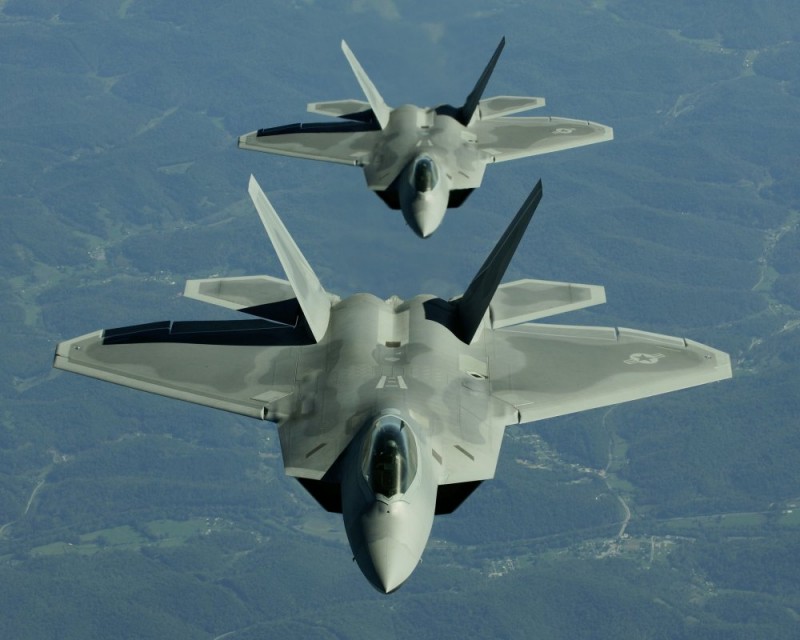
I can't seem to figure out captions, so that's a pair of F-22's to the left and a single F-35 below to the right.
 As I mentioned a few posts ago, one of my major concerns about a Democratic victory in the November Elections is that they will cut new weapons programs to free up money for domestic spending. This attitude can be seen in this report by the Council on Foreign Relations. The general thrust of the report is that the military doesn’t need all the new expensive weapons in development, especially with the current wars ongoing. Yet this concept of mortgaging our future military power to make the present situation cheaper would be a grave mistake if carried out.
 As I mentioned a few posts ago, one of my major concerns about a Democratic victory in the November Elections is that they will cut new weapons programs to free up money for domestic spending. This attitude can be seen in this report by the Council on Foreign Relations. The general thrust of the report is that the military doesn’t need all the new expensive weapons in development, especially with the current wars ongoing. Yet this concept of mortgaging our future military power to make the present situation cheaper would be a grave mistake if carried out.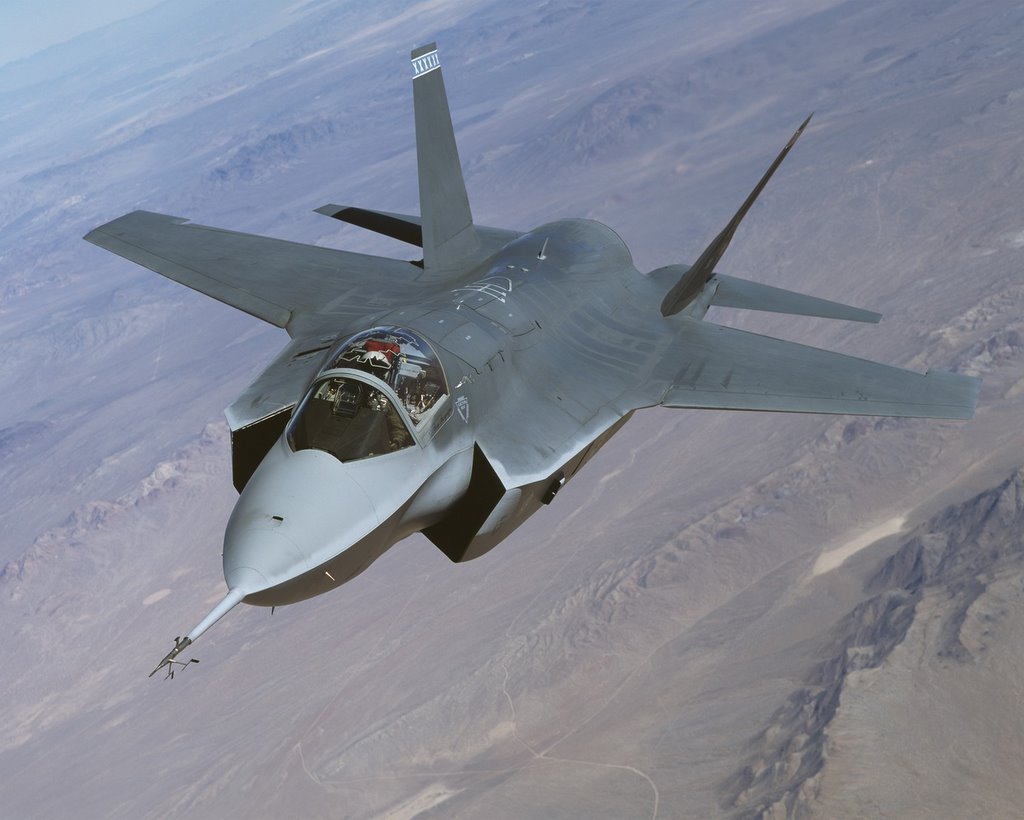
One of the major focuses of the report, and the Democrats, is Air Force fighter procurement. Probably the most glaring error in this report is that it claims US fighters are superior to anything around the world for the foreseeable future (something Democrats have also claimed). That is flat out wrong. This site has the results of the British Defense Evaluation and Research Agency study (near bottom of page) about the combat effectiveness of current and next generation fighters. As can be seen, no current US fighter, with the possible exception of the Navy’s Super Hornet, is a match for the Russian Su-35, Eurofighter Typhoon, or French Rafale. The article also notes that the Chinese J-10 (Pakistani F-10) regularly outperforms Su-35’s in training so that fighter may also be added to the list. Thus, far from our fighters being superior for the next decade or two, current and potential opponents like China, Russia, the countries Russia supplies weapons to (Venezuela, Iran, Syria, any other anti-American country with cash), Pakistan, and France either have or have access to better fighter planes than we do. While true that none of these countries approaches the US Air Force in training or experience, it does not mean that will remain the case forever. Even without the training to challenge the USAF directly, such advanced fighters would cause major problems for a US military dependant on total control of the air simply by being an X factor, or if you prefer an air force in being (that is, rather than doing things like supporting ground troops some American fighters will have to be on constant watch for them, missions must always take their presence into account, etc. depleting force strength).
Something that also has to be considered (the report does mention it near the end) is that the Air Force must contend not only with enemy fighters but also with enemy surface to air missiles. As SAM’s, radars, and communication equipment become more capable and widely utilized, we need to have something other than 20 $2 billion B-2’s and 36 well past their prime F-117’s that can reasonably operate against them. This isn’t a major problem if our enemy either gives us the time we need to pick apart their air defenses (Iraq 91) or doesn’t have a serious air defense (Iraq 03). However, seeing as the only occasions of that occurring involved the same stupendously stupid Saddam, we shouldn’t allow ourselves to rely on it. A war with China, North Korea, Iran, or any number of countries would not afford us either of those luxuries. The F-22 would especially fill this need as it is extremely stealthy, fast, maneuverable, and has a 2,000 lb bomb load. This makes the F-22 capable of performing, amongst its many other missions, the F-117’s vital mission. The F-22 would thus be doubly useful in the initial phase of a war as an air defense suppressor/ground attack (admittedly limited in this respect), and an air superiority fighter still capable of intercepting enemy aircraft (this is an Air Force story on the F-22's effectiveness, biased of course though still useful). Except in ground attack where it is 7 times more capable, the F-35 is not as stealthy, capable, or as expensive as the F-22. It is still useful since it’s far superior and not too much more expensive than the 25 year old F-16. It would also be more survivable in a weak but still operational air defense environment and versus the more advanced fighters now in service around the world. These would both limit the employment of the F-16 and raise their losses. It should go without saying that if our air support is limited or attritted, our ground forces will also suffer more casualties and a tougher war.
One of the biggest complaints is that no matter how effective these aircraft are at their missions, do we actually need them to perform those missions? It doesn’t take much thinking to realize that the F-22 would be of almost no use in Afghanistan or after the first day in Iraq. By this argument though, we hardly need an Air Force at all. A half dozen B-1’s and B-52’s plus several dozen A-10/F-16/F-18's are all that is needed in each country. Since that’s all we need for brushfire wars, then why should we keep around 500 F-15’s, 700 F-18, 900 F-16, 270 A-10, and 180 bombers? The reason should be obvious, the Air Force has more jobs than simply supporting counter-insurgency operations. The military in general needs to be prepared for both COIN and conventional wars, not only one or the other. If we make the opposite mistake we made during the Cold War, and only prepare for COIN wars then we will pay dearly for it in a future conventional war. If we get caught off guard and unprepared by a war with China, we will be lucky to keep the number of killed below 600 per week much less per year as in Iraq. While conventional wars are rarer and deterable, they are not deterred by throwing up 30 year old fighters against a nation(s) rapidly arming with the latest fighters and missiles. That is simply a recipe for miscalculation, the mother of great power wars.
So on to another complaint, though the F-22 and F-35 would be an extremely effective pair, are they worth the great expense? The heart of this question is whether the F-15 and F-16 are still capable enough to do the job at much lower cost. The advantages versus SAM’s and in supporting ground troops is hard to quantify beyond saying the F-22/F-35 would be more capable than current aircraft (venerable A-10 excepted). The F-35 isn’t as much in debate since its total cost per plane of $115 million is not that great. The bigger debate is over the F-22 and its $340 million per plane price tag quoted by critics. The first thing to realize is that of the $340 million, $150 million represents development cost that we have mostly already paid. Moreover, it is unfair to attribute all of that cost to the F-22 since its R&D spending has helped lower the development cost for the F-35 and various UAV’s. A further $50 million (based on the $137 million construction cost) is the cost of setting up the production line that has mostly been paid as well. This $200 million of the price tag is essentially fixed and is therefore dependant on the number of aircraft purchased and would drop to $100 million if 360 F-22’s were purchased instead of 180. It would also be lower if the Congress would approve the FB-22. This would be a fighter-bomber based on the F-22 with somewhat inferior air-to-air capabilities replaced with a far superior 7,500 lb payload and range.
Whatever the price, how does the F-22 stack up against its rivals? The aforementioned DERA fighter study indicates how it would in a straight up fight. Although US fighters will likely never be in a straight up fight, it does still provide a good indication of their relative performance. The following table has the kill ratios vs the F-22 of various current aircraft from the DERA study, the purchase price of each aircraft from Defense-Aerospace.com amongst others, and then their total price per kill and vs the F-22. (note: the F-35 was not including in the DERA study, I just used the roughly 3:1 capability difference between the F-15 and F-16 as guideline)
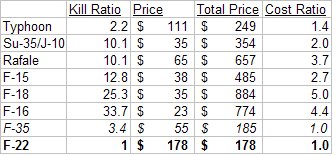 It thus becomes evident that far from being the most expensive aircraft for conventional conflict, the F-22 is one of the cheapest. Further, it should be noted that in addition to dollars, losing almost 13 F-15’s compared with 1 F-22 means 12 more lost pilots.
I am certainly not arguing for the defunding of the current wars or COIN preparations in favor of conventional war programs like the F-22 and F-35. The cost of these two programs is $8.1 billion this year. We are completely capable of funding them, current operations, and future COIN programs at the same time. If one or the other is not receiving enough then we need to increase the defense budget, not eliminate any of the programs. If necessary, this is one of the rare situations where it is better to under fund each somewhat than it is to fund 2 completely and 1 not at all. We have to be able to conduct brushfire wars or else the chaos in much of the world will spread and eventually possibly threaten the civilized word. But we also must not make the same mistake the British made twice and focus solely on “imperial policing”, thereby simultaneously raising the odds of a great war and its length and severity. Around an extra $150 billion a year to guard against each outcome is a small price to pay given the cost of ignoring them (e.g., WWII would cost us something like $30 trillion today). If the Republicans do not fully understand that now, they at least will when it becomes unavoidable. The modern Democrats never have or will.
Tuesday, October 24, 2006
Newsflash!! Elections decided by votes not by pre-election random polls, Democrats perplexed, Republicans respond: Duh
Trolling through political chat rooms, talking with liberals at school/work, or reading the Opinion Journal (third story), it becomes apparent that the left is yet again calling the election in their favor 3-4 weeks out (in some cases in a major way, 40 House and 7 Senate pickups!! update: now some saying 60 House and 8 Senate, if it keeps growing like this the Dems will be up to 232 House and, I think, 14 Senate by the election). I know, I know, they claim they are going to win every election years in advance, but it’s not until a few weeks out that they really really believe it. This causes the post-election meltdowns that we see every two years. This time is a little different in that lefties are beginning to talk more openly about civil disturbances if they don’t win this election. I don’t think it will actually materialize to any great extent, but violence does begin with talk. Also, it’s what leftist are doing elsewhere as can be seen in Mexico.
They believe they should win every election since the media produced countless polls showing the Democrats winning, and since they know the American people agree with them (why they don't know anyone at their San Fransico latte club who votes Republican). Therefore, the only answer for their loss must be that the Republicans stole the election and their victory. The fact that, as I’ve known since kindergarten, elections are not decided until Election Day still hasn’t been learned by some on the left. It also only took me one election (2000) to learn to not fall for the inevitability trap. Like most Republicans I thought Bush was a shoe in. Then Election Day came, and despite the fact that it was still a Bush victory, I learned to never again take victory for granted. It would be nice if the left would learn this and other electoral lessons like sometimes you lose, no amount of random sampling will ever be able to reliably predict a vote, and its not a dirty political trick for Republicans to tell the people what Democrats believe (Heaven knows the Democrats and the media won’t do it).
They believe they should win every election since the media produced countless polls showing the Democrats winning, and since they know the American people agree with them (why they don't know anyone at their San Fransico latte club who votes Republican). Therefore, the only answer for their loss must be that the Republicans stole the election and their victory. The fact that, as I’ve known since kindergarten, elections are not decided until Election Day still hasn’t been learned by some on the left. It also only took me one election (2000) to learn to not fall for the inevitability trap. Like most Republicans I thought Bush was a shoe in. Then Election Day came, and despite the fact that it was still a Bush victory, I learned to never again take victory for granted. It would be nice if the left would learn this and other electoral lessons like sometimes you lose, no amount of random sampling will ever be able to reliably predict a vote, and its not a dirty political trick for Republicans to tell the people what Democrats believe (Heaven knows the Democrats and the media won’t do it).
Monday, October 23, 2006
Why I Oppose the "Cut Off the Nose to Spite the Face" Republicans 2: Illegal Immigrant Amnesty
This follows my last post about why I will vote Republican (even for Republican moderates like DeWine and Pryce) this election despite not being entirely enthralled with the Party’s performance. The last post covered defense spending and this one will cover illegal immigration. The reality is that just as the Democrats can do lasting damage to our country and the world by not providing the military with a sufficient budget, they can also cause permanent damage with illegal immigration. It's, of course, not 100% certain that this will happen, but it is devestating and likely enough to be very concerned.
Within the government, the only check on the liberal-Bush illegal immigrant amnesty plan was the House Republican caucus. The notion that amnesty will not move forward despite the elimination of this sole check is lunacy. The prospect of another “immigration reform” bill is very real and worrisome following a Democrat win in November. Again, the Republicans are not perfect on the issue but they are far far better than the Democrats. So much so that I really do not understand why some Conservatives who say this is their number one issue are so willing to throw out the Republicans and see their worst nightmare happen.
The basic premise behind this is that a Democrat House/Congress will not “accomplish” much over the next 2 years beside raising the minimum wage and limiting defense spending. Similarly, President Bush will also be unable to get anything done in his last two years. About the only major issue that both the Democrats and the President agree is illegal immigrant amnesty. Is there any doubt that if they don’t instantly recognize this that they will by the end of the session? They both will have the desire, interest, and power to see that an amnesty happens; what more do they need?
The Democrats in particular will like the results of an amnesty. True the natives may not like it so much, but as the Republicans who think it’s a good idea to cut off the Republican nose to spite the Republican face plan to show, all that will happen is they won’t vote so as to teach the country a lesson. As far as the Democrats are concerned it’s win-win. The Democrats understand that native demographics are working against them. Birth rates in blue states are at European level deathbed levels compared with reasonable rates in the red states. Simply put, basing your political power on DINK’s, single women, Episcopalians (along with other so called Christians) and homosexuals is not a recipe for long term success. The Democrats need new blood and the 10-15 million illegals are just what the doctor ordered in their eyes.
This would be nothing surprising for a leftwing party. Leftists are the same the world over so it is instructive to see how other leftwing parties are dealing with similar situations. In the Low Countries the socialists reacted to the increasingly rightwing voting habits of the natives by allowing immigrants to vote. The effect was to allow them to hold onto power in the recent elections that they would have lost without the immigrant votes. The downside for the country is that the Muslims are demanding Islamic government policies. But the Leftists keep their power a little longer and that’s all they care about.
Fortunately we have not allowed our immigration problem to get as out of hand as Europe’s, but a similar policy could still lock in a permanent Democrat majority. The country is, at best for conservatives, broken about 53-47 (right-left). In total votes all it would take to swing that is around 7 million. I think the Dems will be able to manage that at some point out of the 10-15 million illegals to which they granted citizenship and welfare. Even should the natives revolt at such a policy, the best we can expect is we will get a small conservative majority. It won’t take long for enough new illegals to arrive, and cut off the nose to spite the face Republicans not voting, for the Dems to eventually become a permanent majority. While this won’t move our politics in an Islamist manner as is happening in Belgium and Holland, it will move it in a Latin Socialist manner.
Admittedly, it will be a constant fight to prevent this outcome. Big business, a faction of the Republican Party, and the entire Democrat Party are too in bed with illegal immigration to make amnesty go away. All it will take to see one occurs is for Democrats and/or the pro-illegal faction of the Republican Party to control the Presidency, House, and Senate. Right now the pro-illegal Republicans control the Presidency and the Senate. Republicans who oppose an amnesty will simply turn over the only one of the three opposed to an amnesty to the pro-amnesty Democrats by not voting. This will cause the issue, and by extension the country, that these Republicans care so much about to be permanently lost. Quite a price to pay for a temper tantrum.
Within the government, the only check on the liberal-Bush illegal immigrant amnesty plan was the House Republican caucus. The notion that amnesty will not move forward despite the elimination of this sole check is lunacy. The prospect of another “immigration reform” bill is very real and worrisome following a Democrat win in November. Again, the Republicans are not perfect on the issue but they are far far better than the Democrats. So much so that I really do not understand why some Conservatives who say this is their number one issue are so willing to throw out the Republicans and see their worst nightmare happen.
The basic premise behind this is that a Democrat House/Congress will not “accomplish” much over the next 2 years beside raising the minimum wage and limiting defense spending. Similarly, President Bush will also be unable to get anything done in his last two years. About the only major issue that both the Democrats and the President agree is illegal immigrant amnesty. Is there any doubt that if they don’t instantly recognize this that they will by the end of the session? They both will have the desire, interest, and power to see that an amnesty happens; what more do they need?
The Democrats in particular will like the results of an amnesty. True the natives may not like it so much, but as the Republicans who think it’s a good idea to cut off the Republican nose to spite the Republican face plan to show, all that will happen is they won’t vote so as to teach the country a lesson. As far as the Democrats are concerned it’s win-win. The Democrats understand that native demographics are working against them. Birth rates in blue states are at European level deathbed levels compared with reasonable rates in the red states. Simply put, basing your political power on DINK’s, single women, Episcopalians (along with other so called Christians) and homosexuals is not a recipe for long term success. The Democrats need new blood and the 10-15 million illegals are just what the doctor ordered in their eyes.
This would be nothing surprising for a leftwing party. Leftists are the same the world over so it is instructive to see how other leftwing parties are dealing with similar situations. In the Low Countries the socialists reacted to the increasingly rightwing voting habits of the natives by allowing immigrants to vote. The effect was to allow them to hold onto power in the recent elections that they would have lost without the immigrant votes. The downside for the country is that the Muslims are demanding Islamic government policies. But the Leftists keep their power a little longer and that’s all they care about.
Fortunately we have not allowed our immigration problem to get as out of hand as Europe’s, but a similar policy could still lock in a permanent Democrat majority. The country is, at best for conservatives, broken about 53-47 (right-left). In total votes all it would take to swing that is around 7 million. I think the Dems will be able to manage that at some point out of the 10-15 million illegals to which they granted citizenship and welfare. Even should the natives revolt at such a policy, the best we can expect is we will get a small conservative majority. It won’t take long for enough new illegals to arrive, and cut off the nose to spite the face Republicans not voting, for the Dems to eventually become a permanent majority. While this won’t move our politics in an Islamist manner as is happening in Belgium and Holland, it will move it in a Latin Socialist manner.
Admittedly, it will be a constant fight to prevent this outcome. Big business, a faction of the Republican Party, and the entire Democrat Party are too in bed with illegal immigration to make amnesty go away. All it will take to see one occurs is for Democrats and/or the pro-illegal faction of the Republican Party to control the Presidency, House, and Senate. Right now the pro-illegal Republicans control the Presidency and the Senate. Republicans who oppose an amnesty will simply turn over the only one of the three opposed to an amnesty to the pro-amnesty Democrats by not voting. This will cause the issue, and by extension the country, that these Republicans care so much about to be permanently lost. Quite a price to pay for a temper tantrum.
Saturday, October 21, 2006
Why I Oppose the "Burn the Village to Save It" Republicans 1: Defense Spending
Like most conservatives, I have more than a few gripes with the Republican Congress. However, I refuse to join those conservatives who think that the best way to save the Republican village is to burn it down for several reasons (they are more commonly known as cut-and-run conservatives). Everyone is, or should be, aware of the Democrat’s plans with taxes, spending, regulation, illegal immigrant amnesty, etc. Those certainly motivate me to do my part in keeping them out of power (the last one much more than the other three) but there is another major reason that hasn’t been discussed, what Pelosi-Reid et al will do to the defense budget.
Even now we are not spending what we should on the military during peacetime much less during war. Peacetime base military spending should be around 4.5% of GDP or about $630 billion in 2007. Next year we will only spend $440 billion or 3.1%. This would be one of my complaints about the Republicans. Given how important military spending is to me (it’s one of my top issues) I should stay home to teach the Republicans and America a lesson according to the burn-the-village-to-save-it Republicans. I will not since doing so will cause the penny-wise pound-foolish Democrats to gain the spending power over the military which is far worse than a repeat of the last Congress.
This is a dangerous possibility as the bills come due from the Clinton procurement holiday of the 90’s at the same time procurement costs escalate rapidly to purchase the new advanced weapons our military needs to stay on top. These expenses can be seen from the future estimated spending in the 2007 defense budget. (in billions of 2007 $)
2007- 84,197
2008- 97,688
2009- 104,148
2010- 104,870
2011- 108,167
In all likelihood this will not be enough to properly equip our military but it is most definitely better than allowing the Democrats to have any influence over the nation’s purse strings. Also, the Republicans have shown that when it becomes more obvious that it isn't enough, they will increase the spending to compensate.
We can be certain that the Democrats will not for two reasons; first it’s what they’ve done in the past, and second their planned policies will leave them no choice. The only two times that the American people were foolish enough to give the modern Democrats control of the government was in 1977-1980 and 1993-1994. In 1993-1994 the Democrats slashed the procurement budget a whopping 24% to only half its 1990 level. The defense budget would go on to shrink every year under Clinton until the Republicans realized the damage being done and began to trade some domestic spending for increased military spending in 1998-2000. No the Republicans weren’t perfect but they sure did a better job than Clinton or the Dems at ensuring our military had proper funding. That was during peacetime, surely the Dems wouldn’t do that during a conflict? From 1977-1980 they did. During four years of power by the Watergate Democrats the military budget increased a mere 1% (I’m excluding 1981 even though it should be included because if I recall Reagan forced through extra spending for the year and if not then Carter no doubt only allowed higher spending to head off Reagan, not because he wanted to). Again, only the Republicans caused military spending to remain at least near proper levels.
It is not only the Democrats’ past that points to their future, but also the Democrats themselves. The Democrats' raise taxes, raise domestic spending, and pay as you go budgeting will prevent the above procurement increases and may even require reductions. This is all the more so since the Democrats have said they oppose many new weapons programs (again as they have in the past). The primary target would most likely be the F-22 Raptor program. We have already paid for about half of this $62 billion program. The rest will be paid out over the next 6-10 years for production of the fighter barring any unfortunate elections. Some Democrats have called for the purchase of F-15’s instead of the F-22. Now the F-15 is a great fighter, but it is over 30 years old. The Europeans and Russians have more advanced fighters that they are selling to anyone with the money to buy them. We cannot allow a situation where Venezuela has better fighters than we do. Our Navy needs to increase its number of warships to counter the growth of navies around the world. Even the modest increase asked for by the Navy will cost an extra $20 billion over the next 5 years. However, some of the biggest supporters of this are in close elections and would be replaced by far less interested Democrats. It also goes without saying that the roughly $9 billion a year National Missile Defense budget would not remain at such levels. These are only three programs, but they total nearly $20 billion a year. When the Dems find out that their tax increases aren’t enough to support their new domestic spending (which will happen almost immediately), it won’t be long before they cast an eye towards these programs.
It is true that President Bush would at least be in office for the next 2 years so the Democrats won’t be completely free to take an axe to the military budget as they would like. The damage they could do is bad enough though. Since the Republicans are spending the bare minimum as it is, any reduction resulting from budget negotiations would severly compromise our military's future. Military procurement programs require years of stable funding. They cannot simply be turned on and off like a light switch. It is very expensive to restart a program after it has been cancelled or downsized. As such it will cost us dearly to correct the Democrats defense spending and program cuts. If the Democrats do not cut new programs then they will have to cut procurement for new equipment to replace equipment worn out or lost in Afghanistan and Iraq. Either way our military will not receive the amount of funding it needs to deal with the present and the future. We will also lose the time that these weapons could have been available to our soldiers. Even if Republicans do retake Congress and restore funding, if trouble flairs over Taiwan in 2010 our soldiers will desperately miss, and be killed by the absence of, the F-22’s, NMD, and more capable warships Democrats refused to fund 3 years earlier.
As can be seen by a short read of history, military underfunding can be a direct cause of war. World War I was started because the Germans believed they could defeat Britain, France, and Russia at the same time. Part of this was because the British only spent about 2.25% of their economy on defense, compared with 3-6% in Europe. Had the British, like the Germans, spent 4% on defense then the Germans would likely not have calculated that they could knock off France before Britain was prepared for war. It is a similar story in 1939 when the British again badly underfunded their military while the Germans spent like crazy in preparation for the coming war. Admittedly, the left-wing British government did increase military spending in 1938 but to their dismay, military spending takes time to translate into actual ships, planes, weapons, and soldiers. As I’ve written before the British certainly had the capacity to stop Hitler had they not been so parsimonious with defense spending in the 1930’s (yes they had good reasons to not be gun-ho but given the price of their mistake we don’t have an excuse to copy them). Lastly, it was not a coincidence that the biggest period of post World War II Soviet expansionism occurred during Carter’s military spending freeze. The great game of global power politics continues unabated whether we like it or not. The more margin that our weaker military leaves other powers, the more likely they are to take advantage of it to our detriment.
Despite the Republicans not spending to the level I think necessary on defense, they are at least spending more than the Democrats would. I also trust the Republicans to not force the military to choose between the present and future when the cost of the procurement holiday comes up against the cost of new weapon programs. The Democrats have shown by their past and their present statements that they are not trustworthy on military spending. The British paid the price twice for undercutting military spending, we paid the price in the 1980’s to defeat the rejuvenated Soviet Union, and we will soon pay the price for the “peace dividend” of the 1990’s. We cannot allow ourselves to make that mistake again. Even though Republicans are not perfect on the issue, they are good, and I will not help the perfect become the enemy of the good by helping to elect a party who is terrible on one of the most important issues to myself and my country.
Even now we are not spending what we should on the military during peacetime much less during war. Peacetime base military spending should be around 4.5% of GDP or about $630 billion in 2007. Next year we will only spend $440 billion or 3.1%. This would be one of my complaints about the Republicans. Given how important military spending is to me (it’s one of my top issues) I should stay home to teach the Republicans and America a lesson according to the burn-the-village-to-save-it Republicans. I will not since doing so will cause the penny-wise pound-foolish Democrats to gain the spending power over the military which is far worse than a repeat of the last Congress.
This is a dangerous possibility as the bills come due from the Clinton procurement holiday of the 90’s at the same time procurement costs escalate rapidly to purchase the new advanced weapons our military needs to stay on top. These expenses can be seen from the future estimated spending in the 2007 defense budget. (in billions of 2007 $)
2007- 84,197
2008- 97,688
2009- 104,148
2010- 104,870
2011- 108,167
In all likelihood this will not be enough to properly equip our military but it is most definitely better than allowing the Democrats to have any influence over the nation’s purse strings. Also, the Republicans have shown that when it becomes more obvious that it isn't enough, they will increase the spending to compensate.
We can be certain that the Democrats will not for two reasons; first it’s what they’ve done in the past, and second their planned policies will leave them no choice. The only two times that the American people were foolish enough to give the modern Democrats control of the government was in 1977-1980 and 1993-1994. In 1993-1994 the Democrats slashed the procurement budget a whopping 24% to only half its 1990 level. The defense budget would go on to shrink every year under Clinton until the Republicans realized the damage being done and began to trade some domestic spending for increased military spending in 1998-2000. No the Republicans weren’t perfect but they sure did a better job than Clinton or the Dems at ensuring our military had proper funding. That was during peacetime, surely the Dems wouldn’t do that during a conflict? From 1977-1980 they did. During four years of power by the Watergate Democrats the military budget increased a mere 1% (I’m excluding 1981 even though it should be included because if I recall Reagan forced through extra spending for the year and if not then Carter no doubt only allowed higher spending to head off Reagan, not because he wanted to). Again, only the Republicans caused military spending to remain at least near proper levels.
It is not only the Democrats’ past that points to their future, but also the Democrats themselves. The Democrats' raise taxes, raise domestic spending, and pay as you go budgeting will prevent the above procurement increases and may even require reductions. This is all the more so since the Democrats have said they oppose many new weapons programs (again as they have in the past). The primary target would most likely be the F-22 Raptor program. We have already paid for about half of this $62 billion program. The rest will be paid out over the next 6-10 years for production of the fighter barring any unfortunate elections. Some Democrats have called for the purchase of F-15’s instead of the F-22. Now the F-15 is a great fighter, but it is over 30 years old. The Europeans and Russians have more advanced fighters that they are selling to anyone with the money to buy them. We cannot allow a situation where Venezuela has better fighters than we do. Our Navy needs to increase its number of warships to counter the growth of navies around the world. Even the modest increase asked for by the Navy will cost an extra $20 billion over the next 5 years. However, some of the biggest supporters of this are in close elections and would be replaced by far less interested Democrats. It also goes without saying that the roughly $9 billion a year National Missile Defense budget would not remain at such levels. These are only three programs, but they total nearly $20 billion a year. When the Dems find out that their tax increases aren’t enough to support their new domestic spending (which will happen almost immediately), it won’t be long before they cast an eye towards these programs.
It is true that President Bush would at least be in office for the next 2 years so the Democrats won’t be completely free to take an axe to the military budget as they would like. The damage they could do is bad enough though. Since the Republicans are spending the bare minimum as it is, any reduction resulting from budget negotiations would severly compromise our military's future. Military procurement programs require years of stable funding. They cannot simply be turned on and off like a light switch. It is very expensive to restart a program after it has been cancelled or downsized. As such it will cost us dearly to correct the Democrats defense spending and program cuts. If the Democrats do not cut new programs then they will have to cut procurement for new equipment to replace equipment worn out or lost in Afghanistan and Iraq. Either way our military will not receive the amount of funding it needs to deal with the present and the future. We will also lose the time that these weapons could have been available to our soldiers. Even if Republicans do retake Congress and restore funding, if trouble flairs over Taiwan in 2010 our soldiers will desperately miss, and be killed by the absence of, the F-22’s, NMD, and more capable warships Democrats refused to fund 3 years earlier.
As can be seen by a short read of history, military underfunding can be a direct cause of war. World War I was started because the Germans believed they could defeat Britain, France, and Russia at the same time. Part of this was because the British only spent about 2.25% of their economy on defense, compared with 3-6% in Europe. Had the British, like the Germans, spent 4% on defense then the Germans would likely not have calculated that they could knock off France before Britain was prepared for war. It is a similar story in 1939 when the British again badly underfunded their military while the Germans spent like crazy in preparation for the coming war. Admittedly, the left-wing British government did increase military spending in 1938 but to their dismay, military spending takes time to translate into actual ships, planes, weapons, and soldiers. As I’ve written before the British certainly had the capacity to stop Hitler had they not been so parsimonious with defense spending in the 1930’s (yes they had good reasons to not be gun-ho but given the price of their mistake we don’t have an excuse to copy them). Lastly, it was not a coincidence that the biggest period of post World War II Soviet expansionism occurred during Carter’s military spending freeze. The great game of global power politics continues unabated whether we like it or not. The more margin that our weaker military leaves other powers, the more likely they are to take advantage of it to our detriment.
Despite the Republicans not spending to the level I think necessary on defense, they are at least spending more than the Democrats would. I also trust the Republicans to not force the military to choose between the present and future when the cost of the procurement holiday comes up against the cost of new weapon programs. The Democrats have shown by their past and their present statements that they are not trustworthy on military spending. The British paid the price twice for undercutting military spending, we paid the price in the 1980’s to defeat the rejuvenated Soviet Union, and we will soon pay the price for the “peace dividend” of the 1990’s. We cannot allow ourselves to make that mistake again. Even though Republicans are not perfect on the issue, they are good, and I will not help the perfect become the enemy of the good by helping to elect a party who is terrible on one of the most important issues to myself and my country.
Thursday, October 19, 2006
Taxing Polls
Just a disclaimer, there's some boring math and so forth in this post so read at your own risk.
As the election draws nearer I will be a bit more political than usual (well actually anything is more political than usual since I haven’t posted in 5 weeks, but anyways). So with the campaign season comes the usual festivities. Pollsters and pundits can find work again, producing wildly offbase polls for the former and using those absurd polls to predict the death of the Republican Party for the latter. Lefties believe said polls and pundits along with other fever swamp theories about the Bushitler personally supplying and testing North Korea’s nuke, then personally cutting Corey Lidle’s gas line so he would crash into a New York building, and finally rushing back to the White House to send emails to the NFL threatening dirty bomb attacks on football stadiums. Sigh, if only he would use his genius for good. The Democrats are on their usual no holds bar quest for power. When not outing gay Republicans they are busily trying to divine whether a GOP senator used the “N-word” some 40 years ago and hiring Nazi genealogists to determine if this senator also has the blood of the Juden in his veins. If you think that would be the limit you'd be wrong, they are also throwing oreo’s at a black GOP senate candidate while having Nazi ethnologists decide if his contributors have features of the Juden. Ahhh, makes you feel like a kid Christmas time, you just wish it could go on all year.
The key to all this election year behavior is the polls. I know, it seems like every election we go through the same routine. Polls predict GOP rout, lefties get irrationally exuberant, election happens, their bubble pops, and then we get to listen to them cry about it and come up with dark conspiracy theories about stolen elections, questioned patriotism, created terrorism, and such until the next election season when we start the cycle all over. So in the spirit of trying to help some lefties become rationally exuberant, and some conservatives to not be so irrationally depressed, I’ll analyze a recent poll and point to some other analyses of polls that support my theory that polls are becoming more and more useless.
This is a recent New York Times-CBS poll for the Ohio Senate race. I picked it not only because it is at the high end for Sherrod Brown but also because it is the only one of the five recent polls to include internals. It has DeWine losing by 14 points. The first thing to note is that the poll has almost 100 questions and fills up 30 pages! As is one of the oldest complaints about these polls, obviously the middle aged middle income couple with kids who make up the bulk of voters and the bulk of the Republican Party do not have the time to answer these things. Nevertheless, delving down to the bottom of the report they have the poll's weighting. Of all respondents the Rep/Dem breakdown is 30/34. Not too unreasonable, the 2004 exit poll had the party breakdown in Ohio at 40/36 so it’s sort of close. Then they weight it to a 27/34 breakdown without saying how or why they did it.
They then further adjust the poll for “likely voters”. They only show the likely voter total (693 out of 1164) and like the weighted total they do not say how this number was calculated. It seems to have been done by simply multiplying the weighted respondents by the number who said they will “definitely vote” (page 15, question 2) since I arrive at 684 “likely voters” and also the same Brown by 14 result doing that. I thought pollsters had some elaborate method of foretelling who would vote and who wouldn’t, but I guess I was wrong. So after correcting for “likely voters” the poll sample is (R/D) 27/37. Again, this is compared to 2004’s 40/36. The change per party (with independents tossed in) is -13/+1/+14. Anyone who has followed politics for more than just this year would recognize this result is ridiculous.
It is possible this year will have lower Republican turnout, but 33% lower? We can also compare these weights to historical turnout (state election website). In 1998 and 2002 (picked since they followed motor voter and such laws that caused a major increase in registration and corresponding drop off in turnout) turnout was 49% in Ohio. In the 2002 primary turnout was 19.4% with 586,000 Dems and 659,000 Reps voting. In 1998 primary turnout was 28% with no partisan breakdown. This year’s primary turnout was 24% with 872,000 Dems and 870,000 Reps voting. So yes this indicates higher Dem turnout but not a 27/37 advantage. It also means that if turnout is 49% or thereabouts again and Republicans are only 27% of voters then Republicans will only increase their turnout 12% over the primary. Further, the poll has likely voters at 70% of registered voters which means a full 30% of them are lying and shouldn’t count. This causes the poll to be worthless, are those 30% DeWine voters, or Brown voters? Or they could be equally both, no one knows. My own guess, for what little it is worth, is that the turnout will be (R/D) 36-37/38-39.
Others have picked up on this line of reasoning as they do before each election. Rich Lowry at the National Review has a good review of the partisan weighting of the “Generic Ballot” polls (which are even more useless than Senate polls). In short, they are also grossly over-weighted in favor of the Democrats. Also at the National Review, Jim Geraghty reviews a lot of House polls from across the country. He looks at polls from the same district released during the same time. Despite being the same district and the same time frame the polls have radically different results. For example, in Iowa-1 a poll has the Democrat up 11 points while another has the Republican up 13 points. So either it’s a major win for the Dems or it’s a major loss for them. You can see this in the DeWine-Brown race. Looking at the Real Clear Politics list of polls, Brown is either up 4 (Zogby) or 14 (NYT-CBS). Overall, it’s the same as it is every election. Media polls show Democrat victory, election reveals Republican victory (though certainly less of one this year than most), sun rises, sun sets.
Update: Looks like every leftie's favorite pollster (Zogby for those who didn't know) has a series of good Senate polls for the Republicans. I swore off Zogdby long ago (Kerry winning Florida and Ohio my, ahem) and put no credance in any of his polls but since lefties love him there you have it.
As the election draws nearer I will be a bit more political than usual (well actually anything is more political than usual since I haven’t posted in 5 weeks, but anyways). So with the campaign season comes the usual festivities. Pollsters and pundits can find work again, producing wildly offbase polls for the former and using those absurd polls to predict the death of the Republican Party for the latter. Lefties believe said polls and pundits along with other fever swamp theories about the Bushitler personally supplying and testing North Korea’s nuke, then personally cutting Corey Lidle’s gas line so he would crash into a New York building, and finally rushing back to the White House to send emails to the NFL threatening dirty bomb attacks on football stadiums. Sigh, if only he would use his genius for good. The Democrats are on their usual no holds bar quest for power. When not outing gay Republicans they are busily trying to divine whether a GOP senator used the “N-word” some 40 years ago and hiring Nazi genealogists to determine if this senator also has the blood of the Juden in his veins. If you think that would be the limit you'd be wrong, they are also throwing oreo’s at a black GOP senate candidate while having Nazi ethnologists decide if his contributors have features of the Juden. Ahhh, makes you feel like a kid Christmas time, you just wish it could go on all year.
The key to all this election year behavior is the polls. I know, it seems like every election we go through the same routine. Polls predict GOP rout, lefties get irrationally exuberant, election happens, their bubble pops, and then we get to listen to them cry about it and come up with dark conspiracy theories about stolen elections, questioned patriotism, created terrorism, and such until the next election season when we start the cycle all over. So in the spirit of trying to help some lefties become rationally exuberant, and some conservatives to not be so irrationally depressed, I’ll analyze a recent poll and point to some other analyses of polls that support my theory that polls are becoming more and more useless.
This is a recent New York Times-CBS poll for the Ohio Senate race. I picked it not only because it is at the high end for Sherrod Brown but also because it is the only one of the five recent polls to include internals. It has DeWine losing by 14 points. The first thing to note is that the poll has almost 100 questions and fills up 30 pages! As is one of the oldest complaints about these polls, obviously the middle aged middle income couple with kids who make up the bulk of voters and the bulk of the Republican Party do not have the time to answer these things. Nevertheless, delving down to the bottom of the report they have the poll's weighting. Of all respondents the Rep/Dem breakdown is 30/34. Not too unreasonable, the 2004 exit poll had the party breakdown in Ohio at 40/36 so it’s sort of close. Then they weight it to a 27/34 breakdown without saying how or why they did it.
They then further adjust the poll for “likely voters”. They only show the likely voter total (693 out of 1164) and like the weighted total they do not say how this number was calculated. It seems to have been done by simply multiplying the weighted respondents by the number who said they will “definitely vote” (page 15, question 2) since I arrive at 684 “likely voters” and also the same Brown by 14 result doing that. I thought pollsters had some elaborate method of foretelling who would vote and who wouldn’t, but I guess I was wrong. So after correcting for “likely voters” the poll sample is (R/D) 27/37. Again, this is compared to 2004’s 40/36. The change per party (with independents tossed in) is -13/+1/+14. Anyone who has followed politics for more than just this year would recognize this result is ridiculous.
It is possible this year will have lower Republican turnout, but 33% lower? We can also compare these weights to historical turnout (state election website). In 1998 and 2002 (picked since they followed motor voter and such laws that caused a major increase in registration and corresponding drop off in turnout) turnout was 49% in Ohio. In the 2002 primary turnout was 19.4% with 586,000 Dems and 659,000 Reps voting. In 1998 primary turnout was 28% with no partisan breakdown. This year’s primary turnout was 24% with 872,000 Dems and 870,000 Reps voting. So yes this indicates higher Dem turnout but not a 27/37 advantage. It also means that if turnout is 49% or thereabouts again and Republicans are only 27% of voters then Republicans will only increase their turnout 12% over the primary. Further, the poll has likely voters at 70% of registered voters which means a full 30% of them are lying and shouldn’t count. This causes the poll to be worthless, are those 30% DeWine voters, or Brown voters? Or they could be equally both, no one knows. My own guess, for what little it is worth, is that the turnout will be (R/D) 36-37/38-39.
Others have picked up on this line of reasoning as they do before each election. Rich Lowry at the National Review has a good review of the partisan weighting of the “Generic Ballot” polls (which are even more useless than Senate polls). In short, they are also grossly over-weighted in favor of the Democrats. Also at the National Review, Jim Geraghty reviews a lot of House polls from across the country. He looks at polls from the same district released during the same time. Despite being the same district and the same time frame the polls have radically different results. For example, in Iowa-1 a poll has the Democrat up 11 points while another has the Republican up 13 points. So either it’s a major win for the Dems or it’s a major loss for them. You can see this in the DeWine-Brown race. Looking at the Real Clear Politics list of polls, Brown is either up 4 (Zogby) or 14 (NYT-CBS). Overall, it’s the same as it is every election. Media polls show Democrat victory, election reveals Republican victory (though certainly less of one this year than most), sun rises, sun sets.
Update: Looks like every leftie's favorite pollster (Zogby for those who didn't know) has a series of good Senate polls for the Republicans. I swore off Zogdby long ago (Kerry winning Florida and Ohio my, ahem) and put no credance in any of his polls but since lefties love him there you have it.
Saturday, September 16, 2006
The (except America) No Armed Troops Organization
It used to be that NATO was considered the one international organization on which we could count. After all it was the “most successful alliance” in history and such. It also wasn’t full of corrupt and incompetent third worlders like the UN. However, the value of even this alliance is increasingly in question.
The fundamental flaw in NATO is similar to the problem with the UN, it has become extremely unbalanced in the capabilities, responsibility, and interests of its members. The rapid collapse of Europe in virtually all aspects of global power and influence is the heart of the problem. This has bred in Europe a desire to maintain the trappings of power and influence the only way they can (diplomacy) while avoiding any tough actions that would lay bare their impotence. They are further bedeviled by their rapidly growing Muslim minorities, their proximity to the rapidly growing homelands of said Muslims, and their rapidly growing class of retirees with their high social spending requirements. The former restricts European actions due to fear of social disturbances and the latter prevents European actions due to lack of military spending and the intense quest for money wherever it can be found.
We are seeing the results of an increasingly dysfunctional Europe today in Afghanistan. NATO has sent remarkably few troops given its European members have over 400 million people and 2 million soldiers. Recent requests for an additional 2,500 soldiers have apparently fallen on unconcerned ears. One of the few good European countries, Poland, has offered 900 soldiers but sadly their capability doesn’t match their courage and responsibility (we should increase aid to help the former). Norway has recently ordered their soldiers to redeploy to a safe northern province since they aren’t prepared for combat (no excuse in this case, Norway is as rich as us with much of it coming from oil). Meanwhile, what NATO forces are in the south are not capable of completely wiping out the Taliban in their area since we have yet again been burned by European promises.
The change in the world power structure highlighted here is nothing new or surprising and should be expected and adapted to. Europe is in an irreversible slide, Japan is reawakening, Russia is returning to great power status, China and India are rising, and a global anti-West socialist ideology is advancing throughout the third world and beginning to join forces with radical Islam. Bush has made great strides in refocusing our foreign policy to radical Islam and China, while deepening our alliance with Japan and India. Yet the central focus of our foreign policy continues to be on a Europe who more and more does not share either our capabilities or our interests. The world is going to keep on turning no matter how much we wish it would stay still.
The fundamental flaw in NATO is similar to the problem with the UN, it has become extremely unbalanced in the capabilities, responsibility, and interests of its members. The rapid collapse of Europe in virtually all aspects of global power and influence is the heart of the problem. This has bred in Europe a desire to maintain the trappings of power and influence the only way they can (diplomacy) while avoiding any tough actions that would lay bare their impotence. They are further bedeviled by their rapidly growing Muslim minorities, their proximity to the rapidly growing homelands of said Muslims, and their rapidly growing class of retirees with their high social spending requirements. The former restricts European actions due to fear of social disturbances and the latter prevents European actions due to lack of military spending and the intense quest for money wherever it can be found.
We are seeing the results of an increasingly dysfunctional Europe today in Afghanistan. NATO has sent remarkably few troops given its European members have over 400 million people and 2 million soldiers. Recent requests for an additional 2,500 soldiers have apparently fallen on unconcerned ears. One of the few good European countries, Poland, has offered 900 soldiers but sadly their capability doesn’t match their courage and responsibility (we should increase aid to help the former). Norway has recently ordered their soldiers to redeploy to a safe northern province since they aren’t prepared for combat (no excuse in this case, Norway is as rich as us with much of it coming from oil). Meanwhile, what NATO forces are in the south are not capable of completely wiping out the Taliban in their area since we have yet again been burned by European promises.
The change in the world power structure highlighted here is nothing new or surprising and should be expected and adapted to. Europe is in an irreversible slide, Japan is reawakening, Russia is returning to great power status, China and India are rising, and a global anti-West socialist ideology is advancing throughout the third world and beginning to join forces with radical Islam. Bush has made great strides in refocusing our foreign policy to radical Islam and China, while deepening our alliance with Japan and India. Yet the central focus of our foreign policy continues to be on a Europe who more and more does not share either our capabilities or our interests. The world is going to keep on turning no matter how much we wish it would stay still.
Wednesday, September 06, 2006
Friendly fire then and now
I’m vacationing at the moment so this is just a short observation. After the Gulf War the media went crazy over the friendly fire rate. I was a preteen at the time but was already watching the news and Discovery Channel. As such I remember the reports and shows about the unbelievably high “blue on blue” incidents during the war (to think of what things were like before the internet and Fox News, *shudder*). Why, they were much higher than in World War II, Korea, or Vietnam. Countless time was spent analyzing why this was the case and what should be done to fix it. As I recall the most common conclusion was that war had become to video gamey. All the thermal displays and night vision had made it too difficult for soldiers to tell who was who.
Even at the time I thought this attempt by the media to disparage whatever aspect they could of our massive victory to be silly. I thought the high friendly fire rate was merely the result of the Iraqi soldiers not doing their jobs. Had they been more competent and actually stood and fought then the friendly fire share of killed would be much lower. Thankfully the Iraqis didn’t even though that meant the friendly fire share was higher than usual. There were other peculiarities about that war that would have caused higher friendly fire casualties, it was a large and extremely aggressive mobile campaign, fought in the open desert, and fought day and night for the first time.
I was reminded of this by this article on strategypage.com about the number of friendly fire incidents in Iraq. Out of 2,100 killed in action since March 2003, only 21 have been due to friendly fire or 1%. This war, like all wars, also has its difference with past wars. Many of the killed are the result of I.E.D.’s that don’t have gunfights associated with them, engagements are mostly smaller scale with little operational maneuver that results in units unknowingly bumping into each other, and the soldiers are not dealing with a furious 24 hour tempo. Given the choice, I would prefer 21 friendly fire dead representing an absurdly high 35% of soldiers killed in action rather than 1% even if it causes the media to look down on trigger happy G.I.'s.
Nevertheless, it does show that American soldiers do not have an obsession with killing anything that moves, including fellow Americans. Unfortunately, that notion has been hammered into the minds of many around the world by this point. It is also further evidence that the media does not like the military or report fairly or intelligently about it. The military wins a conventional campaign quickly and with low casualties and the media still finds something that looks bad when incorrectly analyzed and beats the military over the head with it. Now it is ignoring the historically low friendly fire rate, once its pet cause, and instead focuses on casualty rates that are below those of the Filipino Insurrection and Vietnam (5 per 1,000 soldier-years for the Philippines vs. 20 in Vietnam vs. 4 today). Lastly, it further shows how incompetent the media is that they couldn’t figure out something an 11 year old boy could; that the high friendly fire share of the Gulf War was nothing endemic and would unfortunately not be as high when we faced an enemy who fought.
Even at the time I thought this attempt by the media to disparage whatever aspect they could of our massive victory to be silly. I thought the high friendly fire rate was merely the result of the Iraqi soldiers not doing their jobs. Had they been more competent and actually stood and fought then the friendly fire share of killed would be much lower. Thankfully the Iraqis didn’t even though that meant the friendly fire share was higher than usual. There were other peculiarities about that war that would have caused higher friendly fire casualties, it was a large and extremely aggressive mobile campaign, fought in the open desert, and fought day and night for the first time.
I was reminded of this by this article on strategypage.com about the number of friendly fire incidents in Iraq. Out of 2,100 killed in action since March 2003, only 21 have been due to friendly fire or 1%. This war, like all wars, also has its difference with past wars. Many of the killed are the result of I.E.D.’s that don’t have gunfights associated with them, engagements are mostly smaller scale with little operational maneuver that results in units unknowingly bumping into each other, and the soldiers are not dealing with a furious 24 hour tempo. Given the choice, I would prefer 21 friendly fire dead representing an absurdly high 35% of soldiers killed in action rather than 1% even if it causes the media to look down on trigger happy G.I.'s.
Nevertheless, it does show that American soldiers do not have an obsession with killing anything that moves, including fellow Americans. Unfortunately, that notion has been hammered into the minds of many around the world by this point. It is also further evidence that the media does not like the military or report fairly or intelligently about it. The military wins a conventional campaign quickly and with low casualties and the media still finds something that looks bad when incorrectly analyzed and beats the military over the head with it. Now it is ignoring the historically low friendly fire rate, once its pet cause, and instead focuses on casualty rates that are below those of the Filipino Insurrection and Vietnam (5 per 1,000 soldier-years for the Philippines vs. 20 in Vietnam vs. 4 today). Lastly, it further shows how incompetent the media is that they couldn’t figure out something an 11 year old boy could; that the high friendly fire share of the Gulf War was nothing endemic and would unfortunately not be as high when we faced an enemy who fought.
Sunday, September 03, 2006
Thoughts about a couple Muslim talking points
We kept hearing during the fighting in southern Lebanon about “disproportionate” Israeli action. Teeth were gnashed and hands were wrung by countless people over the fact that roughly 6 Arabs were dying for each Israeli. The Lebanese Prime Minister bemoaned what he said was the world valuing Israeli tears more than Lebanese blood. And so on it went. This was the same thing were heard regarding the Palestinians during their second intifada (where about 5 Arabs died for each Israeli). Yet, no one complains about the Arabs disproportionate prisoner swap demands. For one Israeli prisoner the Arabs routinely demand 400-1000 Arab prisoners. The same Arabs who decry what they say is counting an Arab as 1/6 an Israeli are counting their prisoners as 1/400 to 1/1000 an Israeli. It should also be noted that the Iranians have said trading 60 million Muslims for 6 million Jews is worth it since it is a loss of 6% of the world’s Muslims for 50% of its Jews. So the Arabs own Muslim brothers put the Muslim-Jew value at 1/10. For that matter, where are the complaints about the Alawis killing 20,000 at Hama for demanding democracy? Or when the Jordanians finally had enough of Palestinian terrorism and killed thousands, maybe tens of thousands, during Black September? Or are disproportionate responses only ok when it’s Goyim doing the killing? It would seem to me then that Israel is overvaluing Arabs by at least twofold and maybe as high as 170-fold based on the Muslims own view of their value.
Never mind that “proportionate” responses are never how a nation should respond. After Pearl Harbor we didn’t respond by bombing Kure Naval Base, killing exactly 2,400 Japanese, and then going home. We didn’t respond to the Lusitania sinking by demanding Imperial Germany load up a similar sized German vessel with 1,100 civilians so we could sink it. Nor was the Iranian response to Saddam’s limited invasion of Khuzestan province to invade a similar Iraqi province but to attempt to overthrow Saddam and occupy Iraq. In the world of geopolitics this is a non-issue.
This also touches on the similar Muslim talking point that the world in general and America in particular care a lot more about Israeli babies than Arab ones. Last I checked it wasn’t the Israelis but the Arabs who are sending their children on “martyrdom operations” and who are setting up rocket launchers and terrorist safe houses in places with lots of children about. Adding the Iranians to the mix again, it was they and not the Israelis who used their young boys by the hundreds of thousands as human mine clearers and machine gun fodder. Even if the Muslims are right about us caring more about Israeli babies than theirs (which I would disagree with that), the real questions are why do they expect others to care more about their children than they themselves do and why they don't care about either their babies or Israel's.
Next up is another frequent claim by various “moderate” Muslims that stereotyping Muslims as terrorists is angering them and producing more terrorists. So angry at being considered the prime source for suicide bombers, bus bombers, school kid murderers, and beheaders they are going to disabuse us of this notion by….producing more suicide bombers, bus bombers, school kid murderers, and beheaders. Well I don’t know about you, but I’m certainly disabused. However, to be fair to Muslims, I will fully agree we need to focus more attention on elderly Japanese women’s Mahjong groups the first time one carries out a grade school massacre or bus bombing. Also I should note that I have no problem with hardline approaches against other terrorists like the ETA and IRA (to the point that I think the British should have invaded Ireland in the 60’s or 70’s for allowing the IRA to operate there). The attention on Muslims has nothing to do with their religion (except inasmuch as it motivates their actions and therefore requires us to pay attention to them) and the sooner “moderate” Muslims accept that and help us battle a common enemy, the sooner we can stop worrying about Muslims as terrorists.
Never mind that “proportionate” responses are never how a nation should respond. After Pearl Harbor we didn’t respond by bombing Kure Naval Base, killing exactly 2,400 Japanese, and then going home. We didn’t respond to the Lusitania sinking by demanding Imperial Germany load up a similar sized German vessel with 1,100 civilians so we could sink it. Nor was the Iranian response to Saddam’s limited invasion of Khuzestan province to invade a similar Iraqi province but to attempt to overthrow Saddam and occupy Iraq. In the world of geopolitics this is a non-issue.
This also touches on the similar Muslim talking point that the world in general and America in particular care a lot more about Israeli babies than Arab ones. Last I checked it wasn’t the Israelis but the Arabs who are sending their children on “martyrdom operations” and who are setting up rocket launchers and terrorist safe houses in places with lots of children about. Adding the Iranians to the mix again, it was they and not the Israelis who used their young boys by the hundreds of thousands as human mine clearers and machine gun fodder. Even if the Muslims are right about us caring more about Israeli babies than theirs (which I would disagree with that), the real questions are why do they expect others to care more about their children than they themselves do and why they don't care about either their babies or Israel's.
Next up is another frequent claim by various “moderate” Muslims that stereotyping Muslims as terrorists is angering them and producing more terrorists. So angry at being considered the prime source for suicide bombers, bus bombers, school kid murderers, and beheaders they are going to disabuse us of this notion by….producing more suicide bombers, bus bombers, school kid murderers, and beheaders. Well I don’t know about you, but I’m certainly disabused. However, to be fair to Muslims, I will fully agree we need to focus more attention on elderly Japanese women’s Mahjong groups the first time one carries out a grade school massacre or bus bombing. Also I should note that I have no problem with hardline approaches against other terrorists like the ETA and IRA (to the point that I think the British should have invaded Ireland in the 60’s or 70’s for allowing the IRA to operate there). The attention on Muslims has nothing to do with their religion (except inasmuch as it motivates their actions and therefore requires us to pay attention to them) and the sooner “moderate” Muslims accept that and help us battle a common enemy, the sooner we can stop worrying about Muslims as terrorists.
Saturday, September 02, 2006
Leftists are the same everywhere
How is a congressman to react when the outgoing president of the opposite party who won the recent election is about to give his State of the Union speech? If he’s leftwing, he’ll react by storming the stage and refusing to allow the president to speak of course. That’s one of the ways the left in Mexico is dealing with its narrow defeat in the July 2nd elections. It’s also blocking roads, holding mass protests, and otherwise making as much a mess of things as they can.
Fortunately for us, thus far our leftists only sit on their hands at the State of the Union, complain bitterly, imagine vast rightwing conspiracy after vast rightwing conspiracy, and otherwise make as much a mess of the courts as they can. Even prior to the 2004 election, the left admirably managed to limit itself to petty vandalism, a few burglaries, and a couple cases of assault and more serious destruction of property. However, as with the Mexican left still holding a grudge over what they claim was a stolen election in 1988 (mentioned here), how much longer before we see this sort of misbehavior and serious violence from the Democrats?
Hopefully the Democrats will instead realize elections are not street ball and will lose their "if I don't win I'm taking the school's ball and going home" mentality.
Fortunately for us, thus far our leftists only sit on their hands at the State of the Union, complain bitterly, imagine vast rightwing conspiracy after vast rightwing conspiracy, and otherwise make as much a mess of the courts as they can. Even prior to the 2004 election, the left admirably managed to limit itself to petty vandalism, a few burglaries, and a couple cases of assault and more serious destruction of property. However, as with the Mexican left still holding a grudge over what they claim was a stolen election in 1988 (mentioned here), how much longer before we see this sort of misbehavior and serious violence from the Democrats?
Hopefully the Democrats will instead realize elections are not street ball and will lose their "if I don't win I'm taking the school's ball and going home" mentality.
Friday, September 01, 2006
International community…what is it good for?
Absolutely nothing, as we are seeing. However, since that didn’t quite have a good ring to it, I’ll have to wait for someone to come up with a monosyllabic word for the international community before I use it again. Oh well, again at least the last part is right. August 31st was supposed to be a big day. Iran was to stop its uranium enrichment program as decreed by the United Nations. Completely unsurprising to all but the most dedicated internationalist, Iran didn’t. The IAEA also released a report that revealed that highly enriched uranium was found for the third time in Iran, and this time it couldn’t be written off as contamination from Pakistan. To further add insult to injury, Ahmadinejad was also very clear that he did not care what the U.N. said or did (I will give Ahmadinejad credit for that, I wish our president was as forthright about the U.N.’s value, or lack thereof).
Where is the vaunted international community that agreed at the G8 meeting that this was Iran’s last chance? Russia has said no to sanctions or any action; but they do regret Iran’s actions. I'm sure we will also have their regrets when London, or New York, and Iran are radioactive parking lots, but I digress. Europe is demanding…. more talks since 8 years is obviously to short a time to rush to impose visa sanctions on Iran’s leaders. The U.N. didn’t even release a statement as it was the ambassador from Ghana’s last day, and as he told reporters, “give me a break.” What a surprise that the good people of Ghana who can’t provide enough food, clean water, or jobs for their own people think that a nuclear Iran isn’t the biggest threat to their country. What is surprising is that there are people who think such a country should be allowed to head what is supposedly the most important institution to the security and stability of the world.
Well so much for promises from the international community (but then Europe's promises aren't worth the paper they are written on as I wrote about here, and pretty much the same thing with the Russians and Chinese). None of this is helpful to a Bush Administration that is beginning to look a lot like Olmert’s in Israel. Bush accepted the challenge from Iran, losing the challenge through inactivity as he is on his way to doing will be worse for us and the world than never having accepted the challenge to begin with.
Where is the vaunted international community that agreed at the G8 meeting that this was Iran’s last chance? Russia has said no to sanctions or any action; but they do regret Iran’s actions. I'm sure we will also have their regrets when London, or New York, and Iran are radioactive parking lots, but I digress. Europe is demanding…. more talks since 8 years is obviously to short a time to rush to impose visa sanctions on Iran’s leaders. The U.N. didn’t even release a statement as it was the ambassador from Ghana’s last day, and as he told reporters, “give me a break.” What a surprise that the good people of Ghana who can’t provide enough food, clean water, or jobs for their own people think that a nuclear Iran isn’t the biggest threat to their country. What is surprising is that there are people who think such a country should be allowed to head what is supposedly the most important institution to the security and stability of the world.
Well so much for promises from the international community (but then Europe's promises aren't worth the paper they are written on as I wrote about here, and pretty much the same thing with the Russians and Chinese). None of this is helpful to a Bush Administration that is beginning to look a lot like Olmert’s in Israel. Bush accepted the challenge from Iran, losing the challenge through inactivity as he is on his way to doing will be worse for us and the world than never having accepted the challenge to begin with.
Thursday, August 31, 2006
Rumsfeld Vs. The McClellan Democrats
I should start by saying that I’m a huge Rumsfeld fan. Have been ever since I read the Wall Street Journal editorial back in 2000 calling for his appointment and discussing his prior distinguished Pentagon stint (for example, as Defense Secretary under Ford he almost single-handily saved the cruise missile from arms limitation talks; that alone should earn him a statue in Washington). Of course I don’t agree with all of his policies, but even if I disagreed with most of them, his expert management of the children in the press corps alone is more than worth his tenure. We are seeing in recent days another reason why I’ve always been a Rummy fan. He has an ability of pointing out simple facts that while not directed at the left causes the lefties to reveal their true colors.
Rumsfeld has again laid bare the hollowness of the Dems strategy on the war. Rumsfeld calling our enemy “Fascists”, something most average Americans would not contest, and drawing parallels with others in history who chose to ignore the threat fascists pose has left the Dems with three options:
Rumsfeld has again laid bare the hollowness of the Dems strategy on the war. Rumsfeld calling our enemy “Fascists”, something most average Americans would not contest, and drawing parallels with others in history who chose to ignore the threat fascists pose has left the Dems with three options:
- Agree our enemies are fascists, but say it’s not that big a deal and thereby play to their type as weak on national security,
- Agree and propose a vigorous policy to defeat these fascists and thus lose their nutroots and any hope of electoral victory this election,
- Decry such remarks against the good patriotic freedom loving wannabe American Revolutionary (pick one or more based on the war) Soviet, N. Korean, N. Vietnamese, Iraqi, Iranian, terrorist, (enemy in the next conflict) people we are wrongly fighting thus making the Dems look not only weak but also insane (this is the option they seem to be choosing, I guess so they are at least in good company with their base).
As the Dems realize they put their collective foot in their mouth again, they are beginning to lash out at Rumsfeld, Cheney, Bush, Rove and all those simpletons who keep tricking them into saying stupid things. Senate Minority Leader Harry Reid decided to respond with what liberals consider history, take their current policy preference, slap “history shows” in front of it, and presto; much easier than spending hours upon hours reading and understanding history you must agree. He brought up that favorite of lefty charges, that Rumsfeld had ignored “military experts when he rushed to war without enough troops” (the full press release is here). Only this time, Rumsfeld is alleged to have ignored history as well.
First off, the reason why this assertion is so ridiculous is that you cannot say history always shows you should always send more soldiers. Even a cursory study of history would reveal that this is dependant on the situation. So what the argument should be is history shows more soldiers were needed for reasons x, y, and z, which compares with historical outcomes a, b, and c. The second thing to note is that there are “military experts” who would advise against any chosen course of action. It is simply impossible to do something that does not contravene a “military expert” selected by your political opponents. My views on this charge are a bit light because I link to posts I wrote before about them that are far far more detailed.
The claim that Rumsfeld did not send as many soldiers as were needed is highly questionable at best. I know this is the core liberal claim against the policy in Iraq as they think it allows them to sound tough while also opposing the President’s policy. Yes, they do have generals on their side, although it must be noted that their two highest profile generals, Clark and Shinseki, ended their careers in ignominy (both had been prepped for it during the Clinton years, although in Shinseki’s case they had to wait until Bush was in office to execute it, no it had nothing to do with Iraq). I wrote a post, "Echoes of the Sicilian Expedition" about that telling historical analogy that shows why I think sending 300,000 soldiers would have caused many more problems for us than it solved (it’s a long post, too long to copy here but well worth a read I would say). Essentially, we needed enough soldiers to keep the Sunni revanchists from winning while we established a Shiite-Kurdish security force without sending so many soldiers that we caused the majority of Iraqis to believe that, as lefties in the West told them, we were there to colonize their country and steal their oil.
Added to this is the simple fact that the logistical situation in the region precluded invading with more than 80,000 soldiers that would build to 150,000 over 6-7 months. True it would have been better had Saudi Arabia and especially Turkey gone along, but that wasn’t Rumsfeld’s job. That was Powell’s job and he botched it horribly (some, including me, would add willingly). Granted, the Democrats apparently think Okinawa makes a suitable base of operations for the Persian Gulf, so I can understand why they don’t realize this but I’m discussing reality here. Also, there is the simple fact that our military is of a certain size and can only support so many soldiers on continuous deployment. The Dems will say aha, we support 40,000 extra soldiers. As I wrote in another post,"The 40,000 soldier question", that is not the best way to go and is opposed by the generals for several good reasons (i.e. the “military experts” the civilian leadership is supposed to obey, although that may only be when they support the Dems so maybe it’s ok to ignore them here; lefties?). Basically, our main problem is that we do not have enough combat soldiers and the ones we have are in the wrong fields (artillery instead of recon or military police and even Air Force bomb loader instead of Air Force light infantry). Correcting that should be the priority.
The Democrat position on these topics is just a modern updated version of the original Democrat war policy, the “McClellan Doctrine” of 1861. What the McClellan Doctrine calls for is massive overwhelming firepower to fight any enemy. The problem is that it requires such a preponderance of firepower that in practice it is impossible to ever achieve it. As Lincoln commented about McClellan (not an exact quote), I gave him 200,000 men and he asks for 500,000, if I gave him that he would ask for 1 million, if I gave him that he would ask for 2 million. It wasn’t until McClellan was sidelined that decisive, though non-overwhelming, force was utilized to accomplish something. What Lincoln and Rumsfeld understand that the McClellan Democrats then and now do not is that an army has to be used in a non-perfect situation because a perfect situation will never occur.
Sunday, August 27, 2006
Yet another in the seemingly endless series of lessons on the importance of deterrence
According to Hezbollah leader Nasrallah, had he known that the Israelis would respond as forcefully as they did to the kidnapping of their soldiers, he would never have ordered it. Even though Olmert never ordered the killing blow, the possibility was always there. This is not only a reminder that non-Westerners are not the military masterminds and adept students of Sun Tzu that lefties imagine them to be, but also of the value of deterrence.
The cause of deterrence is simply the belief that any action against another nation will result in so massive a retaliation (yes, that means disproportionate retaliation) that it is not worth it to take the initial action, in this case kidnapping or killing a dozen Israeli soldiers. What we saw with Hezbollah was the effect of years of lefty weakness in Israel. This was supposed to inspire a willingness to compromise in the terrorists but as we saw (and as the right predicted) has only whipped up a willingness to push the envelope against Israel.
We can only hope that Hezbollah has learned its lesson this time. However, since it is still alive, in all likelihood all it has learned is the need for bigger rockets next time. More critically is the lesson that the other nations in the region have taken. Whatever the deterrence effect Israel may have had on terrorists, it hasn’t had any on the nations of the region. Iran now feels free to attack Romanian and Azerbaijani oil platforms, Syria is openly declaring hatred for Israel and the need to conquer the Golan, Egypt is establishing ties with Iran for the first time and some are pushing for an end to the peace treaty with Israel, and Turkey is continuing her move away from the “Phantom Alliance” and secularism and towards Islamism.
I know lefties hate acting tough, much less actually being tough, but in the real world it’s a lot cheaper and better for everyone to make 100 nations fear you will go to war than to have to go to war with even one nation. One would think that with history, even recent history like Iraq, showing the value of deterrence and making your enemy believe that you will go to war this would be obvious to everyone. Sadly, it isn’t and sadly we, like Israel, will pay the price for it again and again in the future.
The cause of deterrence is simply the belief that any action against another nation will result in so massive a retaliation (yes, that means disproportionate retaliation) that it is not worth it to take the initial action, in this case kidnapping or killing a dozen Israeli soldiers. What we saw with Hezbollah was the effect of years of lefty weakness in Israel. This was supposed to inspire a willingness to compromise in the terrorists but as we saw (and as the right predicted) has only whipped up a willingness to push the envelope against Israel.
We can only hope that Hezbollah has learned its lesson this time. However, since it is still alive, in all likelihood all it has learned is the need for bigger rockets next time. More critically is the lesson that the other nations in the region have taken. Whatever the deterrence effect Israel may have had on terrorists, it hasn’t had any on the nations of the region. Iran now feels free to attack Romanian and Azerbaijani oil platforms, Syria is openly declaring hatred for Israel and the need to conquer the Golan, Egypt is establishing ties with Iran for the first time and some are pushing for an end to the peace treaty with Israel, and Turkey is continuing her move away from the “Phantom Alliance” and secularism and towards Islamism.
I know lefties hate acting tough, much less actually being tough, but in the real world it’s a lot cheaper and better for everyone to make 100 nations fear you will go to war than to have to go to war with even one nation. One would think that with history, even recent history like Iraq, showing the value of deterrence and making your enemy believe that you will go to war this would be obvious to everyone. Sadly, it isn’t and sadly we, like Israel, will pay the price for it again and again in the future.
Thursday, August 24, 2006
Europe backtracks and backstabs, what a surprise
Well I didn't expect to be away for almost 2 weeks, but finals are finally over, yipee.
It shouldn’t be a surprise that both France and Germany have quickly backtracked on their promises to send soldiers to Lebanon. Aside from their inability to deploy many troops overseas, this simply continues the trend of the Continental Europeans ignoring their international commitments. It also isn’t surprising that the French would yet again backstab their Western allies for their own geopolitical benefit by promising to send troops and lead the force to get a ceasefire signed and then saying they won't be doing that. I have no idea why the Bush Administration continues to trust the Europeans in general and the French in particular to keep their word.
The main reason for this quixotic behavior by the Europeans is the rapid collapse of the military power of a continent that fielded ten million soldiers and held the fate of the world in its grasp just a generation ago. As the saying goes, when the only tool in your toolbox is a pen, every problem starts looking like a document to sign. What the Europeans will do when they so underfund their militaries that they can’t even afford pens anymore I don’t know. The only ability that the Europeans have to shape world events then is by using diplomacy to hobble the United States when it suits their interests or to get the U.S. to clean up Europe’s messes that are threatening them as in the Balkans. Since we won’t make our “allies” pay a price for such behavior there is no reason for them to not engage in it.
For example, the Europeans are almost single handily ensuring Iran will have nuclear missiles by their endless demand for more talks and then yet more talks. Why should they do that when Berlin, Paris, and Brussels are in range but not Washington? Simple, they are currently reaping the benefits of trading Iranian blood and suffering for European oil and profits just as they were doing with Saddam’s Iraq. From their perspective there is no reason to risk that cozy relationship because of the chance that Iran will go nuclear. If Iran does acquire nuclear missiles, the United States has spent hundreds of billions of ballistic missile defenses so Europe will be protected for free anyways. Indeed the European calculation is proving to be correct, they profit by making a huge overseas mess for us and we pay to protect them from it by installing interceptor missiles in Eastern Europe.
Back to the latest example of Euro-weaseling. That the French would change in a day from 3-4 thousand soldiers to 1,600-2,000 and the Germans from sending soldiers to sending a few naval vessels should have been expected given the few soldiers they have available for deployment. I wrote about both several months ago in regards to the silly lefty belief that France and German would have sent a division each to Iraq had Bush asked pretty please with a cherry on top (France is here, and Germany here). Simply put, the French have only a few thousand soldiers available for deployment who must be kept in reserve given their international interests while the Germans are essentially maxed out by their deployments in the Balkans and Afghanistan (although they could scrounge up a few hundreds if needed). I didn’t write about Italy but they do have a few thousand soldiers to deploy so 3,000 shouldn’t be too difficult to manage.
France’s appalling behavior at the U.N. is the norm for them sadly. They hoodwink us in by appearing interested in a real ceasefire and even going along with it. Then they change the deal but promise to send a large contingent of peacekeepers and to lead the force. The United States and Israelis go along with it (though Olmert hardly needed any encouragement to give up) since at least a strong European force will be in place to stop Hezbollah from returning. Then the day after the French and Germans announce they won’t be sending the soldiers they promised. Sounds a lot like the French game plan at the U.N. circa 2002, they get the U.S. to go through the purgatory that is the U.N with promises of being serious and then after the U.S. can’t wait any longer for a resolution they announce they will veto it.
This isn’t the first time Europe and especially France has broken their own international commitments. This is hardly an exhaustive list and is in no particular order: France and Germany continue ignoring the Euro rules on budget deficits that they themselves wrote, Europe is no where close to meeting its Kyoto Protocol requirements (they should be around 8 not 8.5, their pollution has been rising since the benefits from closing British coal power plants and East German factories ended in the mid 90’s), the reconstruction aid promised after the war in Afghanistan didn't arrive (no we didn't send as much as we could because we believed the Europeans when they said they would send the aid), their international Galileo satellite program is falling apart since no one will provide the funding they promised, the emissions trading system is breaking down as countries ignore it, the French especially break many defense contracts in a manner that benefits French industry. We need to accept that this is the sort of behavior that we will see from Europe in general and France in particular. It will only get worse as their global power and influence continues to recede and their Muslim populations grow ever larger and more violent. The only responsible and good nations left are us, Japan, and the Anglo powers (although Canada can be a bit wobbly on the responsible part when under the Liberals). If the world is to have any chance we must focus our efforts with these countries.
It shouldn’t be a surprise that both France and Germany have quickly backtracked on their promises to send soldiers to Lebanon. Aside from their inability to deploy many troops overseas, this simply continues the trend of the Continental Europeans ignoring their international commitments. It also isn’t surprising that the French would yet again backstab their Western allies for their own geopolitical benefit by promising to send troops and lead the force to get a ceasefire signed and then saying they won't be doing that. I have no idea why the Bush Administration continues to trust the Europeans in general and the French in particular to keep their word.
The main reason for this quixotic behavior by the Europeans is the rapid collapse of the military power of a continent that fielded ten million soldiers and held the fate of the world in its grasp just a generation ago. As the saying goes, when the only tool in your toolbox is a pen, every problem starts looking like a document to sign. What the Europeans will do when they so underfund their militaries that they can’t even afford pens anymore I don’t know. The only ability that the Europeans have to shape world events then is by using diplomacy to hobble the United States when it suits their interests or to get the U.S. to clean up Europe’s messes that are threatening them as in the Balkans. Since we won’t make our “allies” pay a price for such behavior there is no reason for them to not engage in it.
For example, the Europeans are almost single handily ensuring Iran will have nuclear missiles by their endless demand for more talks and then yet more talks. Why should they do that when Berlin, Paris, and Brussels are in range but not Washington? Simple, they are currently reaping the benefits of trading Iranian blood and suffering for European oil and profits just as they were doing with Saddam’s Iraq. From their perspective there is no reason to risk that cozy relationship because of the chance that Iran will go nuclear. If Iran does acquire nuclear missiles, the United States has spent hundreds of billions of ballistic missile defenses so Europe will be protected for free anyways. Indeed the European calculation is proving to be correct, they profit by making a huge overseas mess for us and we pay to protect them from it by installing interceptor missiles in Eastern Europe.
Back to the latest example of Euro-weaseling. That the French would change in a day from 3-4 thousand soldiers to 1,600-2,000 and the Germans from sending soldiers to sending a few naval vessels should have been expected given the few soldiers they have available for deployment. I wrote about both several months ago in regards to the silly lefty belief that France and German would have sent a division each to Iraq had Bush asked pretty please with a cherry on top (France is here, and Germany here). Simply put, the French have only a few thousand soldiers available for deployment who must be kept in reserve given their international interests while the Germans are essentially maxed out by their deployments in the Balkans and Afghanistan (although they could scrounge up a few hundreds if needed). I didn’t write about Italy but they do have a few thousand soldiers to deploy so 3,000 shouldn’t be too difficult to manage.
France’s appalling behavior at the U.N. is the norm for them sadly. They hoodwink us in by appearing interested in a real ceasefire and even going along with it. Then they change the deal but promise to send a large contingent of peacekeepers and to lead the force. The United States and Israelis go along with it (though Olmert hardly needed any encouragement to give up) since at least a strong European force will be in place to stop Hezbollah from returning. Then the day after the French and Germans announce they won’t be sending the soldiers they promised. Sounds a lot like the French game plan at the U.N. circa 2002, they get the U.S. to go through the purgatory that is the U.N with promises of being serious and then after the U.S. can’t wait any longer for a resolution they announce they will veto it.
This isn’t the first time Europe and especially France has broken their own international commitments. This is hardly an exhaustive list and is in no particular order: France and Germany continue ignoring the Euro rules on budget deficits that they themselves wrote, Europe is no where close to meeting its Kyoto Protocol requirements (they should be around 8 not 8.5, their pollution has been rising since the benefits from closing British coal power plants and East German factories ended in the mid 90’s), the reconstruction aid promised after the war in Afghanistan didn't arrive (no we didn't send as much as we could because we believed the Europeans when they said they would send the aid), their international Galileo satellite program is falling apart since no one will provide the funding they promised, the emissions trading system is breaking down as countries ignore it, the French especially break many defense contracts in a manner that benefits French industry. We need to accept that this is the sort of behavior that we will see from Europe in general and France in particular. It will only get worse as their global power and influence continues to recede and their Muslim populations grow ever larger and more violent. The only responsible and good nations left are us, Japan, and the Anglo powers (although Canada can be a bit wobbly on the responsible part when under the Liberals). If the world is to have any chance we must focus our efforts with these countries.
Subscribe to:
Posts (Atom)