Monday, February 26, 2007

The Many Shades of Gray in the Iran Conflict

The Iraq series I had planned turned out to be a bigger bite than I could chew, so enough of the past for a moment. The Wall Street Journal Editorial Report had an interesting discussion of the Iran crises last week. I think it highlights a key point about the current confrontation with Iran, our only options are not war or direct diplomacy. This is a part of the situation with Iran that seems to be ignored in the current brouhaha.

The first part of the show was an interview with Amir Taheri, an Iranian columnist. They discuss whether diplomacy is even possible with the current Iranian regime. Taheri, like me, does not believe it is. He bases his belief on the revolutionary nature of the Iranian regime that he says makes it implacable and unable to compromise like prior revolutionary states. I’ve written before (here and somewhat here) on why I think it is ludicrous to expect any diplomatic solution with Iran. Even though it is always an important element, I don’t focus as much on the human side of Iranian policy. Instead I base my view on a simple power politic calculation that is undoubtedly understood in Teheran. That calculation is that there is at this time nothing to be gained for the Iranian regime by compromising. In the language of the left, rejecting the white option of diplomacy means only the black option of war. Why the left insists on viewing the world in such black and white terms I don’t know, but there are a range of gray options from aggressive diplomacy to undeclared war between diplomacy and war. Taheri touches on this because anyone who says that we can’t negotiate with Iran is immediately tagged by the left as a warmonger,

Gigot: And so the implications of that for U.S. policy have to be regime change? Is that your argument?

Taheri: Yes, it has to be a policy aimed at helping Iran to really become an ordinary nation-state and stopping the revolution. This doesn't mean, of course, invading Iran. Because as soon as you say that you can't talk to these Iran, people think that I am preaching an invasion and full-scale war. No. This is--the important thing is to realize that you cannot make a deal with this regime, because even if its leaders wanted to make a deal, they can't. They are--their DNA would not allow it. They are programmed not to make a compromise. Therefore, the long-term or midterm policy should be regime change. This could be achieved by supporting the Iranian opposition inside the country, by trying to reduce the price of oil, by helping the new emerging regional alliance against Khamenei's regime. There are lots of things one could do. And this is a very weak regime fundamentally. It has lost its revolutionary legitimacy inside Iran. It is trying to gain a new legitimacy, and it is really in a vulnerable position.

This list of actions is a good start and entirely in line with the process of effecting regime change without a war. I would argue in addition that we should encourage Iran to become an ethno nation-state with the slogan “Persia for the Persians”. This would be simply a replay of the Reagan strategy for subverting the Soviet Union. Iran and the USSR are very similar in many regards. Both had/have global ambitions, both had/have terrible economies and had/have to rely on weakness in the West to allow their victories, both of their populations were/are only 51-53% of the core ethnicity but had/have 20-25% of their minorities of the same ethnic stock as the core, both were/are heavily dependant on oil exports. Against the Soviets our subversion campaigned consisted of economic action by collapsing the price of oil, the USSR’s primary export, engaging in an arms race that ruined the weak Soviet economy, fighting the Soviet invasion of Afghanistan through proxies (though I’d say with hindsight we went a bit too far in that regard), destabilizing the Soviet hold on their empire in Eastern Europe, being as ready as possible to defeat the USSR in a war, and ultimately encouraging the subject peoples of the Soviet Union to demand better treatment that led to the formation of a smaller “Russia for the Russians”. A similar strategy today would involve Taheri’s ideas above along with economic sanctions, fighting the Iranians in Iraq, destabilizing their hold on the Levant, being as ready as possible for an all out war, and perhaps encouraging the subject peoples in Iran to demand better treatment or independence. Of course the Mullahs could decide, unlike the Soviets, to drag the whole country down with them. If they do it is their decision, not ours, and the Iranian people will see it as such. If, contrary to all expectations, they do decide to deal and compromise then we will be able to do so from a position of strength and be able to demand a cessation of terrorism, the nuke program, Iran’s ambitions in the Middle East, more freedom for the Iranian people, and so forth in return for normalized relations.

On the issue of a war with Iran, the left and media is not content to just say its either talks or war, they also say there is only one type of war possible, one like the Iraq War in 2003. Apparently, our only options to fight Iran are to mass half a million soldiers on Iran’s border and occupy the entire country. The Washington Post had an article (I thought by Anne Applebaum, but I can’t seem to find it) detailing all the reasons why we can’t invade and occupy all of Iran. Yes, they are 100% true. Without a major mobilization and massive increase in military spending, we do not have the capability to occupy a mountainous nation of 70 million competent people. That does not mean that is our only possible strategy. We never had the manpower to contemplate occupying all of the Soviet Union, and vice versa, but that didn’t stop war plans and preparations on both sides. The British and French had nowhere near the capacity to occupy the Russian Empire in 1854, they didn't let that stop them from fighting against Russian expansion into the Balkans. Lastly, the Prussians didn’t have the capability to occupy and enforce regime change on either Austria or France in 1866 and 1870 but they still formulated a war plan that achieved their aims without occupying either of those countries. What then would a US war with Iran look like? Something like the Kosovo War mixed with the Crimean War. The Kosovo War relied entirely on bombing Serbia until the leadership had had enough and overthrew Milosevic. The Crimean War involved a blockade of Russia, attacks on a few key ports, and the occupation of the Crimea Peninsula (to damage Russia’s position in the Black Sea area), and support for the Ottoman forces fighting the Russians in modern day Romania. A war with Iran would most likely consist of a powerful air campaign that would destroy Iranian infrastructure at a methodical pace, a full blockade of Iran with the seizure of key ports like Bandar Abbas, an invasion of oil producing and flat Khuzestan province, the destruction of any Iranian forces that attempt to attack outside of Iran, and possibly support for Kurdish, Baluchi, and other rebels fighting the Ayatollahs. The war would then continue until either the leadership overthrows Ahmadinejad and the Mullahs, the current leadership agrees to our demands, or Iran is weakened to such a degree that the campaign could be suspended.

The main point I’m trying to make here is that if diplomacy is rejected it does not automatically mean war, and if war does occur there are other ways of fighting it that do not include the unlikely or impossible. The left and the media will try to make it a case of if not A then B, and B is impossible so therefore it must be A. However, the world does not exist in such diametric tones. The Ayatollahs may see the world that way, but we can far more effectively advance peace, prosperity, and America’s interests by understanding that it is not.

Tuesday, February 20, 2007

Iraq Part 2: Why We Should Have Invaded

The first part of my Iraq series, over where we're going in my opinion is here, and the introduction is here. This is a very long post, lots of reasons, but well worth the read whether you favored the Iraq war or not I think.
This isn't the completed post yet, due to a schoolwork surge (engineering projects are fun) and the overall difficulty of preparing this post (maps, tables, old news stories and such), I've written 14 of 16 reasons so far. The rest will of course be added as they're completed.
All maps are courtesy of the CIA so I don't think there's any issue using them. I also realize that my additions are crudely drawn at best.


The second part of my series on Iraq is about the reasons we should have toppled Saddam. I haven't written much about Iraq simply because most of the arguments over it are essentially over ancient news. Like it or not it happened, the important thing is what to do now. However, since a lot people seem to have either forgotten or never knew that there were many valid reasons for invading Iraq I figured I'd add them into an Iraq series. This is generally from reasons I developed prior to 2000 and fleshed out for chat room debate, if it can be called "debate", prior to 2003. Anyways, onto the matter at hand, I should note that I don’t agree with all of Bush’s stated reasons for invading Iraq so there are differences on key reasons (I’d also add spare me the flurry of comments over WMD’s but I don’t get a flurry in the best of times so knock yourself out). I of course have no idea what convinced President Bush to order the invasion so I’m not saying we invaded for any of the following reasons (though I know a few played a role). I’m also not saying that the goals of any of these reasons were necessarily met; several of them will show up in the next post about what we should learn from mistakes in Iraq. . I have them listed by overall rationale, direct, indirect, long-term, and non-Iraq specific and in no particular order therein.


Direct Reasons to Invade

The UN needed to decide whether it was going to play a useful role in the world.
This argument did appear a few times in Bush’s speeches. The UN has thus far been failing to live up to the hopes and dreams some have placed in it to prevent mass slaughter around the world. For good reason, it is no more than the sum of its member states and when none of them wish to do anything, the sum of their action is nothing. This had been learned over the years and most tinpot dictators had long since learned that they could ignore the UN if it suited them to. Saddam was far and away the most egregious example of this. Threatening and if necessary using force was a way to see if the problem was just none of the member states wanting to act or if it went much deeper into the very structure of the UN. It seemed to me that the value of the UN was learned when it did nothing to stop the slaughter in Bosnia, Rwanda, Darfur, and Chechnya, but since it could be argued those cases were only because no one wished to act (indeed the US is regularly criticized for not acting in most of those cases) we needed one more go of it. If the UN refused to go along with one of its member states finally handling the most recalcitrant dictator, when would it go along?

Saddam was breaking out of his box and becoming the hero who defeated America.
One of the popular mantras of the Clinton years was that we had Saddam safely in cage. The sanctions were working and would be in place be forever I guess. Neither was true. As we found out, as anyone who cared to know before the war could have, the sanctions were deeply subverted by Saddam with the aid of permanent members of the Security Council. They were well on their way to falling apart and allowing Saddam free access again to the supplies and equipment he needed for his military and NBC forces. Attempts to reverse this by Bush in 2001 through tougher/smarter sanctions ran into UN and regional intransigence. We would later find out that a major reason was that the Oil-for-Food scandal reached to the highest levels of governments and the UN. Had we allowed the sanctions to collapse, as they would have, while Saddam was in power it would not have been seen as anything but what it was, a defeat for the United States. Where Saddam would have gone from there is impossible to say, but with Iraq's oil wealth and victories over the hated Persian and Crusader under his belt it would have been entirely up to him and almost certainly against our interests. Initiative when loss is very difficult to regain.

We needed to remove a potential terrorist & WMD threat.
The second threat is obviously the one that got the most attention in the run up to the invasion. The main threat from the WMD wasn’t in any that would have been piled up prior to the invasion as they would have mostly degraded. The primary problem was the knowledge and equipment that could be put to later use; hence the term “pre-emptive war” (as in before the threat manifests itself). I know it’s some consider it axiomatic that “secular” Saddam would never ally with Islamic extremists, but that was the same attitude that caused the French and British to prepare for war with Hitler believing that Stalin would be at the least be confrontational towards Germany. We also found out in 2004 that after 9/11 Russian President Putin informed Bush that Russian intelligence believed Saddam was planning attacks against the US with Islamic terrorists. Given the disintegration of the UN’s sanctions, and with it the last check of any sort on Saddam’s activities, he was simply too dangerous to leave in power. While I didn’t know about the Russian info prior to 2004 I did know enough to realize it was a possibility, one that especially after 9/11 had to be avoided at all costs.

Humanitarian.
This one is sort of self-evident so there isn’t too much for me to add to it. Clearly amongst modern dictators, Saddam had one of the larger butcher’s bill. Not the largest to be sure, but he had still oppressed and killed enough Iraqis to justify his removal on that count alone in my opinion. A victim of mass murder doesn't only count if they're European (even then only because Americans decided to do something).


Indirect Reasons to Invade

Occupying Iraq placed us in a better position to deal with Iran and Syria.
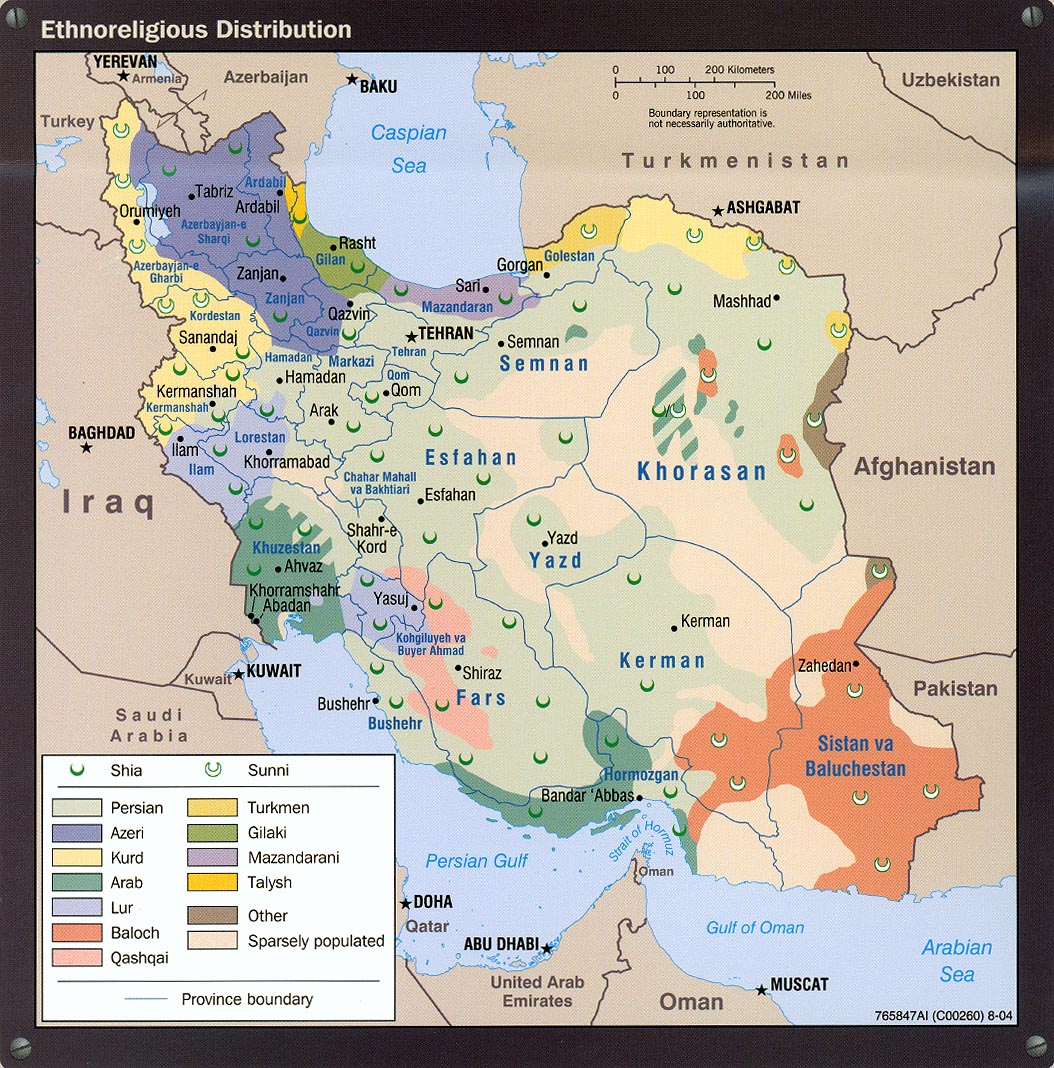
Although Saddam supported terrorists somewhat more than the anti-war crowd would let on, he was by no means the biggest sponsor. Iran is far and away the biggest state sponsor of terror in the world as a whole with Syria predominating among anti-Israel terrorists. Iraq isn’t officially in league with Iran and Syria but it does have one valuable trait, it is between both and was the only country adjacent to each that was not in some way aligned with us in 2002. Syria especially benefited from Saddam as it was a key smuggling route for him which provided Damascus with precious hard currency. By occupying Iraq we placed ourselves in a position to more easily and forcibly attack or destabilize both Iran and Syria increasing our leverage over them to effect peaceful resolutions. Without Iraq our avenues of attack with Iran were limited to the ocean and small thrusts from the north and east, and with Syria from the sea (since using Israel would have been a diplomatic nightmare). Another major benefit was that Iraq is next to some of the most restive minorities in each country. The Kurds of each country are next to their brethren in Iraq as are the Arabs of Iran. Given the natural permeability of any long border we would be excellently placed to support each. The Iranians could be exceptionally hard pressed as the Iranian Arabs mostly inhabit Khuzestan province, home of Iran’s oil fields. While they didn’t prove much help to Saddam in the 80’s, it’s not hard to blame them. Not only did Saddam prove utterly incapable of even taking the province when his soldiers outnumbered the Iranians 10:1, but they were then quickly ejected by inferior Iranian forces. That and it’s hard to see how trading the Ayatollahs for Saddam was something worth fighting for. Should the Iranians and Syrians try to destabilize Iraq we could then destabilize them and trade stability for stability. As with Italy in World War II, Iraq would allow us to hit the soft underbelly of the Tehran-Damascus Axis when and where we chose to. This one was something of a risk since Iran and Syria could just as easily do the same to us in Iraq should we prove, as we have, unwilling to actually follow through with this option. Risky though it was, fortune favors the bold.
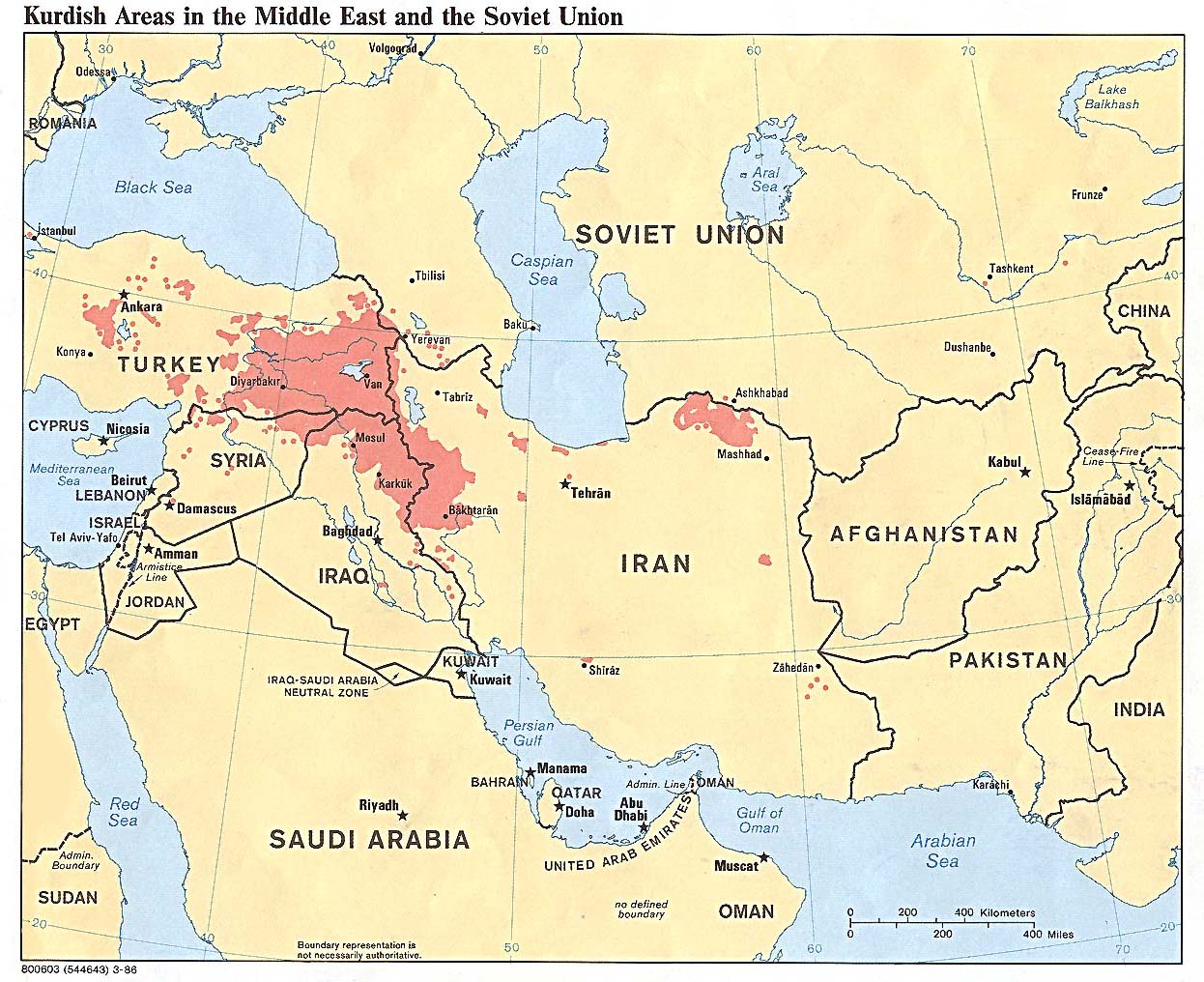
This map shows the situation with Iran and Syria. Blue borders are where we had them surrounded in 2002, red borders are those countries' borders with Iraq that as can be seen completed the encirclement. Yellow dotted areas are Kurdish and maroon dotted is most of Khuzestan province, the area with Iran's Arabs and oil. The maps this is based can be found here for the Kurds and here for Iran.

It would upset the Sunni-Shiite balance of power in the Mideast and place us at its fulcrum. The balance of Shiites and Sunnis in the Arab part of Southwest Asia is greatly in favor of the Sunnis. Of the nearly 120 million people, 84.3 million are Sunni and around 27 million Shiite. This changes markedly when Iran is added to the picture. With Iran the Sunnis only slightly outnumber the Shiites, 89.6 million to 88.5 million. This specter greatly scares the Arabs as the Persians have always proven so much more capable such that when Saddam, with the most powerful military ever fielded by an Arab nation, attacked an extraordinarily weak Iran the result was a draw. The one thing holding back the Sunni nightmare scenario was Sunni control of Iraq, the second biggest Shiite country. With Saddam in Iraq, countries ruled by Sunnis were marginally larger than those controlled by Shiites. Further, the Levant, while technically Shiite controlled (Alawis are only like Shiites in that they are heterodox, but they claim to be Shiite) it’s Sunni majority and was detached from Iran and surrounded by Sunnis. By replacing Saddam with a Shiite government we greatly altered the overall Sunni-Shiite balance. Now Shiite ruled nations hold an almost 2-1 population advantage over Sunni ruled ones. The Shiite Arabs of Iraq, on the whole, hate the Persians as much as the Sunni Arabs. We could then be the guarantor of the Shiite Arab country and if they didn’t go along then we could threaten to leave them to the Ayatollahs or the Sunnis who would put themselves back in power with the help of their coreligionists in other countries. Meanwhile, as the Sunni Arabs gaze nervously at the new Shiite crescent to the north they must also worry about their own large Shiite minorities. The Sunnis could then be presented with three options, rely on the Turks who they hate almost as much as the Persians and who want nothing to do with Arabs anymore, rely on poor, far away, and Israel checked Egypt for support, or help us deal with the Sunni Iraqis so that Iraq did not become a full blown member of the Shiite crescent. If they chose, as they did, to not help us work with Iraqi Sunnis but rather to aid the Sunni revanchists then we could threaten to leave Iraq to Iran and be done with the region. Essentially, we would be able to make the first side to be uncooperative the loser. Of course, like before, this would have required at the least our appearing to be willing to follow through with the threat. Russian President Putin is making a move to become this very fulcrum. To which I must once again say bravo, he has yet again shown himself to be quite expert at improving Russia’s place in the world regardless of its effect on other nations. If only we could get him to teach American foreign policy makers how the world works.

This table is compiled from population data in the CIA World Factbook. The key thing to note is the radical shift in the share of population under Sunni governments versus Shiite governments following the Iraq war. Before it a slight majority were under Sunni governments but today the Shiites hold a 5:3 advantage. It's even more dramatic excluding Iran, the Sunni advantage in just the Arab part of Southwestern Asia fell from just under 4.2:1 to under 1.4:1. (Iraq should be 33% Sunni, due to the difficulty of switching out pics in the middle of posts in Blogger I'm leaving the incorrect one with this correction)

See if the Arabs proved as ready for democracy as they and liberals before 2002 claimed.
Back before 2002 there was two main trains of thought over Middle East democracy. The foreign policy realists, who had largely dominated US foreign policy to that point, claimed that Arabs couldn’t handle democracy. It either leads to chaos or the election of Islamic fundamentalists. The foreign policy liberals argued that Arabs could handle democracy if we would stop supporting dictators and help them achieve it. Around 2002 those two schools of thought largely merged as a greater threat arose, the “neo-conservative” (still haven’t really heard that defined, they seemed more neo-liberal to me, but whatever). Contrary to the “you can’t spread democracy at the point of a gun”, it has been spread that way before, in Germany, Japan, Italy, the Philippines, Dominican Republic, Panama, Liberia, and Sierra Leone. It has also failed before, most notably on numerous occasions in Haiti, but also Cuba, Mexico, and other Central American States. Each has differences with Iraq of course, Germany, Italy, and Japan were devastated to a degree we would never imagine doing in Iraq and were functioning nations prior to WWII, Panama, Liberia, and Sierra Leone are small countries, and the Philippines and Dominican Republic are islands with little prospect of foreign meddling. Even so, the Philippines in particular was close to what Iraq would be like. We had to deploy a huge army for the time (initially 120,000 but falling to 80,000) for 8 years to suppress 2 separate insurgencies (like OMG that’s 2.3 WWII’s, how did we ever manage). The Filipino Insurrection lasted 4 years and involved fighting mostly on the northern and central islands against Christian Filipinos. As that was suppressed, another insurrection by fanatical Muslims in the south who used suprise suicide attacks took a further 4 years to suppress (the Moro War). A low grade insurgency continued for another 7 years in the south. It was several more years before the Filipinos were ready to run the country, we stayed longer than necessary due to the Japanese threat, so it shouldn’t be surprising that it will take many a year to fully establish an Iraqi democracy. That is should it prove viable. If it doesn’t, and if the Arabs simply use the opportunity to kill kill kill and bring in Islamic extremists then the issue is settled in the realists favor. We will then need to move to the long term Syngman Rhee/Chiang Kai-shek/Pinochet form of economic/political development. We should change our policy to finding nicer free market strongmen who can keep the baser instincts of their populations under control as they take 50 years developing their countries and steadily introducing more freedoms. I don’t think it’s quite to the point of throwing in the towel on Arab democracy, but it’s getting close. Whatever the Arabs choose, we needed to see for certain what it was before we ultimately choose. Nicer though those strongmen were, we still shouldn’t relegate hundreds of millions of people to living under them for decades unless we have to.

Take the fight to the terrorists’ home front.
This has been dubbed the “flypaper strategy” and has appeared in many of Bush’s speeches. The goal is to draw the terrorists into a combat zone where justice can be dealt out far more swiftly and effectively than if we wait for them to come here where lawyers can protect them. It undoubtedly would create more terrorists (just like the German army of WWII grew larger until the last months of the war) but it would result in most being killed. Soldiers would sadly be killed also, but the critics who focus on casualties get it backwards, the purpose of a soldier is to fight and if necessary die so civilians back home don’t (certainly something that I and many of the guys I met in the army understood when we volunteered). The other thing it did was force the terrorists to react to the American victory in the heart of the caliphate much quicker than they would have liked. This led to the bombings in Saudi Arabia that got the Saudis to finally shut down terrorist organizations in their country though still not international funding apparently. Similarly, the attacks in Jordan that culminated in the dreadful bombing of the wedding party in Amman showed the Arabs what the terrorists were capable of. Jordan also became even more committed to fighting terrorism, though they were already very committed for an Arab country. Inside Iraq the terrorists, if not the run of the mill insurgents or militias, are deeply unpopular. As I recall the most popular Iraqi TV show simply has captured terrorists being interrogated and humiliated on their way to an inevitable execution. It is true that Iraq opened the possibility of a greater threat migrating to certain countries in the Arab world and Europe. Again, this could have been another useful tool to pry cooperation from them. We were going to invade Iraq with or without them, if Iraq generates a flood of terrorists because it fell apart, most of the terrorists would head back to their own countries or to Paris, Berlin, London, Madrid, or Rome (well for some that is their home country) whether those countries helped or not. Given that they might as well help and lower the odds of that result. As the others, this is assuming we would seriously make that case.


Long-Term Reasons to Invade

By spreading democracy to Iraq we would help it spread throughout the Middle East.
This is another of the reasons that can be found in many of Bush’s speeches. Helping Iraq develop a democratic government would serve two purposes in the wider goal of spreading democracy throughout the Middle East. It would firstly be a clear example to Arabs and other Muslims that they could indeed manage a democracy. Clearly, this is tied to the reason above about seeing if Arabs could handle democracy. If the Iraqis failed the test then obviously it wouldn’t be much of an enticement. The second effect this would have is to put our money where our mouth is and show the various dictators and indigenous voices for democracy that we will support democracy now. This one isn’t as tied to the success or failure of the Iraqis as the very attempt is what matters. The ultimate strategic goal would be to use Iraq to encourage the indigenous spread of democracy in other nations as the people demand it and the petty tyrants fear ending up at the end of a noose like Saddam. It would be a sort of reverse domino effect. Bush has made much of the draining the swamp aspect of this argument, the idea that until the Middle East has freedom and liberty it will continue to produce terrorists. This would primarily target next door Iran and Syria. Iran in particular would prove susceptible to such democratic undermining since it is run by extraordinarily unpopular theocrats and has one of the most pro-America populations in the world (New York Times Columnist Thomas Friedman noted on one of his documentaries that American college students in Europe were subjected to constant anti-Americanism until they visited Iran). Another strategic advantage to the United States and other democracies is the same one that spreading democracy had to Athens in ancient Greece. Similar governments tend to be much friendlier with other than with different government types. This can be seen in our alliances with Europe, Australia, Turkey, Japan, Taiwan, S Korea, etc versus China’s ease of maneuvering with countries like Cuba, Venezuela, Iran, Saddam’s Iraq, Cambodia, Burma, and so on. Especially as we see an undemocratic Sparta and Thebes (China and Russia) rise to challenge the free world it is in our interests to flip as many dictatorships to democracies as possible. Since it is much easier for China or Russia to shore up a dictatorship than for us to change it to a democracy and since short of a World War II scale effort we are not going to be able to take the kind of direct role that we did in Iraq with many other countries we had to move quickly if we were to have any impact before China and Russia got into the game. This would require a great deal of follow through however. By its very nature it would hit the more moderate dictators who were friendly with us along with impinging on the interests of great powers like Russia. It’s easy to say we will help if people rise up, but it’s much harder to actually support them when they do.

It would give us the Kurdish card.
The Kurdish card is the ability to create or threaten to create an independent Kurdish state. This is a particular case of the next reason for invading Iraq but it’s the biggest one since it affects most of the major players in the Mideast since a free Kurdistan is greatly feared by Turk, Arab, and Persian alike. The majority of Kurdistan is in Turkey where around 14 million of the 25 million Kurds live. Iran and Iraq each have over 4 million Kurds and Syria has the remaining million or so. Iraq only has about 1/6 of the Kurds but it is in the center of their homeland and is also the most economically viable due to the Kirkuk and Mosul oil fields. It’s also the one we have the most influence over. With direct control over the future of Iraq we would be in a position to utilize this card as negotiating tool with Iran, Syria, and if need be with an increasingly Islamist Turkey. This would be similar to the Polish question of the late 18th and 19th Centuries in Europe. The Russia, Austria, and Prussia had divided Poland between during the 3 Partitions and had unwittingly created a serious weakness for themselves that Napoleon would later exploit. By invading Iraq and helping the Kurds we would give ourselves enormous leverage over the other peoples of the Mideast. They could be presented with a choice of either cooperate or see an extremely capable, pro-America, stable, prosperous Kurdish state arise in the heart of the Middle East. This would be a long-term policy since it would obviously undermine any attempt at Iraqi democracy and assumes a high degree of uncooperative behavior from the Sunni Arabs, Persians, and Turks. It goes to show though that even should things turn out worse than expected after the invasion, it would open other options that still make it worthwhile.


Map of the Kurdish lands.

A possible revolutionary redrawing of the Mideast could occur.
In line with the prior reason, this one is a long-term plan that would primarily be used should the direct and indirect benefits of invading fail to materialize. It seems that most people view the Middle East as a monolithic bloc of Sunni Arabs with a few Jews in Israel. This is no doubt how the Sunni Arabs themselves wish the Middle East to be viewed. However it is very divided both by ethnicity and religion. A previous reason focused primarily on the power struggle between the two largest religions in the area while the previous one dealt solely with the Kurdish minority. This diversity in the Mideast makes it extremely susceptible to the ancient tactic of divide and conquer which has been used frequently in the region. The following graphs show the divided nature of the region.

The most recent such division was the reorganization of the former Ottoman provinces by the French and British after World War I. That worked for its day but many of the problems in the Middle East today stem from the refusal to realign the region to suit today’s situation and interests and not the interest of two defunct empires a century ago. One example of this is Lebanon. The area that is now Lebanon was generally combined with Syria until the 19th Century. Initially Beirut was broken off to be its own duchy. It was expanded under pressure from Europeans in the late 19th Century to include the Christian central Lebanon region after increased oppression of the Christians by Ottoman authorities. When the Levant passed to France following World War I, they expanded the duchy of Beirut to what we know as Lebanon today so it would include as many Muslims as possible while keeping the pro-French Christian population in the majority. That was all well in good in the early 20th Century but no longer serves any purpose but causing chaos in Lebanon today as the Christians are no longer a majority and no longer have the French Empire backing them. Invading Iraq would allow for the encouragement and support for indigenous nationalist movements to gain independence from the current powers in the region. This would be similar to the redrawing of Eastern Europe following World War I after dissolution of the German, Austro-Hungarian, Russian, and Ottoman Empires (similar since the mistake of the Kingdom of the Southern Slavs shouldn’t be repeated). A primary benefit of such a redrawing is that it would mainly impact the key problem country in the region, the current decrepit form of the Persian Empire, Iran. One delicate area here is the pro-America views of the Persian people. Hopefully we would be able to encourage a sentiment of “Persia for the Persians” amongst them (which I was surprised to find was generally well taken by many of the Persians with whom I chat). If not then we should still go through since it would help with many of the problems in the region. Iraq would be the largest part of the western half of the division and is the easier of the two. The eastern half draws in Pakistan, Turkmenistan, and Afghanistan and is an entirely different order of magnitude as a result. This map shows what a possible new Middle East could look like. Red denotes the western division while blue represents an eastern division. A- Shiite Arab State. B- Kurdistan. C- Greater Azerbaijan. D- Sunni Arab State (or seperate Greater Syria, Jordan, and Anbar). E- Beirut city-state. 1- Greater Turkmenistan. 2- Hazarastan. 3- Baluchistan.

Since invading Iraq is the key the western division I won’t go into the eastern one. The Azeri, Kurd, and Shiite Arab parts of Iran could be broken off and combined with their compatriots across the border. Lebanon could be reduced to its 19th Century Christian majority Beirut duchy status with the Muslims either returned to Syria sans Kurds or combined with a Greater Sunni Arab state. The change this would cause in the populations of the various Mideast nations is roughly estimated on the following table.

The effect this would have is to create more stable nations with clear ethnic/religious majorities. It would also cause America to be seen as the granter and guarantor of the newly independent nation-states in much the same way that France created a ring of pro-France states in the Balkans following World War I. This would have obvious benefits to the US although it would also require us to defend the new nations from any revisionist moves by the Persians, Turks, and Sunni Arabs along with possibly Pakistan (a much thornier issue). I am not to say that this would be the end of changing borders. Nothing is ever final.

A developed Iraqi oil industry would break Saudi control of global oil prices.
Ahhh, oil, the black gold that we supposedly invaded Iraq to steal according to the international left. Not quite the reason to invade, but there is an oil-related reason for the invasion. The Saudis are well known to essentially control the price of oil since they are not only the largest exporter of oil, but they also have by far the largest reserve production capacity and the ability to cut millions of barrels of oil production almost overnight. Obviously they aren’t the only factor in oil prices, but they are the only controllable factor (i.e. global economic growth, the weather, international conflict are difficult to impossible to influence by a single government). This causes far more power and influence to accrue to the Saudis that makes it difficult for any country to stand up to them. To counter Saudi influence we would need a country with similar production and capabilities as the Saudis. Looking around the globe there are not many countries capable of doing so. The Saudis can produce between 10 and 11 million barrels of oil per day. The other two major oil producers, Russia and America, produce about 9 and 8 million bpd respectively. However, both America and Russia cannot greatly influence oil prices as both have little reserve capacity, do not produce oil based on political decisions, and have little ability to lower production. Other smaller producers such as Canada, Kazakhstan, and Iran that with significant investments could produce far more oil than they do each have problems that would keep them from matching the Saudis. Canada is free market, Kazakhstan lacks reliable access to global markets, and Iran would first require regime change. The only country that has the ability to match Saudi Arabia in oil production and that could counter-manipulate the oil market is Iraq. Iraq at one point had the capacity to produce 6 million bpd and could probably exceed that with investment in the future. Like Iran though, that wasn’t possible without regime change. Saddam had shown that he was not trustworthy when it comes to managing tens of billions of dollars of oil production each year. We would also need a more pro-America government since Saddam would not likely manipulate the oil market to our favor anyways. There is nothing wrong with the global superpower making war with the interest of stabilizing a key global commodity. As the general guarantor of the global economy it is in the interest of everyone for us to stop the wild oscillations in oil prices. The British had the Anglo-Iranian Oil Company in their day and we would do better to have an American-Iraqi Oil Company today (much fairer AIOC of course).

Non-Iraq Reasons to Invade Iraq

We need nation building experience.
It’s been a long time since the United States successfully helped rebuild a nation. Since World War II we largely ignored the nation building game until the 90’s. Through out the 90’s we had a series of largely botched exercises in nation building. We tried in Somalia until a few soldiers were killed and we ran away with our tail between our legs. We intervened in Bosnia after hundred of thousands were killed, but unless success is lowered to mean that 11 years after maintaining a military force equal to 1% of the countries population to simply separate the warring parties into their own de facto countries we haven’t been successful there. Kosovo is an even worse example than Bosnia. 8 years after attacking Serbia to protect the terrorist KLA, all we have to show is a non-functioning country that is only marginally peaceful since we’ve allowed the Albanians to drive out most of the Serb population. East Timor is the smaller example, less than a million people live there, but even it has decayed into little more than a broken protectorate of a UN that as with the KLA is only capable of protecting the troublemakers not the country or the people. This is all not to even mention the Congo, which lacks direct US participation and as a result is fairing even worse than the Balkan efforts. The UN internationalist way of nation building has been tried and found greatly wanting. If billions around the world who are born into non-functioning tyrannical countries are to have any chance of a better future we will have to figure out how to do nation building. Like the other reasons in this category, this is not a reason to invade Iraq per se as much as it is something that invading Iraq allowed. Iraq is not a particularly large country with less than 27 million people. The average size of the 192 countries of the world is around 33 million. However, Iraq is far larger than any of the other rebuilding efforts except the half-hearted Congo one. As such Iraq is large enough to be a serious exercise that can teach useful lessons and is small enough to minimize the cost of the operation and mistakes. These mistakes are bound to occur, why it is so shocking to the left and some on the right that they do is beyond me. Last I checked no one walked without first falling. Conversely, Iraq would reveal whether the America and the world have the stomach for real nation building. If not then it would allow us to change our foreign policy to compensate. The Romans and British also had a moment when they switched over from wars of expansion (nation building in our case) to punitive wars. Iraq would show whether we need to plan future wars in the Iraq mold with a full occupation and reconstruction or more in the mold of the Kosovo War, air and missile assault to destroy the power of the country. With whatever lesson learned from Iraq we would be better able to adjust our future policies to be inline with our capabilities and national will.

The military needs an occasional war to combat test new tactics and weapons.
This seems cold-hearted but stems from the desire to ultimately save soldiers lives while also advancing America’s interests as best as possible. Military affairs involve such morbid calculations. Soldiers are going to die, nothing will ever change that. All that can be done is to minimize the deaths while still achieving the objectives. For example, the Dieppe raid of 1942 was certain to fail and produce an extremely high casualty rate. Yet it was willingly launched since the Allies had to learn how to launch amphibious landings in Europe. Better to sacrifice 6,000 soldiers today to prevent the 180,000 landing at Normandy from being destroyed tomorrow along with allowing the war to be won. The Prussians were so successful in 1870 not only because they were fighting the French but because they had just fought and learned from the smaller war with Austria in 1866. The Prussians were so successful against the Austrians because they had just fought and learned from the war with Denmark in 1864. The 25,000 Prussian casualties in the 1860’s helped prevent even more casualties in the much larger Franco-Prussian War and ensured that Germany’s interest were advanced to the utmost. The German military, from 1740-1790 and 1860-1945 the finest military machine in history, had a saying that one short war was worth 10 years of peace-time training. Like all great powers we have the same requirement today. Military weapons and the tactics they require change frequently. If we were caught in a major war, say with Iran, N Korea, or China and used our weapons incorrectly the price in lives would quickly dwarf the 2,700 or so combat deaths in Iraq thus far. It would also potentially cause irrevocable damage to America’s interests. As with nation building, this isn’t to say Iraq was the only option but it was an option (the only one besides North Korea we had a casus belli against). Also like with nation building, Iraq had the benefit of being large enough to teach real lessons but not so large as to cause enormous casualties and cost overall and for mistakes that would undoubtedly happen. One mistake nations tend to make is to learn too much from small wars which often teach lessons contradictory to the needs of larger wars. The British were alone in 1914 among Western Europeans in expecting their cavalry arm to play a major role in the war. They believed that because cavalry had played a major role in the Second Anglo-Boer War. They didn’t seem to realize that cavalry was only effective because of the open flat veldt of South Africa and the fact the Boers generally fought with under 1,000 men per mile of frontage. In cluttered northern Europe against 5,000 men per mile such tactics led to the slaughter of the British cavalry that happened at the Somme in 1916. Along with not teaching false lessons, Iraq was small enough to limit the damage from mistakes. Against far more capable Iranians for example, the unarmored Humvee mishap would probably have led to the loss of at least 4-6 times as many soldiers as it did in Iraq. Since Iraq caused a critical short fall in munitions of almost all types in 2004, it is unlikely that we would have been able to meet the demands of a far larger war like Iran or China. Our military has been able to perfect and figure out how best to employ the new weapons developed during the 90’s and have been able to come up with new previously unthought-of weapons and tactics. We also now have a generation of combat experienced officers and NCO’s, the most valuable trait for any military. When we inevitably have to fight again against a far more powerful enemy, our military will be fully prepared. In addition to advancing the interests and safety of their country, the sacrifice of our soldiers today will help advance the interests and safety of their country tomorrow while lowering the sacrifice required of their brothers in arms. Our soldiers will always be called on to sacrifice for the good of our country. The only way to stop it is to abandon the second part which I, and many Americans, would never support and which is only temporary. Thus it is incumbent upon us to do everything we can to limit the amount of sacrifice for which we call on them. Along with a larger military budget (5% of GDP plus war appropriations, or about $800 billion this year) I think periodic medium wars is the best way history will sadly show.

Tuesday, February 06, 2007

Iraq Part 1: Where We Are Heading

This is the first in a series about Iraq, the Introduction is here.

I don't think any sober analysis would argue Iraq is shaping out well geopolitically for the United States. However, this has little to do with Iraq itself. The biggest issue with Bush’s strategy in Iraq isn’t necessarily the Iraq part, which has generally been ok, but the policies regarding the larger conflict of which Iraq is merely one part. Put another way, the problem is that Washington seems to have lost sight of the global forest for the Iraqi tree. I don’t mean this in the manner of “ignoring Afghanistan” as some have charged or ignoring China or Venezuela but rather in ignoring (or not understanding) the ways Iraq has changed the global order and allowing those changes to drift out of our favor. If this tendency isn’t arrested it will make a real victory extremely difficult to achieve in Iraq and what victory we do manage would likely be either fleeting or Pyrrhic. We still have the chance to use the wider struggle Iraq has initiated to improve our geopolitical position if we can keep the Democrats from forcing a precipitous retreat and if Washington will start engaging the wider conflict. It should be noted however, that this isn’t a new American tendency. We have done it before in much greater wars and the reasons are all the same.

Recently, President Bush at very long last has been making some changes to Iraq policies that do take a tougher position inside Iraq while marginally recognizing the global nature of the conflict. Though sort of little and somewhat late, they are still welcome changes. US soldiers are finally being allowed to go after Iranian and Syrian meddlers in Iraq. Rules of engagements seem to have been loosened and more aggressive patrols launched. Shiite militias will apparently be targeted along with the usual Sunni suspects. The addition of 5 combat brigades at least seems to indicate our intention to finish the job. It’s not an extremely large or lengthy deployment so I’m not sure what its practical impact will be, but changing perception is in itself something important. Through all this we seem to be telling the Iraqis that if they follow Arab tradition and take another opportunity to miss the opportunity we are presenting them that it will be the last time they do that. Again, whatever the limitations, whatever the unnecessary delay, it is good to see these changes in Iraq. That doesn't mean they are enough though. Max Boot, author of The Savage Wars of Peace about America's small wars, has a good piece in the LA Times about some changes Bush should make in Iraq. I'd say some like the security issue and moving soldiers out into the population are sort of being addressed but could use more. Some, such as appointing a clear American leader for everything in Iraq and doing a census and handing out ID cards, would be better late than never. Others however are simply too late like imposing martial law and keeping suspected insurgents looked up despite a lack of evidence.

However, because these changes primarily deal with the situation inside Iraq, they are not dealing with the main supporters of the chaos in Iraq, Iran, Syria, and Islamic terrorists. Bereft of support from these three sources the Sunni revanchists would have run out of the required money, weapons, supporters, and fear for a terror/insurgent campaign. This would have happened prior to the Shiites growing so tired of the continued Sunni sponsored violence that they launched their revenge terror campaign that is fueling the current violence. Minus the support of Iran the Shiites would have far less capable of doing so even had they decided to. As good as it is to let our soldier kill those trying to kill them, the reality is that killing individual ants after they cross the Iranian or Syrian borders is not the best way to deal with the problem. The only way to deal with it effectively is to go for the ant queen in Teheran. This doesn’t mean starting a war, but rather clear and painful action (economic mostly) that is linked to Iran and Syria continuing to support chaos in Iraq. If that doesn’t stop them then we could show as much respect for the Iranian and Syrian border as the show for the Iraqi border and launch small scale raids on terror camps and facilities in those countries. If those countries choose to escalate from there that’s their decision, though we would have to be prepared for that escalation. Lastly, though I don’t think we have the resolve, we could counter-destabilize Iran and Syria both. Syria is run by a very unpopular heretical minority, the Alawis. Iran is only 50% Persian with the rest largely disgruntled Azeris, Baluchis, Turkmen, Arabs, Kurds, etc. If we made Tabriz as unsafe for Persians as the Iranians have made Basra for the British we could potentially trade security for security or at least make Iran pay a price for its activities.

This international conflict doesn’t just impact Iraq inside Iraq, it also does so outside of the country. Caroline Glick, a columnist for the Jerusalem Post, has an excellent article about Bush’s pointless general retreat from pretty much all aspects of the global conflict outside of Iraq. I would recommend reading it since the few points I’ll mention are also mentioned by her along with many others. Iraq is the central front of this conflict, but the other fronts can have a major influence on it. This is primarily because the willingness of these three actors to confront us in Iraq is driven by our retreats elsewhere. Since the more trouble Iraq is for us the more we retreat elsewhere, we’ve given Iran and Syria a massive incentive to cause as much trouble in Iraq as possible. All the more since until recently we haven’t even been fighting them in Iraq, much less in their own countries (which we still aren’t doing). As we continue to retreat in Lebanon, in the Palestinian areas, in Libya, in Uzbekistan, now in Somalia these are all to one extent or another falling to the Iran-Syria-Islamic terrorist axis. Rather than strengthen our hand in Iraq, these retreats will make our job all the more difficult as Iranian resolve strengthens and the perception of American weakness grows stronger. The sad thing is that it is only perception, we have the power to deal with these problems if only we would accept that we are in conflict with something beyond the nebulous “terror”. Somalia especially we did a great job by sub-contracting the invasion to Ethiopia (who showed so much tenacity that some conservatives jokingly suggest licensing Iraq to them also) but supporting it with intelligence, aid, and some air power. Now for some unfathomable reason we are joining with Europe, the UN, and the Arab League in demanding the Islamic Courts Union be brought back to share power. The result is that while Bush is coming around to what has been needed in Iraq for years now, we could still easily see the stable Iraq we form end up as little more than an Iranian puppet. Even should Iraq not fall to Iran we would probably be left looking at the price of Bush’s unnecessary retreats elsewhere along with a costlier than need be Iraq occupation and like Pyrrhus considering his retreat from Sicily to win 2 costly victories against Rome wonder what kind of victory we had achieved.

As mentioned above, this isn’t the first time that we’ve lost sight of the bigger picture and real goals during a war. The worst example of this tendency has to be the way in which FDR, General Marshal, and General Eisenhower conducted the European campaign of World War II. Liberating all of France and smashing up as much of Germany as possible were allowed to override winning the war as quickly as possible and in a manner that didn’t plunge the world into another global conflict. The British, as long-time masters of managing an empire and fighting wars, understood this and were from late 1944 were in conflict with the US leadership over the wars conduct. JFC Fuller’s Military History of the Western World covers this in its last chapters. By the end of August 1944, the German army had largely been destroyed in both France and Italy. What was left in France, 11 small divisions, faced 38 larger Allied divisions while in Italy the Germans were racing for their last line of defense, the Gothic Line in the north. Prior to this 3 decisions were made which kept Germany from losing the war before the end of 1944. The first was the decision to liberate Paris before the German army west of the Seine had been destroyed. Due to the diversion of 3 American divisions to Paris, the Germans after a furious battle were able to break the encircling Allied divisions at Falaise and get enough troops out to continue the fight east of the Seine. The second decision was to withdraw 10 divisions from the Mediterranean to invade southern France so as to liberate the entire country. 6 of these divisions were pulled from Italy which kept General Alexander from breaking through the Gothic Line and pushing into the Po valley and possibly southern Germany in late 1944. The last decision was the one to advance on a broad front through France instead of blitzing through weak German defenses into either the Ruhr as per Montgomery’s plan or the Saar as Patton would have liked. Although I’d cut the US leadership some slack on the last one, they knew the Allied forces were not anywhere near as capable of the Germans at operational maneuver and didn’t want to get sucked into the kind of bloody maelstroms the Soviets kept walking into (such as 3rd Kharkov). At any rate, the desire to liberate France and to placate the Soviets (who didn’t want us occupying Germany before they did) we prolonged the war until 1945. Since we didn’t make it to the borders of Eastern Europe before the Soviets we, as the British warned us, consigned that region the Soviet domination and the world to the Cold War.

The reasons for these decisions are pretty much the same as today. The biggest problem is that due to our sheltered history we have a hard time accepting wars that are fought to benefit ourselves. Wars are to be fought to destroy evil and only to destroy evil. During World War II we therefore had trouble thinking like the British and planning for how the war would leave a world that benefited us. We could only think in terms of totally eradicating Nazism, no matter how long it took and no matter how much more favorable the peace was to another power. Today we can understand fighting terrorism and getting WMD out of the hands of a madman, but Iraq is increasingly about America’s position in the world and that is much harder to sell as worth the fighting. Dovetailing with the last problem, we also tend to trust that other countries are like us and have good intentions leading us to have unrealistic expectations. During World War II it was our unbelievable faith in the Soviets. We believed they were our true friends and saw no reason to try to win the war before they gobbled up too much. We apparently never questioned whether the Soviets would use their gains to start another war. Today it is the even more unbelievable faith that the State Department in particular has in Iran and Syria. This can be seen in the constant recommendations from the Iraq Survey Group and others that we talk to Iran since Iran has no interest in a chaotic Iraq. This is said despite the obvious fact that Iran has a lot to gain from a chaotic Iraq (as mentioned above and as Mark Steyn writes about). Another major problem is the constant electoral cycle in which our politicians exist. JFC Fuller notes that one of the reasons FDR ruled out focusing on Italy and driving into Austria and Slovenia was the upcoming presidential election. He had been warned by advisors that the American people were fixated on France, if things didn’t go as well as expected in France and it was discovered that he had allowed divisions to be diverted to invade “the Balkans” he would likely face a difficult re-election campaign. President Bush likewise faced major pressures in 2004 when insurgency was in its growth stage to not allow US casualties to rise to high lest it become a campaign issue. As such the April attacks into Fallujah and the killing of al-Sadr were called off. While Fallujah was taken care of after the election, al-Sadr becomes a greater problem with each passing day. FDR’s reluctance to be seen expanding the war and attacking on multiple fronts is also reflected today by the outcry that has already occurred over the idea of attacking other countries in the progress of fighting Iran and Syria.

These are the real problem’s I see today with Bush’s Iraq policy and could be summed up with the slogan “Iraq has nothing to do with Iraq”. This is of course exaggerated but it gets to the heart of the matter. Yes there are powerful forces and sentiments in this country against fully prosecuting the war on all levels, but that doesn’t absolve the President for taking us to a war he apparently didn’t intend to fully wage. We are playing a much bigger game in Iraq than just knocking off Saddam and replacing him with a democracy. Iran and Syria have risen to our challenge and are fighting back to markedly improve their position in the world at our expense. As victory everywhere else cannot make up for defeat on the main front, we do need to win in Iraq also, which at long last Bush is making moves inside Iraq in that direction. However, due to the influence the other fronts have on Iraq, unless the Bush Administration soon comes to grip with the wider war, who we are fighting, why we and they are fighting, what we are trying to accomplish beyond Iraq, and does what needs to be done regardless of internal pressures, we are likely to end up with an international situation, that while better than if we let the Democrats call it quits and retreat from Iraq, is still less than desirable and not worthy of the sacrifice of our soldiers or our great nation.

An Iraq Series: Where we are heading, Why we're there, and so on

Seeing as declaring Iraq to be a “debacle” that has “destroyed” America’s place in the world seems to be all the rage today I figure I would do a series of posts dealing with different aspects of the Iraq war from an unabashedly pro-war perspective. Hopefully I will touch on some issues that you may not have heard of so that whether you were for/against it from the get go or for it before you were against it there will be some food for thought. The first part, as the most important part, deals with the prospects going forward of Bush’s overall strategy not just in Iraq but with the war on terror in general. The second part looks back at my reasons for supporting the invasion of Iraq which only peripherally overlap with the official reasons and which also pre-date the Bush Administration. The third part deals with the mistakes we’ve made, as best as can be determined from this still early date, from the standpoint of what we can learn from them. The last part is whether and to what extent this has damaged our place in the world.

Saturday, February 03, 2007

Ranting a la Chirac

Blogger and internet problems kept me from posting until today so sorry for the lack of posts last week.

We all know President Bush has a reputation, especially overseas, of being a raving belligerent lunatic, but it seems you have to be a Frenchman to really get it right. Last week, French President Jacques Chirac continued in the grand French tradition of de Gaulle and Mitterrand when it comes to refined bullying. Last I checked Bush has yet to respond to a disagreeable country by telling them they had missed an opportunity to shut up like Chirac did when those ingrate Eastern Europeans had the temerity to support America over France’s EU on Iraq. Bush spent 6 months at the UN trying to get it to enforce its own resolutions with Iraq before dealing with the problem, while Chirac didn’t bother informing the UN, EU, or NATO before he occupied the Ivory Coast to protect French cocoa interests. Even with terror attacks Bush does not rise to the level of Chirac who warned that any country that supported a terror attack on France would face nuclear retaliation. I could go on and on with past examples of Gallic brusqueness but there’s no need to with 2 new examples from just the last week.

The first example is Chirac’s comment that a nuclear Iran is no threat to anyone except maybe Israel (so of course, who cares). He further elaborated that should Iran nuke Israel, Israel would nuke Iran (so again, who cares). I know for many, especially in France, it must be calming to think that big bad scary Iran is only a threat to the Jews, but it isn’t. The effect of a nuclear Iran will be felt by everyone. For example, is Chirac still willing to contemplate any response, much less a nuclear response, to an Iranian backed terror attack in France? Part of the cause of high oil prices is the fear that the next terror attack or round of saber rattling may lead to a major war, the destruction of important oil fields, and/or the closure of the Straits of Hormuz by Iran. What will the price be when an emboldened nuclear Iran can more swiftly bring about each and is more resolute about threatening to do it? This is not to mention when a nuclear Iran takes advantage of this situation and demands tribute from the West. Even if Iran were only a threat to Israel and even if any exchange would result in both being wiped off the face of the planet I can’t imagine why anyone, especially a leader of a nation, would be blasé about that prospect. At the very least we are condemning around 80 million people to live under a nuclear sword of Damocles and at worst millions of them will die should the Ayatollahs be less rational than Chirac expects or should Iranian/Israeli nuclear command and control prove less than 100% reliable. Anyways, whatever the correctness, or not, of the comment, the point remains, Bush has never said oh well if N. Korea goes nuclear, if they nuke Seoul S. Korea will destroy the north. I intended to write a full post about this last week, but due to the aforementioned blogger/internet problems, Chirac was able to correct his statement before I could. He now says it’s not what he really thinks, and he thought he was off record anyhow. I think he initially said what he believes so I’ll stick with that.

Like all masters of their art, Chirac was merely warming up when he took on the little Satan of the Franco-Iranian world view. He was saving his best act for later in the week when he challenged le grande Satan, the United States. America’s economy is a serious threat to France and we aren’t going along with the left’s drive to use hysteria over “global warming” to drive the US economy into an equally uncompetitive position as Europe in general but France in particular. Whoops, I meant “global climate change”, the alarmists had to protect themselves against to their previous charge that we were heading for an ice age (due to man’s pollution of course) and against any future weather changes that may revive the ice age charge. Anyways, so we aren’t going along with the diktats of France’s EU and that won’t do at all for France. So, according to Chirac France will have the EU punish us with a carbon tax on our exports for not accepting their climate imperialism. The fact that France and the rest of Continental Europe have utterly failed to pay the price to live up to their own pollution treaties (newest I could find, EU-15 should be around 8.4 and dropping in 2003, not 8.6 and rising, as usual only the British are making the effort to meet their commitments) further shows that this is economic warfare plain and simple. Whether Chirac has the EU follow through or not is questionable since the already strained Continental economies would not likely take the combination of higher American import prices and reduced exports from the inevitable American retaliatory sanctions very well. Like with Chirac’s other comments, the key thing here is that this is a level of gall that we haven’t seen out of Bush.

While I do sometimes wish Bush would be the raving belligerent lunatic that much of the world imagines him to be, the fact that he isn’t and couldn't be highlights the difference between him and Chirac. Bush is the leader of the most powerful country of the world and Chirac is not. Bush must as the leader of the free world be far more circumspect than leaders of lesser countries who do not share his responsibility. It is easy to say that a nuclear Iran isn’t a big deal when it’s not your problem to deal with. Likewise it is a simple matter to demand your main economic competitor sign on to economy wrecking pollution treaties when you won’t abide by them and you wouldn’t have any impact of global pollution if you did. Bush on the other hand, as leader of the free world, if fully expected and does abide by agreements that we have signed. While it is to be expected that due to his lower position Chirac can get away with worse comments and threats than Bush can, it doesn’t mean Bush should drop to his level nor ignore them. As annoying and counter-productive as his comments may be, the Gallic flare with which Chirac delivers them can still be appreciated.

Tuesday, January 30, 2007

A World without America

In accordance with my recent posts about the fate of America and the world if we don’t get out of our funk, this post is about the “World without America” that many people seem to think is the solution to all the world’s problems. Fareed Zakaria has an article in Newsweek about the trouble this is already causing and some warning about the future if it doesn’t stop. He mentions several issues that have already appeared, such as global trade talks are collapsing as France refuses to allow Europe to sign on to the agricultural subsidy cuts the US proposes in exchange for developing world fully opening its financial sector. Any possibility of reducing global pollution is gone as India and China demand the same per capita pollution levels as Europe. However, he only really covers those two problems that are the favorites of Western internationalists, globalization and global warming. Beyond these there are more pressing problems that are developing as the mice realize the cat will no longer wake up.

Absent US intervention, Darfur continues to be the scene of mass slaughter. Sri Lanka’s war with the LTTE has flared up again despite decades of Euro soft power intervention. As America’s resolve has slackened, Russian pressure on former Soviet Republics that we were helping like the Ukraine, Georgia, and Kazakhstan is increasing. Probably the most deleterious effect on future global stability is the loss of the Pax Americana that underpinned the low defense budgets and free trade that we saw in most of the world. The cause of the relative peace we’ve seen for the last 15 years was the reality that any country that attacked another would simply be destroyed by the US military. No matter how much money any country spent (Japan and Germany aside) they could never hope to match even a single American carrier and division. With zero chance of victory there was no reason to try. In a world without an active America that calculation changes drastically. There are still national hatreds and disputed territories to fight over around the world. Places like Arica, Kashmir, the Crimea, Taiwan, Azerbaijan, Kurdistan, and the Fergana Valley are potential scenes of centuries old grudge matches. This can also be seen by the growing defense budgets and the purchases of advanced military weapons by countries around the world. Just because Alsace-Lorraine, Silesia, the Skane, and Tirol are not at the moment disputed and Euro defense budgets are presently inadequate doesn’t mean conflict is a thing of the past. Zakaria ends his article by quoting Niall Ferguson about what may be in store for the “World without America”,
“In a provocative essay in Foreign Policy three years ago, the British historian Niall Ferguson speculated that the end of American hegemony might not fuel an orderly shift to a multipolar system but a descent into a world of highly fragmented powers, with no one exercising any global leadership. He called this "apolarity." "Apolarity could turn out to mean an anarchic new Dark Age," Ferguson wrote, "an era of waning empires and religious fanaticism, of economic plunder and pillage in the world's forgotten regions, of economic stagnation, and civilization's retreat into a few fortified enclaves."”

Something for Americans should remember, even if we aren’t exposed to the sort of depravations that Europe, Africa, and much of Asia will be, we’ll still be part of that world and it will far worse for us than anything Iraq can be imagined as. This is something that I've written about since the earliest days of this blog (all of 8 months ago). The earliest being my 8th post back in May 2006 about that contrary to what the left says we will have to fight and win this struggle and contrary to what some on the right say this isn’t the last great conflict, we’ll have to do it again and again. This post from June covers my general agreement with the top British strategist who warned the West is looking mightily like the Roman Empire at its end these days. Also from June are two posts, one dealing with how the insistence on treating every “nation” equally is creating many of the world’s problems that are then being fanned by the fatigue we are now showing in spades, and the other dealing with the problem of relying on Europe for our alliances in the future as the Democrats desire. There are other ones that deal tangentially with this topic but that should show that isn't something recent or surprising.

I should add that one of my quibbles with the article is that he states the power of the US and Europe in the world is declining. In my view there are two types of power, theoretical and real. Theoretical power is the total potential power of a nation realized or not while real power is that power which a nation is willing to use. Europe’s power, however you define it, is on the decline so I don’t dispute that point. As for us it is true that our real power is on the decline as we seem intent on no longer exercising the full breadth of our capabilities. However, our theoretical power is essentially unchanged. Our economy grows at roughly the world average so there isn’t much change there. Our population is growing at near the world average and will actually likely be above the world rate soon. Our military holds as big if not a bigger share of global military power than ever before, as we are the only nation with a fully combat experienced force, our weapons and tactics are proven in combat, and we dominate global R&D spending (both military and civilian). This is what is so disheartening about the current mood in America, we have the power of Britain in 1870 at the height of the Pax Britannica, yet we are behaving and electing politicians like the Britain of 1970 at the ebb of her power (when even France and Italy! were richer than England, may that never be said about us).

Monday, January 29, 2007

Defeat Has a Price as Well- Cont.

To follow up on my previous post, there is a short article by Michael Barone that notes some of the reasons for the softness the American public is showing. He also links to an editorial on the website for Der Spiegel, which is here also, about how much worse things are in Europe. The one consolation for concerned Americans whenever we consider the dark waters the American people are allowing our nation to drift to is that Europe is much further along than we are in almost all respects of weakness (economic, military, demographic, cultural, etc.). There will always be the final hope that Europe going into the abyss will at last wake up the American people just before we fall in.

On the political side, the wife of wannabe First Lady William Clinton Rodham is continuing the Democrats strategery of trying to bring about defeat in Iraq, like they did with Vietnam, while not being blamed for it, like they did with Vietnam. Her comments that it’s Bush’s job to extricate us from Iraq are classic liberalism, all political maneuver no substance. If it’s Bush’s job then she needs to prevail on her party to get out of his way and let him handle it. If however, she doesn’t think Bush is making the right choices and needs to be told to then it isn’t his job and she shares responsibility for the outcome. Again, though the Democrats want neither of those things. The Democrats want to hide the fact the jaws of defeat we are struggling to pull victory from are their own. Then if Bush can manage to pull victory from their jaws of defeat they can still claim they were in favor of it all along, they just had some “constructive criticism”, but if Bush cannot then they can step aside and let Bush take the blame. Either way, politically they win; our soldiers and our nation will always be second to that.

Sunday, January 28, 2007

Defeat Has a Price as Well

I apologize for the week with no posts. I was caught off guard by two midterms that were scheduled in the third week of class.

Daniel Henninger has an excellent editorial in the Wall Street Journal, which can be found online, about the fatalism gripping America today. He discusses how this fatalism in America is on almost everything, justified or not.

“Yes, on any given day on some discrete issue (Prime Minister Maliki's bona fides, for example), the criticism of the American role is not without justification. But the cumulative effect of this unremitting ill wind is corrosive. We are not only on the way to talking ourselves into defeat in Iraq but into a diminished international status that may be harder to recover than the doom mob imagines. Self-criticism has its role, but profligate self-doubt can exact a price.”

I think the second to last sentence is the key one there, we will not be able to mosey back into our current position in the world if we give up in Iraq and elsewhere. I’ve written about this several times since I think it is the most troubling part of the media and Democrat’s endless pessimism (here is a general one and here is one when I was more optimistic about the voters' ability to see the left for what it is). The days when we could choose to be isolationist and then instantly restore our place in the world are over. The old Euro-centric great power system that we couldn't help but lead no longer exists. Although the Democrat’s either don’t know or don’t care, there are real penalties for losing our top spot in world affairs. We would live in a world where like Europe we have to suffer Russia and the Arab’s energy politics, like Japan the price of our imports would vary wildly on the basis of someone else’s currency, and like China foreign trade is conducted according to another culture’s standards.


Our lack of resolve over Iraq is also sending a terrible signal to our allies. If a nation of 300 million can’t endure 3,000 dead in Iraq then what are the odds that it will suffer more to protect Japan from China, Ethiopia from the Arabs, or the Ukraine from Russia? Not very likely some countries will decide leading them to take the best deal they can from these countries. Even the most powerful nation requires a handful of allies to operate effectively. We don't need many but we don't need to scare off potential real allies either. Henninger quotes the Australian Foreign Minister who is for obvious reasons worried,

“What concerns me about this," he said, "is that it's sort of an isolationist sentiment, subconsciously, not consciously, and that would be an enormous problem for the world. I hope the American people understand the importance of not retreating and thinking the world's problems aren't theirs.”

The Aussie FM mentions another point, the world’s problems will still be our problems. The only difference will be our ability to do anything about them. As with other issues we’ll be left to hoping others keep them from becoming problems for us (fat chance) or simply living with them.

Power will always exist and be exercised. If the nation who holds it doesn’t then someone else will in their place. If we decide that we aren’t up to the responsibility our power entails then others will do it for us. The Europeans are desperate for the Euro to replace the Dollar which would place our import prices at the whims of the European Central Bank and Europe’s creaking economy. Russia and China are maneuvering to corner the global production of various raw materials so they can be used to their and not the world’s advantage. China is especially making moves to relocate the various global trading boards from New York and London to Shanghai so China can have a greater role in determining the value of raw materials to benefit herself. Problems like international terrorism, Lebanon, and Taiwan would be left to the witless UN and EU and would be handled by them much as they dealt with international communism, Bosnia, and Rwanda. There is no denying that many benefits accrue to us as the world’s superpower, but along with them comes responsibility and duty, we cannot have one without the other. The American people should be aware that the decision to ignore our responsibilities comes with a great and possibly irreversible price.


My last worry about this focuses on the US military. The American military is about the only part of the US government and probably the only global institution that still functions properly. Our soldiers are very proud of their country and their duty to her (I certainly was and am), much more so than the civilian population. I believe this is one of the key aspects that make America a great country and the main problem for most other countries. An Iraqi soldier was quoted in a news story (it’s several years old so I can’t find it) saying that after serving with American soldiers he can see that Iraq’s main problem is that not enough Iraqis love their country enough to die for it. However, this is one of the increasingly large gaps between the military and the public at large. The military is of course very worried that its 5 years of hard work and sacrifice will soon be thrown down the drain by an American public and establishment apparently not up to the task of supporting their armed forces. Former Army Vice Chief of Staff Jack Keane is quotes as saying in exasperation,
“My God, this is the United States. We are the world's No. 1 superpower. This isn't about arrogance. This is about capability and applying ourselves to a problem that is at its essence a human problem."
It’s not likely or something near term, but I just wonder if longer-term we are heading to a point where our military could no longer tolerate a public not worthy of its sacrifices.

Sunday, January 21, 2007

When Leaders Follow Diplomats Who Want to Talk at any Price

To continue with my last post on American diplomacy, there are a group of news stories that deal with the troubles that stem from using the diplomacy-ueber-alles policy with every international problem. Yahoo News had a story a few days ago about the Democrats seeking to block any military action against Iran unless Bush gives Iran advance notice and time to prepare by first going to the Democrat Congress for approval. Usually this would be worth a long post about how the Democrats are only reinforcing Iran’s opinion that we won’t do anything to stop them so they can push as far as they like. However, barring any major attacks by Iran (apparently killing American soldiers in Iraq isn’t major enough) it doesn’t seem likely Bush will actively move to stop Iran in his last 2 years. It would be a very tough decision even in the best case, but since the American people clearly don’t want anything done that would risk raising gas prices even a penny and voted in the left to run Congress this is not the best of cases. Ultimately, it is up to Bush but since the American people would either rather deal with Iran at much greater expense later or live in a world in which a nuclear Iran dictates oil prices and extorts tribute from America to keep terrorism to a lower level then I would expect Bush to go along (though I hope I’m wrong). Of course the people will blame Bush when the bill comes due for their current demands. I’ll instead focus on another issue this story brings up, the seeming inability for members of modern leftists and diplomats to understand that negotiating with dictators and terrorists for the sake of negotiating, or worse giving them concessions for the privilege, is not to our advantage and only makes the problem worse when we do decide to deal with it.

What grabbed my interest in the Yahoo story was the comments at the end by Lee Hamilton. He was the Democrat co-chair of the Iraq Study Group, which definitely makes him prime fodder like his co-chair James Baker (whom I covered over his plan to deal with Iran to stabilize Iraq and his plan to sell out Israel to stabilize Iraq). Mr. Hamilton, along with the ISG, believes the solution to the Iran and Iraq issues is… dialogue. What a surprise. He tries to flip the issue in a way so that if you criticize talks then you’re criticizing US diplomats by saying,
“Do we have so little confidence in the diplomats of the United States that we're not willing to let them talk with somebody we disagree with?" The problem is not so much American diplomats but the “somebody we disagree with”. American diplomats are fine professionals who are capable of advancing America’s interests in the world when they don’t fall for the left-wing-no-bad-peace-we’re-so-smart-we-can-solve-any-problem-null-think. The problem is they usually do and this gives the advantage to the “somebody we disagree with.” This kind of muddled thinking can be seen in Hamilton’s statement, Iran is a country that has on many occasions killed Americans, violates diplomatic norms whenever they want, is currently doing everything they can to see to it that Iraq is as bloody as possible, and is starting a nuclear arms race in the Middle East and possibly beyond (for those who would blame Israel, she’s had nukes for some 30 years, Arab countries are only now talking about starting nuclear programs). This is not a country with which we merely “disagree”. It doesn’t take much rational thinking about the world to realize that.

We can see what happens when diplomats win and attempt to reason with the unreasonable in other recent news. Mario Loyola over at the National Review has a recap of recent news regarding talks with North Korea. In short it’s the same as it’s always been. Talk, talk, talk, nothing happens except North Korea continues advancing their nuclear and missile programs. Given that the Iranians are visiting, they are also likely sharing their knowledge. Or if we do give in and give them goodies to behave, as Clinton did, they simply take the goodies and continue as before. Either way talk alone accomplishes nothing and only allows the situation to degrade. In Columbia, President Uribe offered talks with Marxist rebels last month. Uribe has generally done a great job fighting the Marxists so at least he is entering talks from a position of strength. Nevertheless, his offer of talks was still met with bombing in the capital city. The Marxist rebels are also demanding the military offensive against them be called off in exchange for talks. Can’t imagine why they’d want that (hint to lefties, it’s because they’re losing). Can't mention failed talks without mentioning the endless round of Israeli concession followed by Palestinian (or other Arab) backtracking that has been the 50 year Arab-Israeli "Peace Process". Nothing particularly new here though, Hezbollah is quietly and quickly rebuilding after last Summer's fighting despite UN "mandates" to the contrary. Israeli Prime Minister Olmert at least hasn't been foolish enough yet to enter into talks with Hezbollah, but we'll see.

Lastly, and most relevantly (hence its own paragraph), from Spain comes news that the far left Prime Minister Zapatero is under pressure because his 9 month long peace talks with the Basque ETA terrorist group resulted in a car bombing at the Madrid airport. One of the surprising things is the shock that the Prime Minister displays about the bombing, “It (ETA) made the worst decision — a criminal, mistaken and useless one. It chose the path of terror." Fancy that, a criminal terror group choosing the criminal path of terror. Unlike Zapatero and other lefties, that decision doesn’t throw my entire perception of reality out the window. As for mistaken and useless, ETA got the peace talks despite its bombings, Al-Qaeda made Spain retreat from Iraq with bombings, so whether it in facts turns out to be a mistake there is certainly reason for ETA to not see it as one. The Prime Minister then makes a Chamberlain-esque mea culpa, “I want to recognize the clear mistake I made before all Spanish citizens.” What I don’t understand is why does all of become so clear of a mistake to the left afterwards? The right and non-diplomats seem to be capable of understanding it beforehand. I know the left hates hearing the words Hitler, Chamberlain, and Munich together, but that was simply the most well known and egregious example of the error of their policies regarding dictators, terrorists, and other assorted thugs (I know, that’s why they hate to hear it).

Bush would be wise to note what has happened to Zapatero’s fortunes since the bombing. Zapatero was elected following a major terror attack promising to talk. He has been popular and followed through with his talks even though it should have been expected to do nothing but give the terrorists breathing room. Now his poll numbers have collapsed and Spaniards say things such as, "What is your word worth after all this? You have been fooled by a pack of murderers." Sadly, it doesn’t work with voters, as Zapatero tried, to point out that you were merely doing what they wanted at the time, “I did what most Spaniards wanted, try to use the truce to end the violence.” Now he is discredited, ETA is as strong as ever, several Spaniards died, and the electorate is up in arms. Sometimes being a leader means leading where others need to go, but don’t want to. I hope Bush is watching and learning.

Friday, January 19, 2007

China Acts, America Whines, Something Isn't Right Here

The news that the Chinese have apparently successfully tested an anti-satellite weapon is an opportunity to mention something that bothers me about the US national security apparatus, its whiny responses to any challenge from other powers. My personal favorite being the State Department official who responded to Russia’s hardball energy politics a year ago by saying, “they’re acting like it’s the 19th Century.” I certainly hope they were able to find that official a ba-ba and a blankey quickly since Russia isn't playing by his rules. We’ve also seen it with the moaning over China’s rapidly increasing military budget, Russia helping Iran, North Korea, Iran, Syria, and others not wanting to join the “community of nations”, and so forth. Sadly, ther one of the few serious voices in US diplomacy is now former representative to the UN Bolton. Ah well, that's the price a US diplomat pays these days for not going along with the Democrat/State Dept. policy of coddling kleptocrats at the UN and murderous tyrants abroad.

The newest case obviously involves China developing the technology to shoot down satellites. The way a grown-up serious nation would deal with is by looking at 1) if we need that ability, 2) if yes then what is the possibility of a treaty banning it working with the power in question, 3) if yes to 1 and not likely to 2 (almost always the case) then can we in other ways make it not worth it to the power to possess these weapons, and lastly 4) regardless of the answer to 3, what counter-measures can we develop to the technology. Instead Washington seems to deal with international problems today by 1) whine, 2) cry to the UN or do nothing (same thing though the second is somewhat more dignified). Regarding the anti-sat we’ve quickly completed step 1 and are presumably well onto step 2. According to National Security Council spokesman Gordon Johndroe, “The United States believes China's development and testing of such weapons is inconsistent with the spirit of cooperation that both countries aspire to in the civil space area… We and other countries have expressed our concern to the Chinese."

This is an absurd statement because every weapon system is “inconsistent with the spirit of cooperation that both countries aspire” in any field. Our large fleet of warships and subs that is increasingly weighted towards the Pacific is not exactly in the “spirit of cooperation”; ditto for our expansion of facilities in Japan and Guam. Our anti-ballistic missile systems are designed specifically to limit China and other countries’ ability to threaten our forces with missiles, one of our major weaknesses. The anti-sat weapons are themselves meant to bring down our satellites that make us much more effective at destroying Chinese targets in a war. Yet again we are not being very consistent with the spirit of cooperation. It would seem obvious then that just as we want to make it as difficult for other powers to hurt our interests that China and others would likewise want to limit the ability of powers to harm their interests.

Yet for some reason it doesn’t seem to be obvious enough to Washington. The concept that nations behave in a way that benefits themselves and not necessarily the United States seems to be an alien one outside of the Pentagon. Maybe it’s because of the “kumbaya we are the world” trash they’ve taught in colleges for the last 40 years. Whatever the cause, the world’s super power needs to act like an adult and realize that isn’t wrong for countries to look out for their own interests first. If it conflicts with our interests then we need to make it not in their interest to continue with their behavior. Granted in this case we are likely doing something to counter (I hope) China's new anti-sat capability but we need to do it in a more dignified manner. Since perception matters as much as, if not more than, reality in power politics a superpower that whines like a little kid who isn’t getting his way is not long for superpower-dom. Since superpower transitions rarely go smoothly we will pay dearly in the future if we don’t start understanding this reality.